
Close Menu
    Facebook X (Twitter) Instagram
    SciTechDaily
    • Biology
    • Chemistry
    • Earth
    • Health
    • Physics
    • Science
    • Space
    • Technology
    Facebook X (Twitter) Pinterest YouTube RSS
    SciTechDaily
    Home»Biology»Big Bumblebees Memorize Locations of Best Flowers
    Biology

    Big Bumblebees Memorize Locations of Best Flowers

    By University of ExeterDecember 28, 2020No Comments3 Mins Read
    Facebook Twitter Pinterest Telegram LinkedIn WhatsApp Email Reddit
    Share
    Facebook Twitter LinkedIn Pinterest Telegram Email Reddit
    Large Bumblebee on Flower
    A bumblebee on a flower. Credit: Natalie Hempel de Ibarra

    Big bumblebees take time to learn the locations of the best flowers, new research shows. Meanwhile smaller bumblebees — which have a shorter flight range and less carrying capacity — don’t pay special attention to flowers with the richest nectar.

    University of Exeter scientists examined the “learning flights” which most bees perform after leaving flowers. Honeybees are known to perform such flights — and the study shows bumblebees do the same, repeatedly looking back to memorize a flower’s location.

    “It might not be widely known that pollinating insects learn and develop individual flower preferences, but in fact bumblebees are selective,” said Natalie Hempel de Ibarra, Associate Professor at Exeter’s Centre for Research in Animal Behaviour.

    “On leaving a flower, they can actively decide how much effort to put into remembering its location.

    “The surprising finding of our study is that a bee’s size determines this decision making and the learning behavior.”
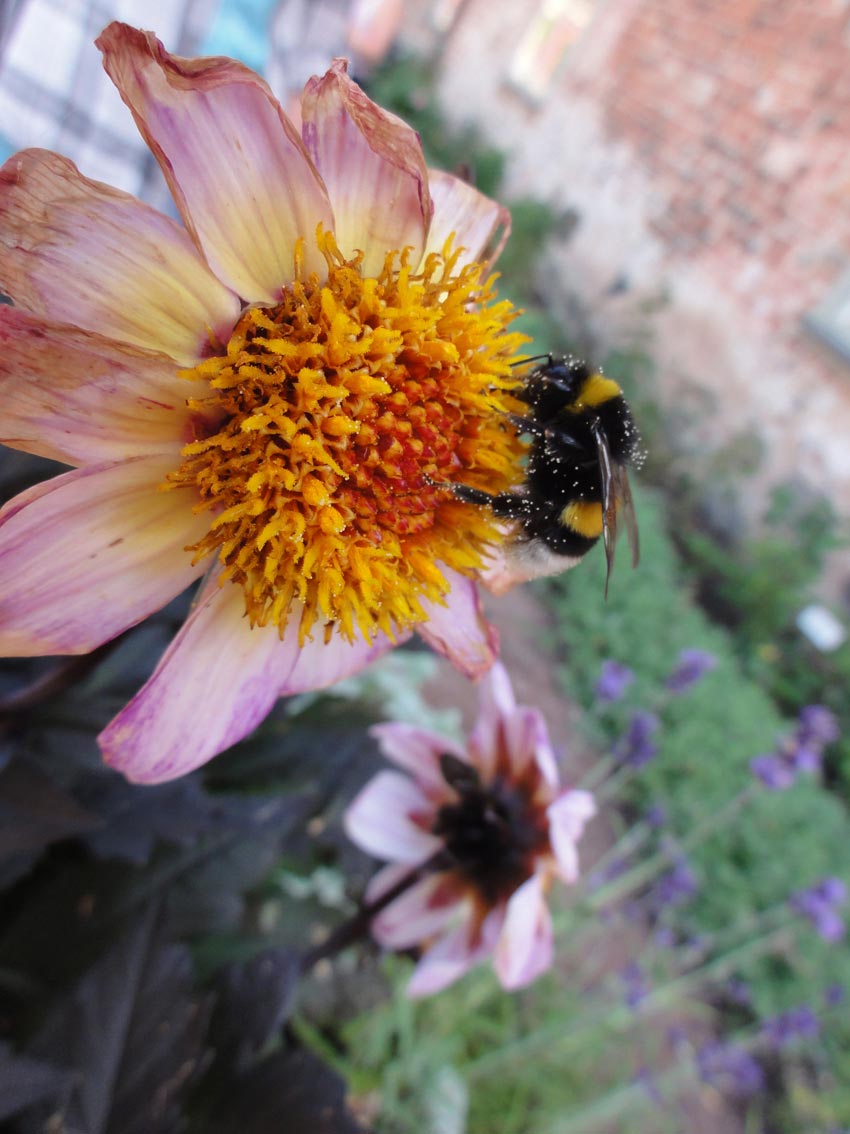
    Large Bumblebee on a Flower
    A bumblebee on a flower. Credit: Natalie Hempel de Ibarra

    In the study, captive bees visited artificial flowers containing sucrose (sugar) solution of varying concentrations.

    The larger the bee, the more its learning behavior varied depending on the richness of the sucrose solution.

    Smaller bees invested the same amount of effort in learning the locations of the artificial flowers, regardless of whether sucrose concentration was high or low.

    “The differences we found reflect the different roles of bees in their colonies,” said Professor Hempel de Ibarra.

    “Large bumblebees can carry larger loads and explore further from the nest than smaller ones. Small ones with a smaller flight range and carrying capacity cannot afford to be as selective, so they accept a wider range of flowers.

    “These small bees tend to be involved more with tasks inside the nest — only going out to forage if food supplies in the colony are running low.”

    Reference: “Small and Large Bumblebees Invest Differently when Learning about Flowers” by Elisa Frasnelli, Théo Robert, Pizza Ka Yee Chow, Ben Scales, Sam Gibson, Nicola Manning, Andrew O. Philippides, Thomas S. Collett and Natalie Hempel de Ibarra, 28 December 2020, Current Biology.
    DOI: 10.1016/j.cub.2020.11.062

    The study was conducted in collaboration with scientists from the University of Sussex.

    The bees were observed in greenhouses at the University of Exeter’s award-winning Streatham Campus, and Professor Hempel de Ibarra thanked the university’s Grounds and Gardens team for their continued support.

    The study was funded by the Leverhulme Trust.

    Never miss a breakthrough: Join the SciTechDaily newsletter.
    Follow us on Google and Google News.

    Bees Evolution Plant Science University of Exeter
    Share. Facebook Twitter Pinterest LinkedIn Email Reddit

    Related Articles

    Mystery That Baffled Darwin Solved: Clever Strategy Some Flowers Use to Ensure Effective Pollination by Bees

    Plant Used in Traditional Chinese Medicine Evolves to Become Less Visible to Humans

    Surprisingly, Plants Are Better Pollinated in Cities Than in the Countryside

    Bumble Bees’ Favorite Flowers Identified to Aid Bee Restoration

    Plant Life Expanding Around Mount Everest and Across the Himalayan Region

    Biologists Discover That Flower Shapes Evolve to Adapt to Their Pollinators

    71 New Species From 2019 Described by Scientists: From Geckos to Goblin Spiders

    Recently Discovered Parasitic Wasp Is Enemy of Serious Alien Pest in North America

    1 Billion Years of Evolution Illuminated by Genetic Sequencing of 1,100 Plants

    Leave A Reply Cancel Reply

    • Facebook
    • Twitter
    • Pinterest
    • YouTube

    Don't Miss a Discovery

    Subscribe for the Latest in Science & Tech!

    Trending News

    Scientists Uncover Potential Brain Risks of Popular Fish Oil Supplements

    Scientists Discover a Surprising Way To Make Bread Healthier and More Nutritious

    After 60 Years, Scientists Uncover Unexpected Brain Effects of Popular Diabetes Drug Metformin

    New Research Uncovers Hidden Side Effects of Popular Weight-Loss Drugs

    Scientists Rethink Extreme Warming After Surprising Ocean Discovery

    Landmark Study Links Never Marrying to Significantly Higher Cancer Risk

    Researchers Discover Unknown Beetle Species Just Steps From Their Lab

    Largest-Ever Study Finds Medicinal Cannabis Ineffective for Anxiety, Depression, PTSD

    Follow SciTechDaily
    • Facebook
    • Twitter
    • YouTube
    • Pinterest
    • Newsletter
    • RSS
    SciTech News
    • Biology News
    • Chemistry News
    • Earth News
    • Health News
    • Physics News
    • Science News
    • Space News
    • Technology News
    Recent Posts
    • Early Warning Signals of Esophageal Cancer May Be Hiding in Plain Sight
    • Researchers Have Discovered a THC-Free Cannabis Compound That May Replace Opioids
    • Common Blood Pressure Drug Shows Surprising Power Against Deadly Antibiotic-Resistant Superbug
    • Students Build Dark Matter Detector and Set New Experimental Limits
    • Scientists Discover Caffeine Can Repair Key Memory Circuits After Sleep Loss
    Copyright © 1998 - 2026 SciTechDaily. All Rights Reserved.
    • Science News
    • About
    • Contact
    • Editorial Board
    • Privacy Policy
    • Terms of Use

    Type above and press Enter to search. Press Esc to cancel.