
Close Menu
    Facebook X (Twitter) Instagram
    SciTechDaily
    • Biology
    • Chemistry
    • Earth
    • Health
    • Physics
    • Science
    • Space
    • Technology
    Facebook X (Twitter) Pinterest YouTube RSS
    SciTechDaily
    Home»Space»Black Beauty: Shock Damage in Martian Zircon a “One-Off Gift” From Mars
    Space

    Black Beauty: Shock Damage in Martian Zircon a “One-Off Gift” From Mars

    By Curtin UniversityFebruary 2, 20221 Comment3 Mins Read
    Facebook Twitter Pinterest Telegram LinkedIn WhatsApp Email Reddit
    Share
    Facebook Twitter LinkedIn Pinterest Telegram Email Reddit
    Northwest Africa 7034 Martian Meteorite
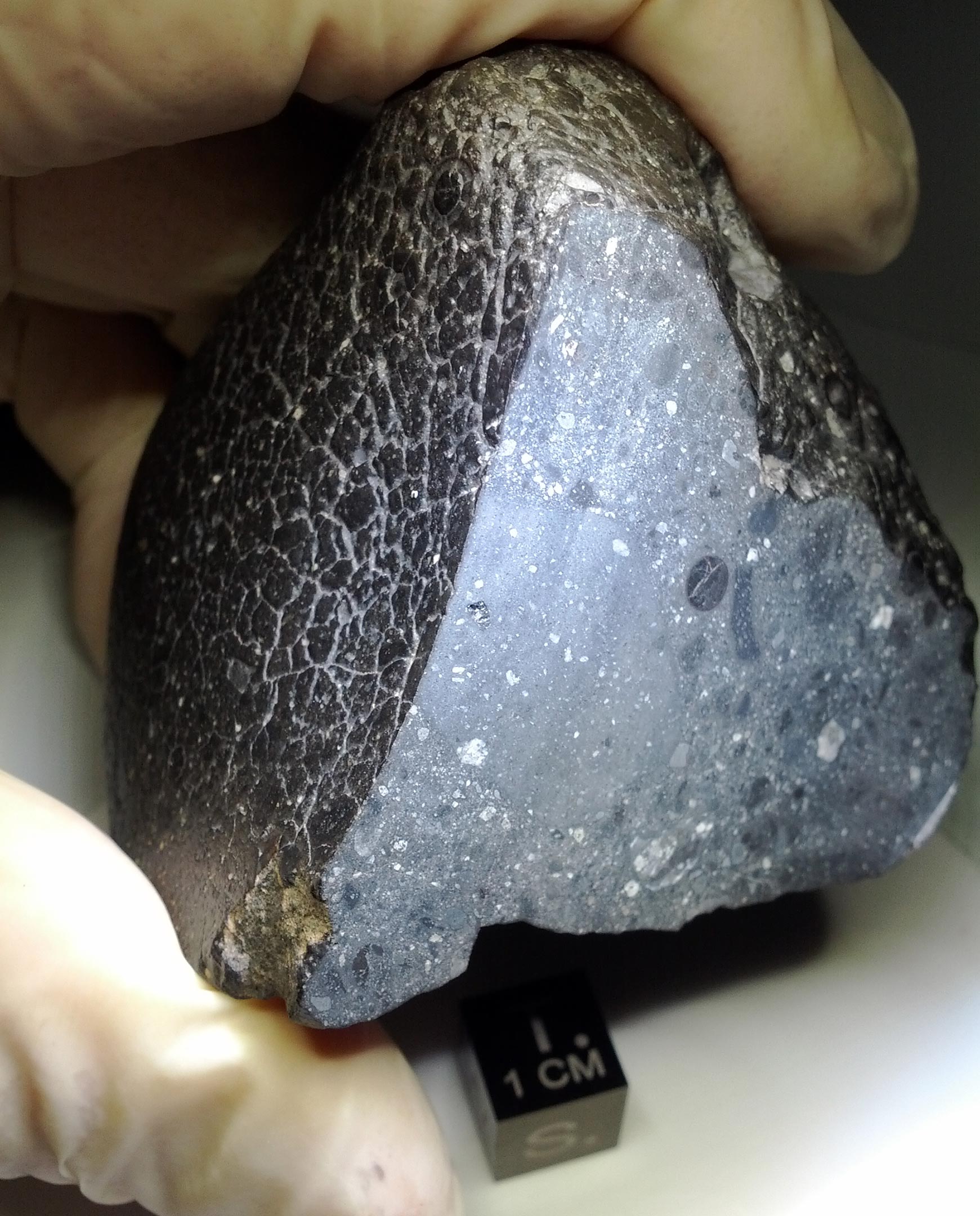
    Designated Northwest Africa (NWA) 7034, and nicknamed “Black Beauty,” the Martian meteorite weighs approximately 11 ounces (320 grams). Credit: NASA

    The research on Martian meteorite ‘Black Beauty’ revealed zircon grains. These zircons showed signs of high-pressure shock deformation similar to those found at major impact sites on Earth and the Moon. This finding indicates that Mars experienced significant impacts 4.45 billion years ago, which could have affected the planet’s habitability.

    Curtin University researchers studying a Martian meteorite have found the first evidence of high-intensity damage caused by asteroid impact, in findings that have implications for understanding when conditions suitable for life may have existed on early Mars. 

    Published in leading journal Science Advances, the research examined grains of the mineral zircon in Martian meteorite NWA 7034. The meteorite, colloquially known as ‘Black Beauty’, is a rare sample of the surface of Mars. The original 320-gram (0.7-pound) rock was found in northern Africa and first reported in 2013.

    Evidence of Ancient Martian Impacts

    Lead author Morgan Cox, a PhD candidate from Curtin’s Space Science and Technology Centre (SSTC) in the School of Earth and Planetary Sciences, described the meteorite as a collection of broken rock fragments and minerals, mostly basalt, that solidified and became a rock over time. A zircon found inside the meteorite preserves evidence of damage that only occurs during large meteorite impacts.
    NWA 7034 Martian Meteorite
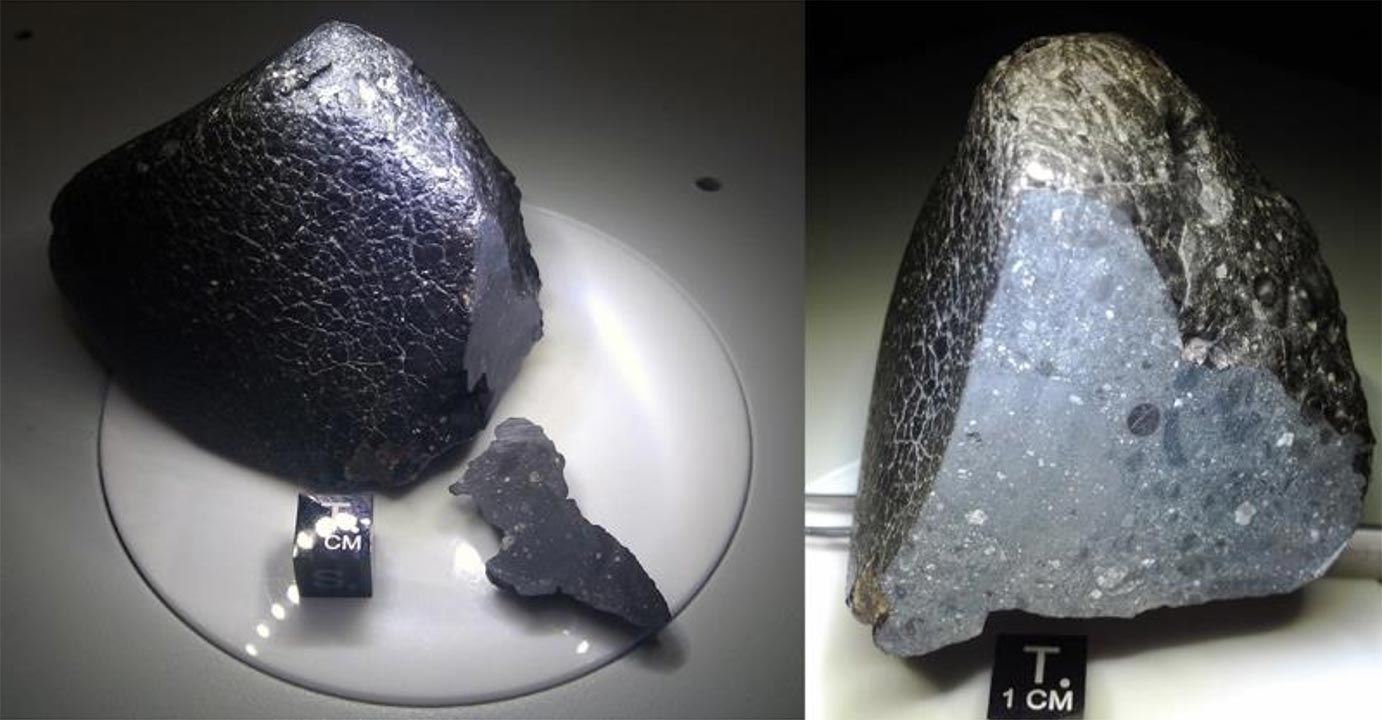
    NWA 7034 showing fusion crusted exterior (left) and sawcut revealing interior (right), both images with a 1 cm cube for scale. Credit: Institute of Meteoritics, UNM

    “This grain is truly a one-off gift from the Red Planet. High-pressure shock deformation has not previously been found in any minerals from Black Beauty. This discovery of shock damage in a 4.45 billion-year-old Martian zircon provides new evidence of dynamic processes that affected the surface of early Mars,” Ms. Cox said.

    “The type of shock damage in the Martian zircon involves ‘twinning’, and has been reported from all of the biggest impact sites on Earth, including the one in Mexico that killed off the dinosaurs, as well as the Moon, but not previously from Mars.”

    Rethinking Mars’ Timeline for Habitability

    Co-author Dr. Aaron Cavosie, also from Curtin’s SSTC, said the occurrence of zircon grains in the Black Beauty meteorite provided physical evidence of large impacts on early Mars, and had implications for the habitability of the young planet.

    “Prior studies of zircon in Martian meteorites proposed that conditions suitable for life may have existed by 4.2 billion years ago based on the absence of definitive shock damage,” Dr. Cavosie said.

    “Mars remained subject to impact bombardment after this time, on the scale known to cause mass extinctions on Earth. The zircon we describe provides evidence of such impacts, and highlights the possibility that the habitability window may have occurred later than previously thought, perhaps coinciding with evidence for liquid water on Mars by 3.9 to 3.7 billion years ago.”

    Reference: “Impact and habitability scenarios for early Mars revisited based on a 4.45-Ga shocked zircon in regolith breccia” by Morgan A. Cox, Aaron J. Cavosie, Kenneth J. Orr, Luke Daly, Laure Martin, Anthony Lagain, Gretchen K. Benedix and Phil A. Bland, 2 February 2022, Science Advances.
    DOI: 10.1126/sciadv.abl7497

    The research team also included collaborators from The University of Western Australia and the University of Glasgow.

    Never miss a breakthrough: Join the SciTechDaily newsletter.
    Follow us on Google and Google News.

    Asteroid Curtin University Mars Popular
    Share. Facebook Twitter Pinterest LinkedIn Email Reddit

    Related Articles

    4.45 Billion-Year-Old Meteorite Points to Hot, Habitable Waters on Early Mars

    Analysis of Organic Compounds Extracted From Ryugu Asteroid Opens New Possibilities in Extraterrestrial Life Search

    Planetary Defense: Asteroid Findings From Specks of Space Dust Could Save Earth

    Major Asteroid Impact May Have Caused Mars Megatsunami

    Earth Asteroid Impacts Mirrored on Moon – Including the Dinosaur Killer

    Consistent Asteroid Collisions Rock Previous Thinking on Mars Impact Craters

    Researchers Say They’ve Solved the Puzzling Mystery of the Moons of Mars

    Intriguing Martian Scars: An Ancient Crater Triplet on Mars

    NASA Curiosity Heads to Mars

    1 Comment

    1. Dustin on February 9, 2022 4:49 pm

      I have found lots of things that could be from outer space,
      Have no idea how to get them tested,
      All of them are iron and crystal,
      Wild looking and beautiful!!!!
      So my question is how do I find out what I have

      Reply
    Leave A Reply Cancel Reply

    • Facebook
    • Twitter
    • Pinterest
    • YouTube

    Don't Miss a Discovery

    Subscribe for the Latest in Science & Tech!

    Trending News

    Breakthrough Bowel Cancer Trial Leaves Patients Cancer-Free for Nearly 3 Years

    Natural Compound Shows Powerful Potential Against Rheumatoid Arthritis

    100,000-Year-Old Neanderthal Fossils in Poland Reveal Unexpected Genetic Connections

    Simple “Gut Reset” May Prevent Weight Gain After Ozempic or Wegovy

    2.8 Days to Disaster: Scientists Warn Low Earth Orbit Could Suddenly Collapse

    Common Food Compound Shows Surprising Power Against Superbugs

    5 Simple Ways To Remember More and Forget Less

    The Atomic Gap That Could Cost the Semiconductor Industry Billions

    Follow SciTechDaily
    • Facebook
    • Twitter
    • YouTube
    • Pinterest
    • Newsletter
    • RSS
    SciTech News
    • Biology News
    • Chemistry News
    • Earth News
    • Health News
    • Physics News
    • Science News
    • Space News
    • Technology News
    Recent Posts
    • Popular Weight-Loss Drugs Found To Cut Heart Attack and Stroke Risk
    • After 37 Years, the World’s Longest-Running Soil Warming Experiment Uncovers a Startling Climate Secret
    • NASA Satellite Captures First-Ever High-Res View of Massive Pacific Tsunami
    • ADHD Isn’t Just a Deficit: Study Reveals Powerful Hidden Strengths
    • Scientists Uncover “Astonishing” Hidden Property of Light
    Copyright © 1998 - 2026 SciTechDaily. All Rights Reserved.
    • Science News
    • About
    • Contact
    • Editorial Board
    • Privacy Policy
    • Terms of Use

    Type above and press Enter to search. Press Esc to cancel.