
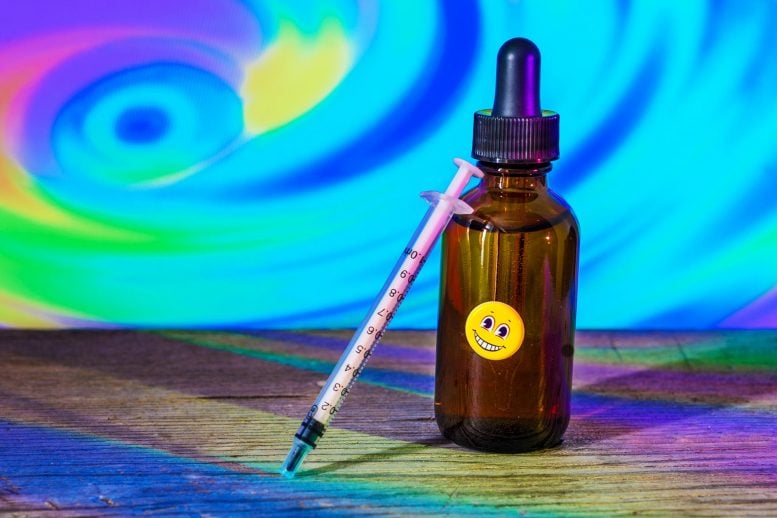
Psychedelic Microdosers Noted Multiple Improvements Compared to Non-Microdosing Peers
Further evidence of the therapeutic potential of microdosing has been revealed by the latest research to examine how tiny amounts of psychedelics can impact mental health.
In the study, which was recently published in Nature-Scientific Reports, 953 people taking regular small amounts of psilocybin and a second group of 180 people that were not microdosing were tracked. This latest research to come from the Microdose.me project was led by University of British Columbia (UBC) Okanagan’s Dr. Zach Walsh and doctoral student Joseph Rootman.
Participants in the 30-day study were asked to complete a number of assessments that evaluate mental health symptomology, mood, and measures of cognition. For instance, to measure psychomotor ability, a smartphone finger tap test was integrated into the study. This can be used as a marker for neurodegenerative disorders including Parkinson’s disease.
Those microdosing psilocybin demonstrated greater improvements in mood, mental health and psychomotor ability over the one-month period compared to non-microdosing peers. Both groups completed the same assessments.
“This is the largest longitudinal study of this kind to date of microdosing psilocybin and one of the few studies to engage a control group,” says Dr. Walsh, who teaches in the Irving K. Barber Faculty of Arts and Social Sciences. “Our findings of improved mood and reduced symptoms of depression, anxiety and stress add to the growing conversation about the therapeutic potential of microdosing.”
Growing Interest in Microdosing
Large doses of psychedelic psilocybin mushrooms have a long history of use among some Indigenous peoples. They are prized by some in Western culture for their psychedelic effects, explains Dr. Walsh. They were also labeled an illicit substance during the American-led “war on drugs.” However, recent interest has expanded from large dose psychedelic use—known for creating dramatic alterations in mood and consciousness—to the potential therapeutic application of smaller microdoses. These are amounts so small they minimally interfere with daily functioning.
The Microdose.me project is conducted by an international team including Dr. Pam Kryskow from UBC Vancouver, Maggie Kiraga and Dr. Kim Kuypers from Maastricht University in the Netherlands, American mycologist Paul Stamets, and Kalin Harvey and Eesmyal Santos-Brault of the Quantified Citizen health research platform.
Microdosing involves regular self-administration in doses small enough to not impair normal cognitive functioning. The doses can be as small as 0.1 to 0.3 grams of dried mushrooms and taken three to five times a week.
Psilocybin’s Non-Addictive and Low-Toxicity Profile
The most widely reported substances used for microdosing are psilocybin mushrooms and LSD. Psilocybin mushrooms are considered non-addictive and relatively non-toxic—especially when compared to tobacco, opioids and alcohol.
“Our findings of mood and mental health improvements associated with psilocybin microdosing align with previous studies of psychedelic microdosing, and add to them through the use of a longitudinal study design and large sample that allowed us to examine consistency of effects across age, gender and their mental health,” says Rootman.
The comparisons of microdosers to non-microdosers over the one-month period of the study indicated greater improvements among microdosers when asked about their mood, depression, anxiety, and stress, he explains. Analyses of the finger tap test showed that microdosers demonstrated a more positive change in performance than non-microdosers, particularly among people over the age of 55.
“Despite the promising nature of these findings, there is a need for further research to more firmly establish the nature of the relationship between microdosing, mood and mental health, and the extent to which these effects are directly attributable to psilocybin rather than participant expectancies about the substance,” says Dr. Walsh.
Although the study was not designed to investigate the potential influence of participant expectancy on microdose outcomes, the authors note this is a necessary advancement in the field.
“Considering the tremendous health costs and ubiquity of depression and anxiety, as well as the sizable proportion of patients who do not respond to existing treatments, the potential for another approach to addressing these disorders warrants substantial consideration,” Rootman says.
Reference: “Psilocybin microdosers demonstrate greater observed improvements in mood and mental health at one month relative to non-microdosing controls” by Joseph M. Rootman, Maggie Kiraga, Pamela Kryskow, Kalin Harvey, Paul Stamets, Eesmyal Santos-Brault, Kim P. C. Kuypers and Zach Walsh, 30 June 2022, Scientific Reports.
DOI: 10.1038/s41598-022-14512-3
Never miss a breakthrough: Join the SciTechDaily newsletter.
Follow us on Google and Google News.
3 Comments
Free
I’m 63, suffering from lower back pain due to a fracture and bone on bone hip joints. Getting clearance from all my doctors to prepare for Surgery takes time. I refuse opiates. Was drinking alcohol for pain. Discovered micro dosing. It has saved my life. The depression, pain and frustration was having a debilitating affect on my everyday life and I was desperate. I have hope now! 🙏
I just want to try anything to help out 1.i have real bad back pain 2. I have anxiety real bad 3. I have depression on meds it seems it doesn’t help much…