
Close Menu
    Facebook X (Twitter) Instagram
    SciTechDaily
    • Biology
    • Chemistry
    • Earth
    • Health
    • Physics
    • Science
    • Space
    • Technology
    Facebook X (Twitter) Pinterest YouTube RSS
    SciTechDaily
    Home»Space»Black Hole Star Destroyer: Scientists Fling Model Stars at a Virtual Black Hole to See Who Survives
    Space

    Black Hole Star Destroyer: Scientists Fling Model Stars at a Virtual Black Hole to See Who Survives

    By Jeanette Kazmierczak, NASA's Goddard Space Flight CenterNovember 28, 20212 Comments3 Mins Read
    Facebook Twitter Pinterest Telegram LinkedIn WhatsApp Email Reddit
    Share
    Facebook Twitter LinkedIn Pinterest Telegram Email Reddit
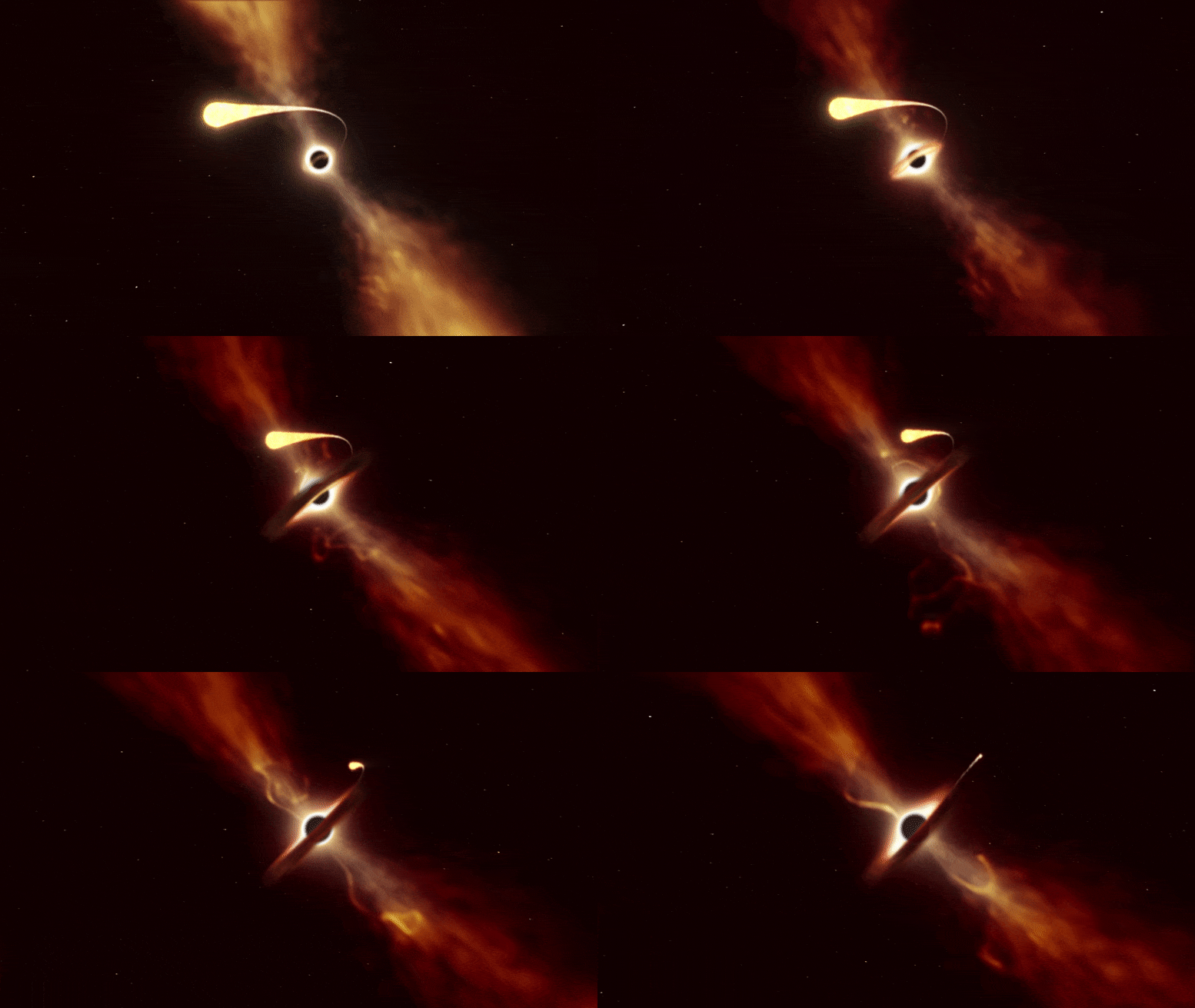
    Star Spaghettification Black Hole
    This animation depicts a star experiencing spaghettification as it’s sucked in by a supermassive black hole during a ‘tidal disruption event’. Credit: ESO/M. Kornmesser

    Simulations of stars near a supermassive black hole reveal that stellar density plays a bigger role than mass in determining whether stars are torn apart or survive.

    In these supercomputer simulations, eight stars are seen avoiding a black hole with a mass one million times that of the Sun. The gravity of the black hole stretches and distorts them all as they get closer. A tidal disruption event, a cataclysmic occurrence that fully separates some into a long stream of gas, occurs in these situations. Others just experience a partial disruption, keeping some of their mass and resuming their original shapes following their terrifying encounters.


    Watch eight model stars stretch and deform as they approach a virtual black hole 1 million times the mass of the Sun. The black hole rips some stars apart into a stream of gas, a phenomenon called a tidal disruption event. Others manage to withstand their close encounters. These simulations show that destruction and survival depend on the stars’ initial densities. Yellow represents the greatest densities, blue the least dense. Credit: NASA’s Goddard Space Flight Center/Taeho Ryu (MPA)

    These simulations are the first to incorporate the physical implications of Einstein’s general theory of relativity with an accurate stellar density model. They were conducted by Taeho Ryu, a fellow at the Max Planck Institute for Astrophysics in Garching, Germany. The mass of the simulated stars varies from roughly one-tenth to ten times that of the Sun.

    There are other factors involved than mass that determine which stars completely disrupt and which ones survive. The density of the star has a greater impact on survival.
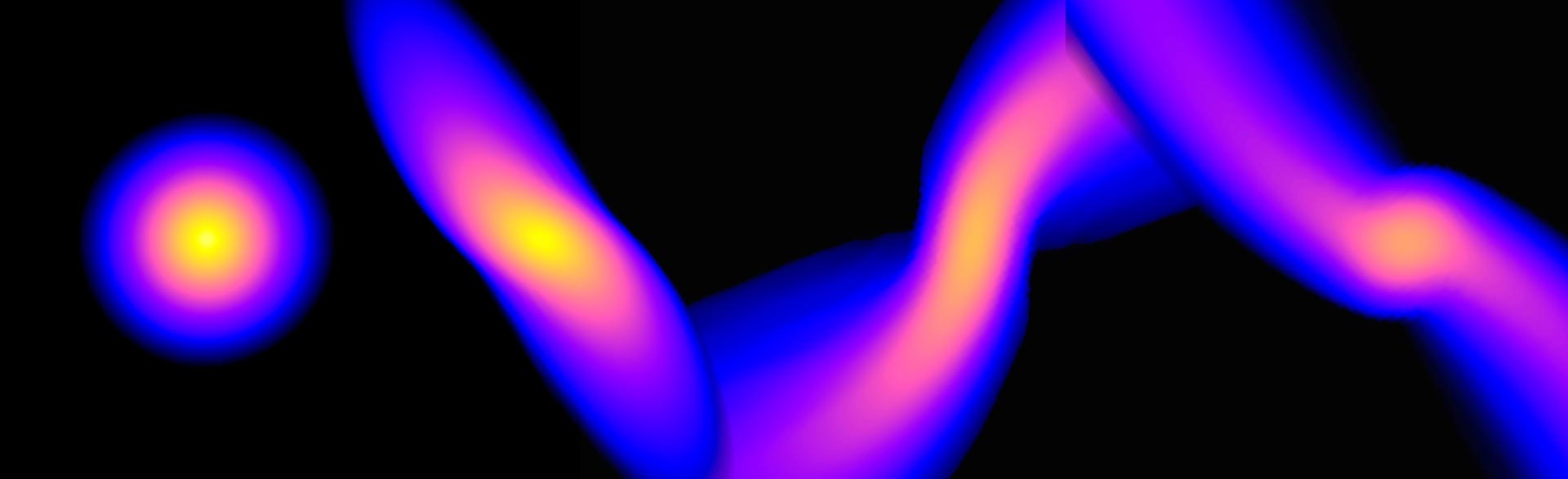
    Scientists Fling Model Stars at Virtual Black Hole
    From left to right, this illustration shows four snapshots of a virtual Sun-like star as it approaches a black hole with 1 million times the Sun’s mass. The star stretches, looses some mass, and then begins to regain its shape as it moves away from the black hole. Credit: NASA’s Goddard Space Flight Center/Taeho Ryu (MPA)

    Ryu and his team also looked into how differing black hole masses and star close approaches affected tidal disruption events. The findings will assist astronomers in developing more precise models of these catastrophic cosmic catastrophes and in estimating how frequently full tidal disruptions occur in the universe.

    Reference: “Tidal Disruptions of Main-sequence Stars. I. Observable Quantities and Their Dependence on Stellar and Black Hole Mass” by Taeho Ryu, Julian Krolik, Tsvi Piran and Scott C. Noble, 25 November 2021, The Astrophysical Journal.
    DOI: 10.3847/1538-4357/abb3cf

    Never miss a breakthrough: Join the SciTechDaily newsletter.
    Follow us on Google and Google News.

    Astronomy Astrophysics Black Hole NASA Popular
    Share. Facebook Twitter Pinterest LinkedIn Email Reddit

    Related Articles

    NASA’s X-Ray Explorer Unveils Black Hole’s Hidden Layers

    Centaurus A’s Massive 13,000 Light-Year Jet Captured in Stunning Detail

    The Big Bang’s Dark Legacy Revealed by Hubble: Unexpected Black Holes

    Astronomical Appetite: NASA Telescopes Decode a Supermassive Black Hole’s Snack Schedule

    From the Dawn of Time: Hunting for Primordial Black Holes With NASA’s Roman Space Telescope

    NASA’s Planet Hunter’s Rare Glimpse at Two Black Holes in a Faraway Galaxy

    Echoes of Creation: The Roman Telescope’s Quest for Primordial Black Holes

    Andromeda’s Supermassive Black Hole Feeding Habits Revealed by NASA’s Spitzer

    Telescopes Reveal Rapid Spin of Milky Way’s Black Hole Warping Spacetime

    2 Comments

    1. Sf. Ramon Careaga, founder EPEMC on November 28, 2021 3:41 pm

      Wrong model of sun meets ridiculous model of “black holes”… Computer simulated… Bound to produce vunkish results.

      Reply
    2. brandon garcia on November 28, 2021 10:58 pm

      Don’t stream me out..lol

      Reply
    Leave A Reply Cancel Reply

    • Facebook
    • Twitter
    • Pinterest
    • YouTube

    Don't Miss a Discovery

    Subscribe for the Latest in Science & Tech!

    Trending News

    Scientists Uncover Potential Brain Risks of Popular Fish Oil Supplements

    Scientists Discover a Surprising Way To Make Bread Healthier and More Nutritious

    After 60 Years, Scientists Uncover Unexpected Brain Effects of Popular Diabetes Drug Metformin

    New Research Uncovers Hidden Side Effects of Popular Weight-Loss Drugs

    Scientists Rethink Extreme Warming After Surprising Ocean Discovery

    Landmark Study Links Never Marrying to Significantly Higher Cancer Risk

    Researchers Discover Unknown Beetle Species Just Steps From Their Lab

    Largest-Ever Study Finds Medicinal Cannabis Ineffective for Anxiety, Depression, PTSD

    Follow SciTechDaily
    • Facebook
    • Twitter
    • YouTube
    • Pinterest
    • Newsletter
    • RSS
    SciTech News
    • Biology News
    • Chemistry News
    • Earth News
    • Health News
    • Physics News
    • Science News
    • Space News
    • Technology News
    Recent Posts
    • Powerful Lasers Reveal How Matter Becomes Plasma in Trillionths of a Second
    • A Simpler Path to Super-Resolution: Scientists Reinvent Microscopy
    • Scientists Uncover Hidden Genetic Cause of Diabetes in Babies
    • Amazonian Chocolate Could Become the Next Superfood, Scientists Say
    • Challenging the Narrative: New Study Shows U.S. Life Expectancy Is Rising Across All States
    Copyright © 1998 - 2026 SciTechDaily. All Rights Reserved.
    • Science News
    • About
    • Contact
    • Editorial Board
    • Privacy Policy
    • Terms of Use

    Type above and press Enter to search. Press Esc to cancel.