
Close Menu
    Facebook X (Twitter) Instagram
    SciTechDaily
    • Biology
    • Chemistry
    • Earth
    • Health
    • Physics
    • Science
    • Space
    • Technology
    Facebook X (Twitter) Pinterest YouTube RSS
    SciTechDaily
    Home»Biology»Blond Hair of Melanesians Evolved Differently Than Those of Europeans
    Biology

    Blond Hair of Melanesians Evolved Differently Than Those of Europeans

    By SciTechDailyMay 7, 2012No Comments2 Mins Read
    Facebook Twitter Pinterest Telegram LinkedIn WhatsApp Email Reddit
    Share
    Facebook Twitter LinkedIn Pinterest Telegram Email Reddit
    blond-pacific-islander
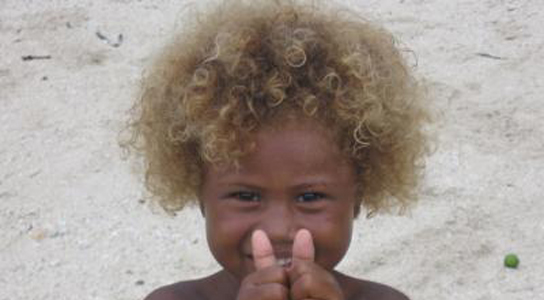
    About 5-10% of the people in Melanesia have naturally blond hair.

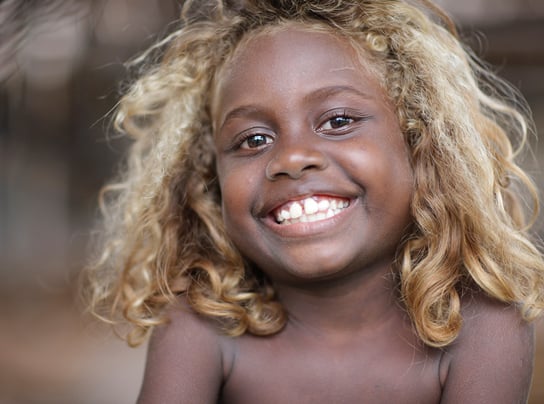
    A new study of the people from the Solomon Islands in Melanesia, a group of islands northeast of Australia, has shown that blond hair evolved differently, genetically speaking, than in Europeans. About 5-10% of the people in Melanesia have naturally blond hair, which is the highest prevalence outside of Europe.

    This refutes the hypothesis that blond hair was introduced by colonial Europeans. Carlos Bustamante, a geneticist at Stanford University School of Medicine, in California, and his team published their findings in the journal Science.
    blond-pacific-islander-girl

    Bustamante and his colleagues compared the genomes of 43 blond and 42 dark-haired Solomon Islanders. This revealed that the blond hair was strongly associated with a single mutation in the TYRP1 gene, which encodes an enzyme that influences pigmentation in mice and humans. In Europeans, several genes are known to contribute to blond hair, but TYRP1 isn’t involved.

    They compared DNA between more than 900 Solomon Islanders and 900 other people from 52 populations around the world to find that the TYRP1 mutation is probably unique to the Oceanic region that includes Melanesia. About one-quarter of Solomon Islanders carry the recessive gene, so two copies are needed to have blond hair.

    However, not all occurrences of blond hair are the result of this particular mutation, but researchers have predicted that it accounts for about 30% of cases. Another 16% are attributed to age and gender (young children and women are more likely to have blond hair), while the rest is attributed to sun exposure and other undiscovered genes. It’s unusual that one specific mutation accounts for such a large proportion of an observable trait in a population.

    Bustamante thinks that this mutation might have arisen between 5,000 and 30,000 years ago, but hasn’t been able to explain why it has reached such a high frequency in the Solomon Islands.

    Reference: “Melanesian Blond Hair Is Caused by an Amino Acid Change in TYRP1” by Eimear E. Kenny, Nicholas J. Timpson, Martin Sikora, Muh-Ching Yee, Andrés Moreno-Estrada, Celeste Eng, Scott Huntsman, Esteban González Burchard, Mark Stoneking, Carlos D. Bustamante and Sean Myles, 4 May 2012, Science.
    DOI: 10.1126/science.1217849

    Never miss a breakthrough: Join the SciTechDaily newsletter.
    Follow us on Google and Google News.

    Evolution Genetics
    Share. Facebook Twitter Pinterest LinkedIn Email Reddit

    Related Articles

    Improved Estimates of DNA’s Mutation Rate Paint Clearer Picture of Human Prehistory

    Genome Study Links Paternal Age to Conditions Such As Autism

    Horizontal Gene Transfer Between Plants is More Widespread than Previously Thought

    Evolutionary Changes Surrounding the NOS1 Gene

    Evolutionary History of Cypress Tree Reflects the Breakup of Pangaea

    Similarities Between Acorn Worm and Vertebrate Brain

    Iceman Ötzi’s DNA Reveals Health Risks and Relations

    Human Y-Chromosome Has Enough Genes to Stay for Millions of Years

    Researchers Discover that Prions Play Role in Yeast Survival and Evolution

    Leave A Reply Cancel Reply

    • Facebook
    • Twitter
    • Pinterest
    • YouTube

    Don't Miss a Discovery

    Subscribe for the Latest in Science & Tech!

    Trending News

    Scientists Discover 132-Million-Year-Old Dinosaur Tracks on South Africa’s Coast

    Scientists Uncover the Secret Ingredient Behind the Spark That May Have Started Life on Earth

    Physicists Observe Matter in Two Places at Once in Mind-Bending Quantum Experiment

    Stanford Scientists Discover Hidden Brain Circuit That Fuels Chronic Pain

    New Study Reveals Why Ozempic Works Better for Some People Than Others

    Climate Change Is Altering a Key Greenhouse Gas in a Way Scientists Didn’t Expect

    New Study Suggests Gravitational Waves May Have Created Dark Matter

    Scientists Discover Why the Brain Gets Stuck in Schizophrenia

    Follow SciTechDaily
    • Facebook
    • Twitter
    • YouTube
    • Pinterest
    • Newsletter
    • RSS
    SciTech News
    • Biology News
    • Chemistry News
    • Earth News
    • Health News
    • Physics News
    • Science News
    • Space News
    • Technology News
    Recent Posts
    • Python Blood Could Hold the Secret to Weight Loss Without Side Effects
    • Naturally Occurring Bacteria Completely Eradicate Tumors in Mice With a Single Dose
    • The Ideal Temperature for Storing Mangoes Isn’t What You Think
    • Groundbreaking Enzyme Atlas Rewrites Decades of Biology Research
    • New “Nanozyme Hypothesis” Could Rewrite the Story of Life’s Origins
    Copyright © 1998 - 2026 SciTechDaily. All Rights Reserved.
    • Science News
    • About
    • Contact
    • Editorial Board
    • Privacy Policy
    • Terms of Use

    Type above and press Enter to search. Press Esc to cancel.