
Close Menu
    Facebook X (Twitter) Instagram
    SciTechDaily
    • Biology
    • Chemistry
    • Earth
    • Health
    • Physics
    • Science
    • Space
    • Technology
    Facebook X (Twitter) Pinterest YouTube RSS
    SciTechDaily
    Home»Health»Brain Cell Membranes’ Lipids Largely Overlooked for Alzheimer’s Disease Therapeutics
    Health

    Brain Cell Membranes’ Lipids Largely Overlooked for Alzheimer’s Disease Therapeutics

    By American Institute of PhysicsJune 15, 2021No Comments3 Mins Read
    Facebook Twitter Pinterest Telegram LinkedIn WhatsApp Email Reddit
    Share
    Facebook Twitter LinkedIn Pinterest Telegram Email Reddit
    Effects of Age-Related Changes to Brain Function
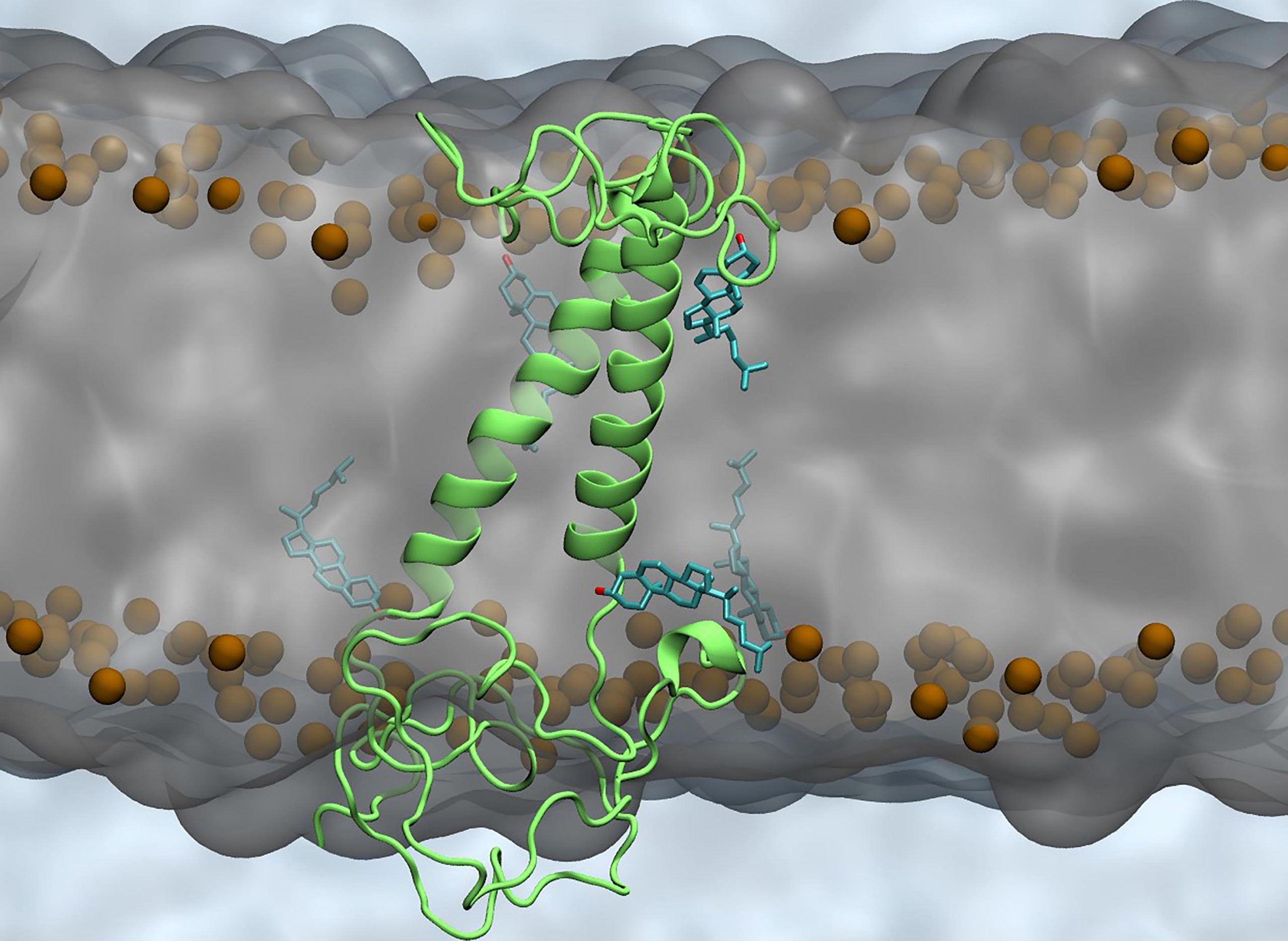
    Links between lipid imbalance and disease have been established, in which lipid changes increase the formation of amyloid plaques, a hallmark of Alzheimer’s disease. This imbalance inspired researchers to explore the role of lipids comprising the cellular membranes of brain cells. In Biointerphases, the researchers report on the significant role lipids may play in regulating C99, a protein within the amyloid pathway, and disease progression. Credit: Amanda Dyrholm Stange, Jenny Pin-Chia Hsu, Lisbeth Ravnkilde, Nils Berglund, and Birgit Schiøtt

    Lipids May Play a Big Role in Alzheimer’s Progression

    Alzheimer’s disease is predominant in elderly people, but the way age-related changes to lipid composition affect the regulation of biological processes is still not well understood. Links between lipid imbalance and disease have been established, in which lipid changes increase the formation of amyloid plaques, a hallmark of Alzheimer’s disease.

    This imbalance inspired researchers from Aarhus University in Denmark to explore the role of lipids comprising the cellular membranes of brain cells.

    In Biointerphases, by AIP Publishing, the researchers report on the significant role lipids may play in regulating C99, a protein within the amyloid pathway, and disease progression. Lipids have been mostly overlooked from a therapeutic standpoint, likely because their influence in biological function is not yet fully understood.

    Toxic amyloid plaques are formed within the brain when a series of enzymes cleave the protein APP, which sits within the neuronal cell membrane, to form C99, which in turn is cleaved to release the amyloid-beta peptide that can form plaques.

    Both C99 and APP are able to protect themselves from cleavage by forming homodimers, a protein composed of two polypeptide chains that are identical. The interaction between C99 molecules is regulated by lipids that make up the membrane in which the protein sits.

    Cholesterol’s Influence on Protective Protein Binding

    “We showed that a change in the cholesterol content of the neuronal cell membrane can change how the C99 dimerizes,” said Amanda Dyrholm Stange, one of the authors. “Our work suggests age-related changes to cholesterol content in the membrane weakens the C99-C99 interaction, which consequently decreases the ‘protective’ effect of the dimerization process, leading to the hypothesis of why more toxic amyloid-beta peptides are released in the elderly.”

    Therapeutics for Alzheimer’s disease currently “have a very high failure rate, with no therapeutics developed for a very long period of time, so a novel strategy is desperately needed,” said co-author Nils Anton Berlund. “Attempting to modulate the composition of the lipid membrane would be an entirely new class of Alzheimer’s disease therapeutics but also immensely challenging without side effects.”

    The researchers postulate shifting the strategy away from targeting proteins to instead targeting the lipid concentration of membranes may be worthwhile.

    “We hope our work will lead the pharmaceutical/biotechnology sector to choose lipid modulation as a means for targeting in drug development, because these changes in lipid composition are linked not just to Alzheimer’s but a large host of diseases — from diabetes to cardiovascular disease,” said co-author Birgit Schiøtt. “We also hope it will lead to more research and funding toward understanding the fundamental science behind the possible regulatory roles of lipids.”

    Reference: “The effect of cholesterol on the dimerization of C99—a molecular modeling perspective” by Amanda Dyrholm Stange, Jenny Pin-Chia Hsu, Lisbeth Ravnkilde Kjølbye, Nils Anton Berglund and Birgit Schiøtt, 15 June 2021, Biointerphases.
    DOI: 10.1116/6.0000985

    Never miss a breakthrough: Join the SciTechDaily newsletter.
    Follow us on Google and Google News.

    Alzheimer's Disease American Institute of Physics Brain Cell Biology Neuroscience
    Share. Facebook Twitter Pinterest LinkedIn Email Reddit

    Related Articles

    Why One Brain Circuit Collapses First in Alzheimer’s

    Toxic RNAs: The Hidden Cause of Neuron Death in Alzheimer’s Uncovered

    Simple Blood Test Can Accurately Reveal Underlying Neurodegeneration (Dementia, ALS)

    New Research Shows the Brain May Need Iron for Healthy Cognitive Development

    Long Before Alzheimer’s Symptoms, Plaque Emerges Deep in the Brain [Video]

    Common Nutrient Supplement May Prevent Alzheimer’s Disease

    Lysosomes May Contribute to Alzheimer’s Disease

    Test for Alzheimer’s May Be Undermining Drug Trials

    Disrupted Sleep Patterns Linked to Alzheimer’s

    Leave A Reply Cancel Reply

    • Facebook
    • Twitter
    • Pinterest
    • YouTube

    Don't Miss a Discovery

    Subscribe for the Latest in Science & Tech!

    Trending News

    Scientists Uncover Potential Brain Risks of Popular Fish Oil Supplements

    Scientists Discover a Surprising Way To Make Bread Healthier and More Nutritious

    After 60 Years, Scientists Uncover Unexpected Brain Effects of Popular Diabetes Drug Metformin

    New Research Uncovers Hidden Side Effects of Popular Weight-Loss Drugs

    Scientists Rethink Extreme Warming After Surprising Ocean Discovery

    Landmark Study Links Never Marrying to Significantly Higher Cancer Risk

    Researchers Discover Unknown Beetle Species Just Steps From Their Lab

    Largest-Ever Study Finds Medicinal Cannabis Ineffective for Anxiety, Depression, PTSD

    Follow SciTechDaily
    • Facebook
    • Twitter
    • YouTube
    • Pinterest
    • Newsletter
    • RSS
    SciTech News
    • Biology News
    • Chemistry News
    • Earth News
    • Health News
    • Physics News
    • Science News
    • Space News
    • Technology News
    Recent Posts
    • Researchers Have Discovered a THC-Free Cannabis Compound That May Replace Opioids
    • Common Blood Pressure Drug Shows Surprising Power Against Deadly Antibiotic-Resistant Superbug
    • Students Build Dark Matter Detector and Set New Experimental Limits
    • Scientists Discover Caffeine Can Repair Key Memory Circuits After Sleep Loss
    • Strange 65-Foot Dinosaur Discovered in Argentina
    Copyright © 1998 - 2026 SciTechDaily. All Rights Reserved.
    • Science News
    • About
    • Contact
    • Editorial Board
    • Privacy Policy
    • Terms of Use

    Type above and press Enter to search. Press Esc to cancel.