

ADHD stimulants may improve performance not by sharpening focus, but by making the brain more awake and motivated.
Prescription stimulant drugs, including Ritalin and Adderall, are commonly prescribed for attention-deficit hyperactivity disorder (ADHD), and many children take them. In the U.S., about 3.5 million kids ages 3 to 17 use an ADHD medication, and that number has climbed as more children have been diagnosed with the neurodevelopmental disorder.
A new study challenges the long held explanation
For years, stimulants have often been described as working by directly targeting brain regions involved in attention. A new study from Washington University School of Medicine in St. Louis questions that idea. The research was led by Benjamin Kay, MD, PhD, an assistant professor of neurology, and Nico U. Dosenbach, MD, PhD, the David M. & Tracy S. Holtzman Professor of Neurology. The team reports that, for the first time, these medications appear to primarily affect the brain systems tied to reward and wakefulness, rather than the circuits typically linked to attention.
The results, published today (December 24) in Cell, suggest stimulants may improve day-to-day performance by making people with ADHD feel more alert and more engaged with what they are doing, instead of directly strengthening focus itself. The researchers also found the drugs produced brain activity patterns similar to what is seen after solid sleep, counteracting the brain effects of sleep deprivation.

“I prescribe a lot of stimulants as a child neurologist, and I’ve always been taught that they facilitate attention systems to give people more voluntary control over what they pay attention to,” said Kay, who treats patients at St. Louis Children’s Hospital. “But we’ve shown that’s not the case. Rather, the improvement we observe in attention is a secondary effect of a child being more alert and finding a task more rewarding, which naturally helps them pay more attention to it.”
Kay said the findings highlight the need to address insufficient sleep alongside questions about stimulant treatment for children being evaluated for ADHD.
Brain scans point to reward and wakefulness
To see how stimulants influence the brain, the researchers analyzed resting state functional MRI, or fMRI, information from 5,795 children ages 8 to 11 in the Adolescent Brain Cognitive Development (ABCD) Study. Resting state fMRI measures patterns of brain activity when someone is not performing a specific task. The ABCD study is a long-term, multisite project tracking the neurodevelopment of more than 11,000 children across the U.S., including a site at WashU Medicine.
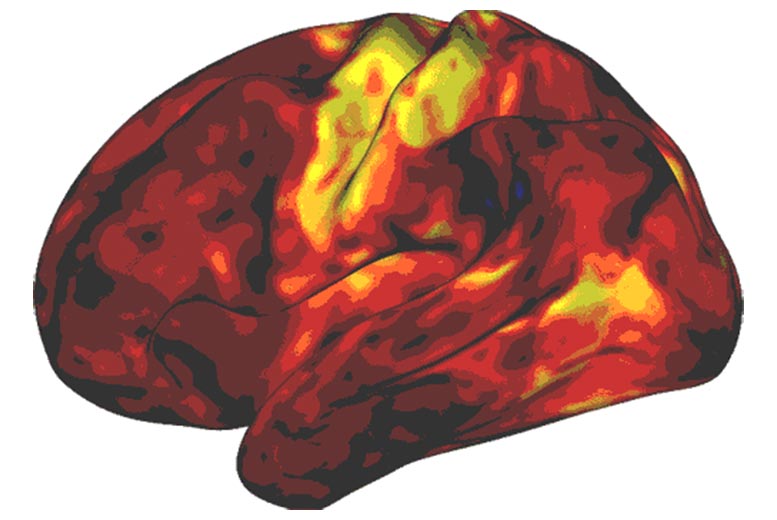
The team compared brain connectivity in children who took prescription stimulants on the day of their scan with children who did not. Kids who took stimulants that day showed stronger activity in brain regions related to arousal or wakefulness and in regions involved in predicting how rewarding an activity will feel. In contrast, the scans did not show notable increases in the areas traditionally associated with attention.
Adult test confirms the same pattern
The researchers then checked their results in a small experiment involving five healthy adults without ADHD who did not typically use stimulants. Each participant received resting state fMRI scans before and after taking a dose of a stimulant medication, which allowed the team to closely track changes in brain connectivity. The same pattern appeared again, with the medication activating arousal and reward networks rather than attention networks.
“Essentially, we found that stimulants pre-reward our brains and allow us to keep working at things that wouldn’t normally hold our interest — like our least favorite class in school, for example,” Dosenbach said. He explained that instead of “lighting up” attention centers, stimulant drugs may make tasks that a child with ADHD usually struggles to stick with feel more rewarding. That added drive can help kids persist through difficult or repetitive work.
“These results also provide a potential explanation for how stimulants treat hyperactivity, which previously seemed paradoxical,” Dosenbach added. “Whatever kids can’t focus on — those tasks that make them fidgety — are tasks that they find unrewarding. On a stimulant, they can sit still better because they’re not getting up to find something better to do.”
The sleep connection and why it matters
Within the ABCD study data, children with ADHD who were taking stimulants performed better than children with ADHD who were not taking a stimulant. Parents reported higher grades, and the children also did better on cognitive tests included in the study. The biggest improvements in cognitive outcomes were seen in children with more severe ADHD who were taking prescription stimulants.
Even with clear effects on brain activity, the benefits did not appear in every child who took these medications. Among children who slept less than the recommended nine or more hours per night, those who took a stimulant had better grades than sleep deprived children who did not take a stimulant. But stimulants were not linked with better performance in neurotypical children who were getting enough sleep. (It is not clear why these kids were taking stimulant medications.) Overall, stimulants were associated with improved cognitive performance only in participants with ADHD or those who were not getting enough sleep.
“We saw that if a participant didn’t sleep enough, but they took a stimulant, the brain signature of insufficient sleep was erased, as were the associated behavioral and cognitive decrements,” Dosenbach said.
The authors cautioned that improved performance despite poor sleep could come with long term downsides.
“Not getting enough sleep is always bad for you, and it’s especially bad for kids,” Kay said. He noted that overtired children can show signs that look like ADHD, including trouble paying attention in class or dropping grades, which could lead to an incorrect diagnosis when sleep deprivation is the true cause. In those situations, stimulants might seem to help because they mimic some effects of a good night’s sleep, while the child still faces the longer-term harms of chronic sleep loss. Kay encouraged clinicians to weigh sleep deprivation as a factor during ADHD evaluations and to consider approaches that improve sleep.
What researchers still need to learn
Dosenbach and Kay also said more research is needed to understand the possible long-term effects of stimulant use on brain function. They noted that stimulants could potentially support brain health by activating the brain’s waste-clearing system during wakefulness, but it is also possible they could cause lasting harm if they are used to mask ongoing sleep deficits.
Reference: “Stimulant medications affect arousal and reward, not attention networks” by Benjamin P. Kay, Muriah D. Wheelock, Joshua S. Siegel, Ryan V. Raut, Roselyne J. Chauvin, Athanasia Metoki, Aishwarya Rajesh, Andrew Eck, Jim Pollaro, Anxu Wang, Vahdeta Suljic, Babatunde Adeyemo, Noah J. Baden, Kristen M. Scheidter, Julia S. Monk, Forrest I. Whiting, Nadeshka Ramirez-Perez, Samuel R. Krimmel, Russell T. Shinohara, Brenden Tervo-Clemmens, Robert J.M. Hermosillo, Steven M. Nelson, Timothy J. Hendrickson, Thomas Madison, Lucille A. Moore, Óscar Miranda-Domínguez, Anita Randolph, Eric Feczko, Jarod L. Roland, Ginger E. Nicol, Timothy O. Laumann, Scott Marek, Evan M. Gordon, Marcus E. Raichle, Deanna M. Barch, Damien A. Fair and Nico U.F. Dosenbach, 24 December 2025, Cell.
DOI: 10.1016/j.cell.2025.11.039
This work was supported by NIH grants NS140256 (EMG, NUFD), EB029343 (MW), MH121518 (SM), MH129493 (DMB), NS123345 (BPK), NS098482 (BPK), DA041148 (DAF), DA04112 (DAF), MH115357 (DAF), MH096773 (DAF and NUFD), MH122066 (EMG, DAF, and NUFD), MH121276 (EMG, DAF, and NUFD), MH124567 (EMG, DAF, and NUFD), and NS129521 (EMG, DAF, and NUFD); by the National Spasmodic Dysphonia Association (EMG); by Mallinckrodt Institute of Radiology pilot funding (EMG); by the Andrew Mellon Predoctoral Fellowship from the Dietrich School of Arts & Sciences, University of Pittsburgh (BTC); and by the Extreme Science and Engineering Discovery Environment (XSEDE) Bridges at the Pittsburgh Supercomputing Center through allocation TG-IBN200009 (BTC).
Computations were performed using the facilities of the Washington University Research Computing and Informatics Facility (RCIF). The RCIF has received funding from NIH S10 program grants: 1S10OD025200-01A1 and 1S10OD030477-01.
This article reflects the view of the authors and may not reflect the opinions or views of the NIH or ABCD consortium investigators.
Never miss a breakthrough: Join the SciTechDaily newsletter.
Follow us on Google and Google News.
3 Comments
I would like to see the scans of children that used this medication and was repeatedly placed on a hot late 80’s to early 90’s school bus where most didn’t even have a fan, causing overheating and vomiting every day. I developed a permanent slight headache that can very quickly increase immensely and pin me to my back and make me extremely sick if I try to get up. These meds cook brains, it’s why I stopped taking them.
That could also be the result of repeated heatstroke events. Causing sensitivity to heat in the long run. Dehydration that comes along with ADHD from not drinking enough water probably didn’t help. And may still be a factor in why in heat this happens to you.
Just like to note here that it was not until I started taking meds that I noticed my water intake was nearly 1/4 of what it was before the meds. So the question is, is it the ADHD diagnosis or meds to treat causing the dehydration