
A new study challenges traditional spin-statistics assumptions in ion-atom charge exchanges, revealing unexpected dynamics in C3+ and helium collisions and opening new avenues in quantum reactivity.
Since the first X-ray image of a comet was captured using an X-ray telescope in 1996, studying charge exchange in collisions between highly charged ions and atoms or molecules has become a hot research topic.
Astrophysicists require accurate atomic data to model observed X-ray spectra. Traditionally, the charge exchange is assumed to follow statistical rules regarding the total spin quantum number. These assumptions of pure spin statistics are of fundamental importance across various fields.
New Findings Challenge Established Assumptions
However, a new study published in Physical Review Letters on Oct. 22 has challenged these assumptions by providing direct evidence of the breakdown of spin statistics in ion-atom charge exchange collisions. This study was led by scientists from the Institute of Modern Physics (IMP) of the Chinese Academy of Sciences (CAS).
The experiment was performed at the low-energy terminals of the Heavy Ion Research Facility in Lanzhou, employing a high-resolution reaction microscope, which is characterized by high precision, sensitivity, and detection efficiency. Neutral helium was used as a target in collisions with C3+ ions in the experiment.
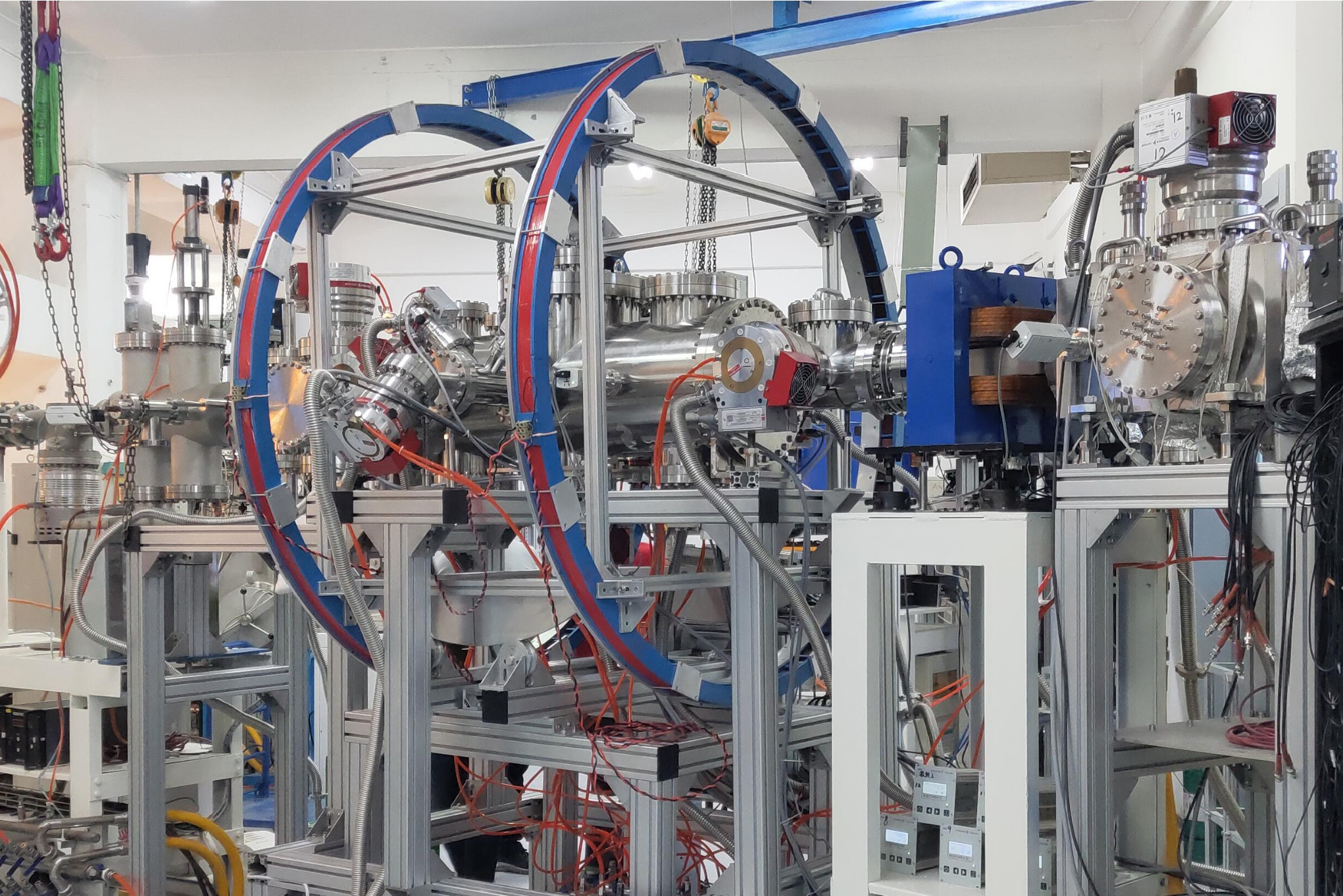
“The C3+ ion is a good candidate for this study because it has no long-lived excited states and is always in its ground state in the collision region. Using the reaction microscope, we can easily determine the atomic states at the moment of electron capture in collisions, overcoming the difficulties encountered in previous experiments. Thus, it is relatively easier to accurately analyze the underlying mechanisms,” said Prof. Xiaolong Zhu from IMP, the first author of this study.
Through experimental and theoretical approaches, scientists directly measured spin-resolved cross-section ratios, as a probe of spin statistics, which demonstrated the breakdown of spin-statistics assumptions at high-impact energies where they are traditionally expected to be valid.
“The novel finding raises intriguing questions both in understanding the electronic dynamics during such fast collisional processes and in exploring quantum manipulation of atomic and molecular reactivity,” said Prof. Xinwen Ma from IMP, one of the corresponding authors of the study.
Reference: “Direct Evidence of Breakdown of Spin Statistics in Ion-Atom Charge Exchange Collisions” by XiaoLong Zhu, Shaofeng Zhang, Yong Gao, Dalong Guo, Jiawei Xu, Ruitian Zhang, Dongmei Zhao, Kaizhao Lin, Xubin Zhu, Dadi Xing, Shucheng Cui, Stylianos Passalidis, Alain Dubois and X. Ma, 22 October 2024, Physical Review Letters.
DOI: 10.1103/PhysRevLett.133.173002
Never miss a breakthrough: Join the SciTechDaily newsletter.
Follow us on Google and Google News.
1 Comment
Traditionally, the charge exchange is assumed to follow statistical rules regarding the total spin quantum number. WHY?
Please ask the researchers to think deeply:
1. Why does quantum spin?
2. Is the Physical Review Letters ( PRL ) trustworthy?
3. Is the purpose of scientific research to show off publishing articles in Physical Review Letters ( PRL )?
4. Physical Review Letters ( PRL ) firmly believes that two sets of cobalt-60 rotating in opposite directions can be seen as two mirror images of each other. Is it scientific and honest?
and so on.
The scientific evaluation system dominated by PRL, Nature, Science, PNAS, and the like is fundamentally rotten and festering. We have new and much better constraints for any future theory, because absolute space possesses zero viscosity and is physically absolutely incompressible, it forms the material basis for the movement of spacetime.
Topology tells us that topological vortices and antivortices can form new spacetime structures via the synchronous effect of superposition, deflection, or twisting of them. Mathematics does not tell us that there must be God particles, ghost particles, fermions, or bosons present. When physics and mathematics diverge, arbitrary imagination will make physics no different from theology. Topological vortex research reflections on the philosophy and methodology of science help us understand the nature essence of science and the limitations of scientific methods. This not only has guiding significance for scientific research itself, but also has important implications for science education and popularization.