
Studying the role of a particular bacterial enzyme has paved the way for the biotechnological breakdown of styrene.
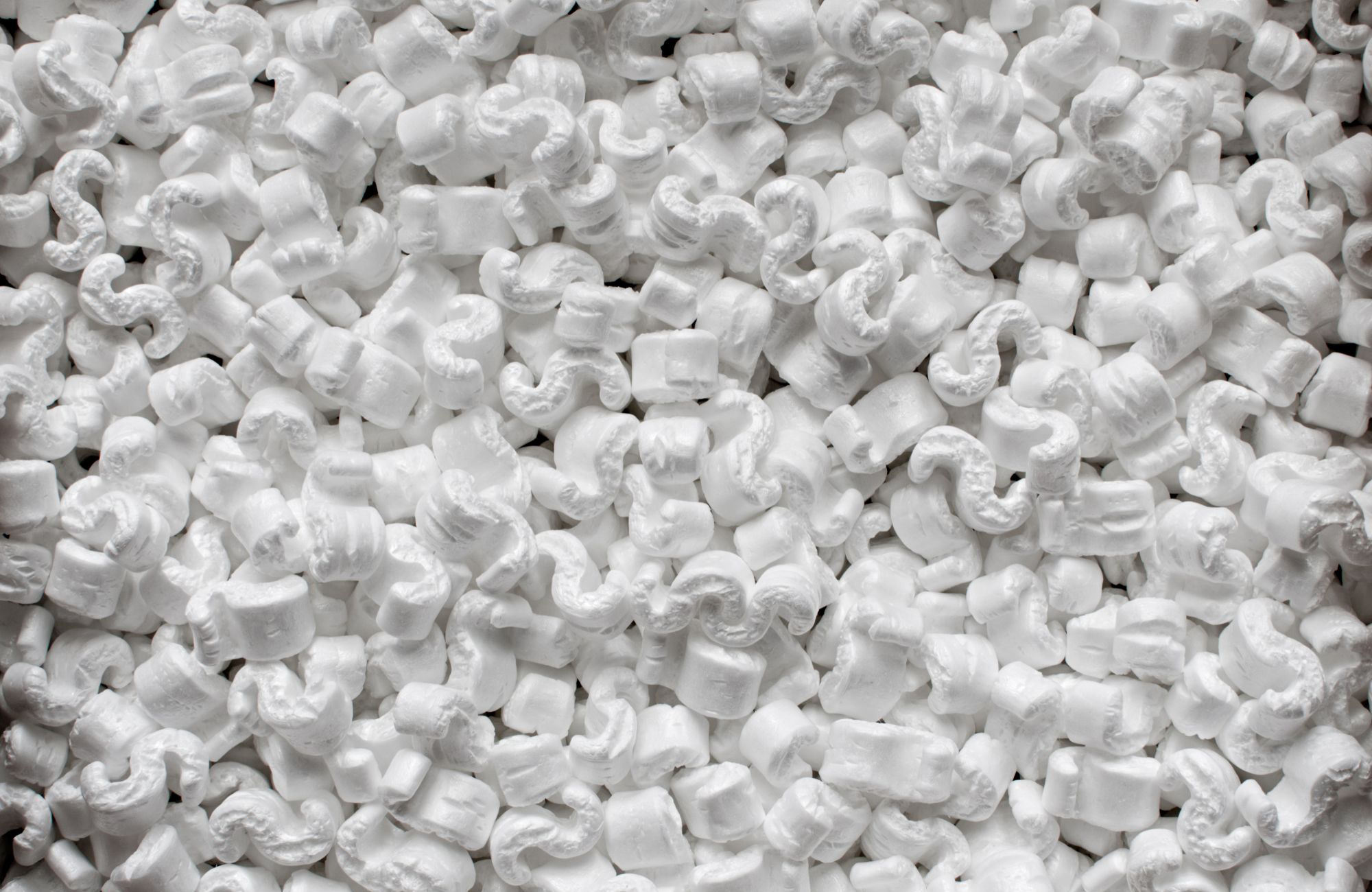
Polystyrene, composed of styrene units, is the most commonly used plastic by volume and is often found in packaging materials. Unlike PET, which can be both produced and recycled through biotechnological methods, polystyrene manufacturing remains strictly chemical. Additionally, this type of plastic can’t be broken down by biotechnological means.
Researchers are looking for ways to rectify this: An international team headed by Dr. Xiaodan Li from the Paul Scherrer Institute, Switzerland, in collaboration with Professor Dirk Tischler, head of the Microbial Biotechnology research group at Ruhr University Bochum, Germany, has decoded a bacterial enzyme that plays a key role in styrene degradation. This paves the way for biotechnological application. The researchers published their findings in the journal Nature Chemistry in a paper published on May, 14, 2024.
Styrene in the environment
“Several million tons of styrene are produced and transported every year,” says Dirk Tischler. “In the process, some of it also gets released unintentionally into the environment.” This is not the only source of styrene in the environment, however: It occurs naturally in coal tar and lignite tar, can occur in traces in essential oils from some plants and is formed during the decomposition of plant material. “It is therefore not surprising that microorganisms have learned to handle or even to metabolize it,” says the researcher.

Fast, but complex: microbial styrene degradation
Bacteria and fungi, as well as the human body, activate styrene with the help of oxygen and form styrene oxide. While styrene itself is toxic, styrene oxide is even more harmful. Rapid metabolization is therefore crucial. “In some microorganisms as well as in the human body, the epoxide formed by this process usually undergoes glutathione conjugation, which makes it both more water-soluble and easier to break down and excrete,” explains Dirk Tischler. “This process is very fast, but also very expensive for the cells. A glutathione molecule has to be sacrificed for every molecule of styrene oxide.”
The formation of the glutathione conjugate and whether, or rather how, glutathione can be recovered is part of current research at the MiCon Graduate School at Ruhr University Bochum, funded by the German Research Foundation (DFG). Some microorganisms have developed a more efficient variant. They use a small membrane protein, namely styrene oxide isomerase, to break down the epoxide.
Styrene oxide isomerases are more efficient
“Even after the first enrichment of styrene oxide isomerase from the soil bacterium Rhodococcus, we observed its reddish color and showed that this enzyme is bound in the membrane,” explains Dirk Tischler. Over the years, he and his team have studied various enzymes of the family and used them primarily in biocatalysis. All of these styrene oxide isomerases have a high catalytic efficiency, are very fast and don’t require any additional substances (co-substrates). They therefore allow rapid detoxification of the toxic styrene oxide in the organism and also a potent biotechnological application in the field of fine chemical synthesis.
“In order to optimize the latter, we do need to understand their function,” points out Dirk Tischler. “We made considerable progress in this area in our international collaboration between researchers from Switzerland, Singapore, the Netherlands, and Germany.”
The team showed that the enzyme exists in nature as a trimer with three identical units. The structural analyses revealed that there is a heme cofactor between each subunit and that this is loaded with an iron ion. The heme forms an essential part of the so-called active pocket and is relevant for the fixation and conversion of the substrate. The iron ion of the heme cofactor activates the substrate by coordinating the oxygen atom of the styrene oxide.
“This means that a new biological function of heme in proteins has been comprehensively described,” concludes Dirk Tischler.
Reference: “Structural basis of the Meinwald rearrangement catalysed by styrene oxide isomerase” by Basavraj Khanppnavar, Joel P. S. Choo, Peter-Leon Hagedoorn, Grigory Smolentsev, Saša Štefanić, Selvapravin Kumaran, Dirk Tischler, Fritz K. Winkler, Volodymyr M. Korkhov, Zhi Li, Richard A. Kammerer and Xiaodan Li, 14 May 2024, Nature Chemistry.
DOI: 10.1038/s41557-024-01523-y
Never miss a breakthrough: Join the SciTechDaily newsletter.
Follow us on Google and Google News.