
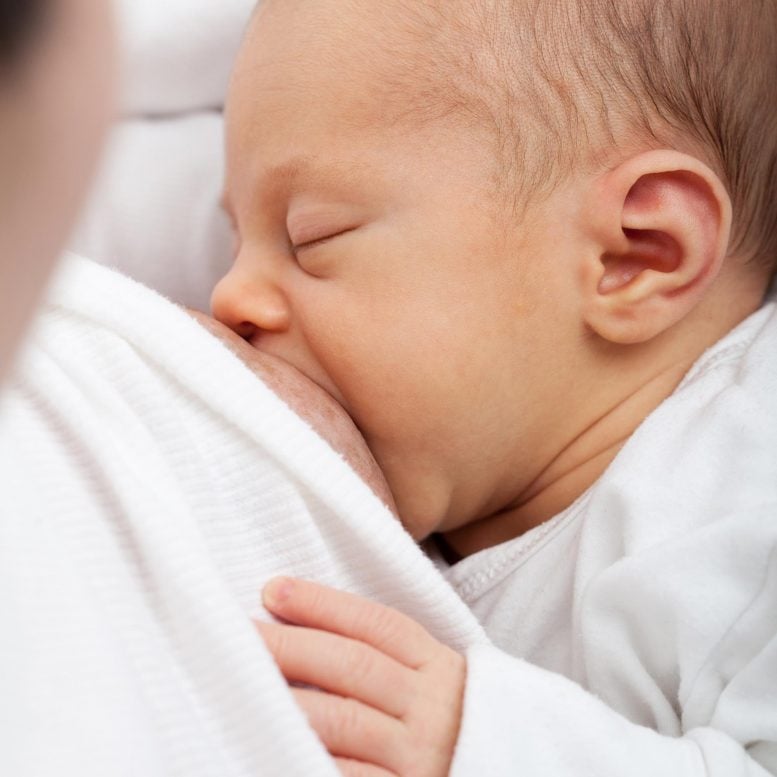
A recent study shows evidence that breastfeeding mothers do not transfer COVID through milk.
A study conducted by researchers at the University of Rochester Medical Center (URMC) — in collaboration with several other universities — indicates that breastfeeding women with COVID-19 do not transmit the SARS-CoV-2 virus through their milk, but do confer milk-borne antibodies that are able to neutralize the virus.
The study, “Characterization of SARS-CoV-2 RNA, antibodies, and neutralizing capacity in milk produced by women with COVID-19,” published recently in the journal mBio — analyzed 37 milk samples submitted by 18 women diagnosed with COVID-19. None of the milk samples were found to contain the virus, while nearly two thirds of the samples did contain two antibodies specific to the virus.
Critically, this study provides evidence that COVID-19 positive mothers should not be separated from their newborn children. At the onset of the pandemic, major health organizations have often provided contradictory advice on whether this separation was necessary. This report will hopefully offer new clarity on guidance for post-natal mothers.
Promising Evidence for Continued Breastfeeding
“We only want to sequester a mother from her baby if it’s medically necessary,” said co-investigator Bridget Young, Ph.D., assistant professor in the Department of Pediatrics at URMC, “However, the issue was very confusing for practitioners who don’t have sufficient evidence. These early results suggest that breast milk from mothers who have had a COVID-19 infection contains specific and active antibodies against the virus, and that they do not transfer the virus through milk. This is great news!”
URMC was funded over $130,000 by the Bill and Melinda Gates Foundation for this research. The initial study published in mBio reported on the first group of 18 women who submitted milk samples. Results from the larger study will be forthcoming, which will hopefully reinforce the initial findings, according to Young.
The URMC research group is led by Antti Seppo, Ph.D., in the Department of Pediatrics. Other co-investigators include Casey Rosen-Carole. M.D., medical director of lactation services and programs at URMC, and Kirsi Jarvinen-Seppo M.D., Ph.D., associate professor in the Department of Pediatrics and chief of Pediatric Allergy and Immunology.
Mark Sangster, PhD, and David Topham, PhD, both research professors in the Department of Microbiology and Immunology, did the primary work measuring antibody assay levels in their lab.
High IgA Antibodies Offer Protective Potential
“We found high levels of IgA — a common antibody in blood and other body fluids — in their breast milk. igA’s migrate in mucosal transfer, therefore this is encouraging information that mothers transfer these antibodies,” said Sangster.
The full research team also included scientists from the University of Rochester School of Medicine and Dentistry, Brigham and Women’s Hospital and Harvard Medical School, and the University of Idaho. The team now has enrolled nearly 50 women who were diagnosed with COVID-19 and has followed their progress with the disease for as long as two months.
The study was initiated to address the lack of existing research into COVID-19 in breast milk. The next steps will be to see if the initial results are replicated in larger samples.
“This work needs to be replicated in larger cohorts. Additionally, we now need to understand if the COVID-19 vaccine impacts breast milk in the same way,” said Young.
Reference: “Characterization of SARS-CoV-2 RNA, Antibodies, and Neutralizing Capacity in Milk Produced by Women with COVID-19” by Ryan M. Pace, Janet E. Williams, Kirsi M. Järvinen, Mandy B. Belfort, Christina D. W. Pace, Kimberly A. Lackey, Alexandra C. Gogel, Phuong Nguyen-Contant, Preshetha Kanagaiah, Theresa Fitzgerald, Rita Ferri, Bridget Young, Casey Rosen-Carole, Nichole Diaz, Courtney L. Meehan, Beatrice Caffé, Mark Y. Sangster, David Topham, Mark A. McGuire, Antti Seppo and Michelle K. McGuire, 9 February 2021, mBio.
DOI: 10.1128/mBio.03192-20
Never miss a breakthrough: Join the SciTechDaily newsletter.
Follow us on Google and Google News.