
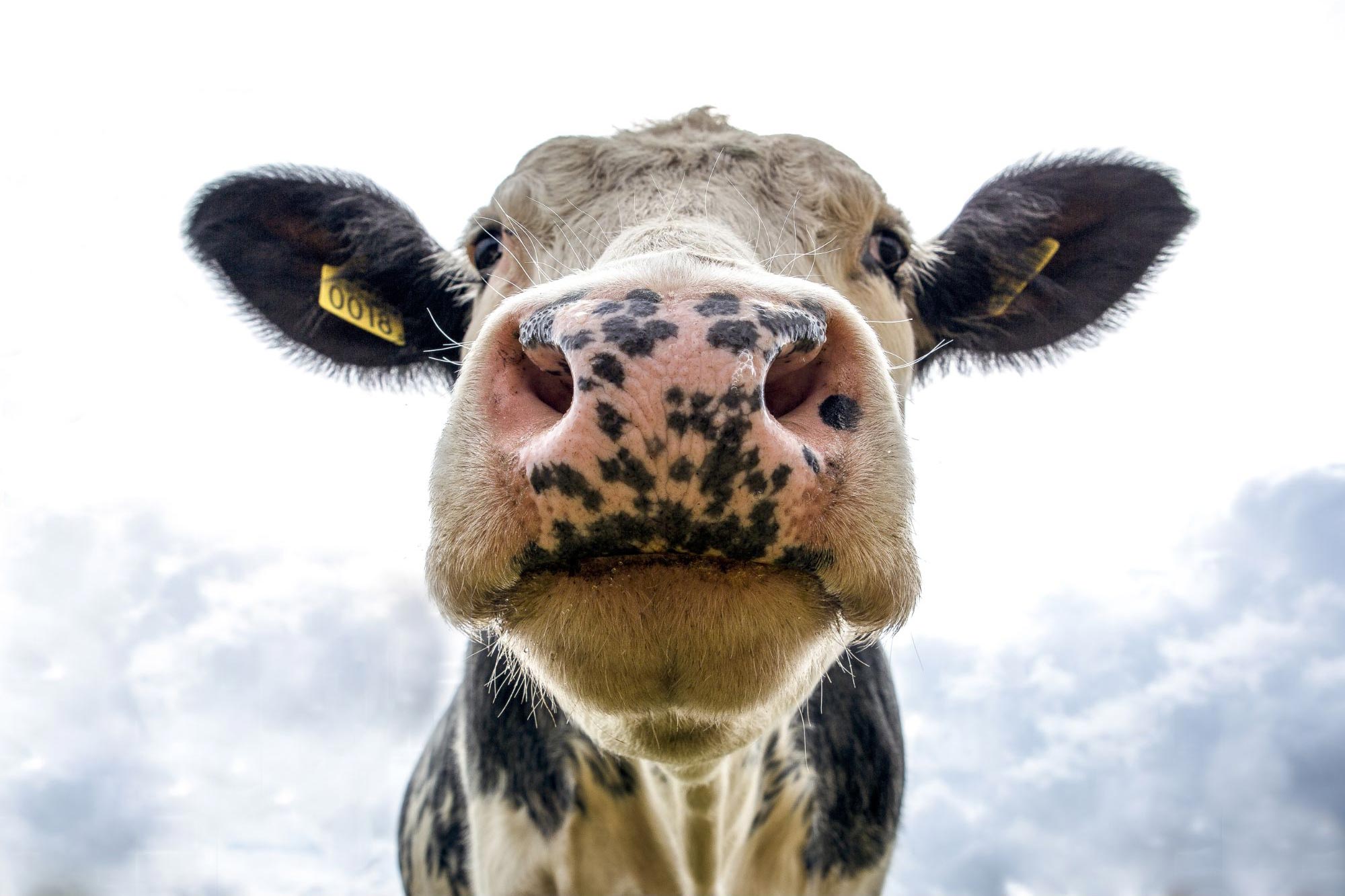
A new flaxseed and pea protein supplement may cut dairy cow methane emissions and boost milk production efficiency.
University of Florida researchers are testing a new type of cattle feed that could help dairy cows release less methane gas from burps and flatulence and use nutrients more efficiently. Because methane traps heat in the atmosphere, reducing these emissions could make dairy farming more environmentally friendly and sustainable.
Researchers, led by Antonio Faciola, looked at a potential dairy cattle supplementary feed made of flaxseed and pea protein. The study was published WHEN in the Journal of Dairy Science.
Methane, a potent greenhouse gas, is naturally emitted by cows during digestion, and cows are significant sources of methane worldwide, especially from their burps. When cows’ stomachs make methane, they lose valuable energy that could otherwise be used to make milk or meat. By feeding them in a way that reduces methane output, researchers might be able to help the cow produce more milk while also chasing climate goals.
“It’s a win-win situation. Every time we reduce methane, we keep that energy in the cow’s body,” said Faciola, associate professor at UF’s Department of Animal Sciences.
Simulated Digestion and Promising Results
University of Alaska research assistant professor and former UF post-doctoral student James Vinyard was critical to the study, he said. Vinyard simulated dairy cattle’s digestion in the lab to see how much methane was produced and to examine possibilities of improving that fermentation by adding a supplemental feed.
The researchers added the flaxseed and pea protein supplement to the dairy cattle’s rumen in a lab and measured how fermentation changed. The supplement, rich in omega-3 fatty acids and proteins, reduced methane production and improved overall digestion, he said.
“This supplement has multiple potential benefits,” Faciola said. “Not only could it reduce methane emissions, but it might also increase energy availability for cows, potentially leading to increased milk production.”
Future Testing and Global Implications
Future studies will include feeding the supplement to dairy cows to see if the lab results match with what happens in the field.
With food security becoming an increasingly important concern, he emphasized the importance of feeding cows more efficiently to meet growing global demands.
“We will need to have cows producing more milk with the same amount of food,” he said. “We have to be more efficient to feed more people.”
Reference: “Effects of a flaxseed and pea matrix on in vitro ruminal fermentation, nutrient degradability, and methane emissions” by J.R. Vinyard, M.L. Johnson, G. Salas-Solis, A. C. Silva Vicente, M. Siregar, E. Sarmikasoglou, C. Hammond, K.S. Alves, S.W. Ma, L. Girardin, B. Kelln, R. Dreger, J.A. Arce-Cordero and A.P. Faciola, 11 April 2025, Journal of Dairy Science.
DOI: 10.3168/jds.2024-25770
The study was funded in part by O&T Farms Ltd., a Canadian farm that produces animal supplements.
Never miss a breakthrough: Join the SciTechDaily newsletter.
Follow us on Google and Google News.
3 Comments
This is a classic case of making a giant termite mound out of a mole hill. Will this diet change the taste or nutritional value of cow’s milk? Will it impact the cost of milk? Might there be as yet unidentified unintended consequences? There usually are.
https://wattsupwiththat.com/2023/03/06/the-misguided-crusade-to-reduce-anthropogenic-methane-emissions/
It was a well known fact in NZ that planting tea bushes in the race, camelia sinensis, reduced flatulence in the shed and made milking simpler. This was published in NZ Farmer and NZ Journal of Ag in the early 1900s. Ignore our wise farming forefathers at your peril.
This article is silly. Cows are a part of the existing ecosystem, not polluters. They’re not pumping new methane into the atmosphere, like the drill companies do. They’re just recycling the methane that’s already in the ecosystem.