

The neutral-atom platform appears promising for scaling up quantum computers.
To solve some of the toughest challenges in physics, chemistry, and other fields, quantum computers will eventually need extremely large numbers of qubits. Unlike classical bits that can only represent a 0 or a 1, qubits can hold both states at the same time through a phenomenon known as superposition. This unusual property of quantum mechanics could allow quantum computers to outperform traditional machines in certain types of calculations. However, qubits are highly delicate, and this fragility makes them prone to errors. To overcome this, researchers design systems with extra qubits that act as backups to detect and correct mistakes. As a result, building reliable quantum computers is expected to require hundreds of thousands of qubits.
In a major step toward this goal, physicists at Caltech have assembled the largest qubit array ever achieved: 6,100 neutral-atom qubits arranged in a grid using laser light. For comparison, earlier versions of similar arrays were limited to just a few hundred qubits.
This achievement comes during a rapidly intensifying global race to expand quantum computing. Competing efforts include platforms based on superconducting circuits, trapped ions, and neutral atoms, the approach used in this new study.
Building the Array with Optical Tweezers
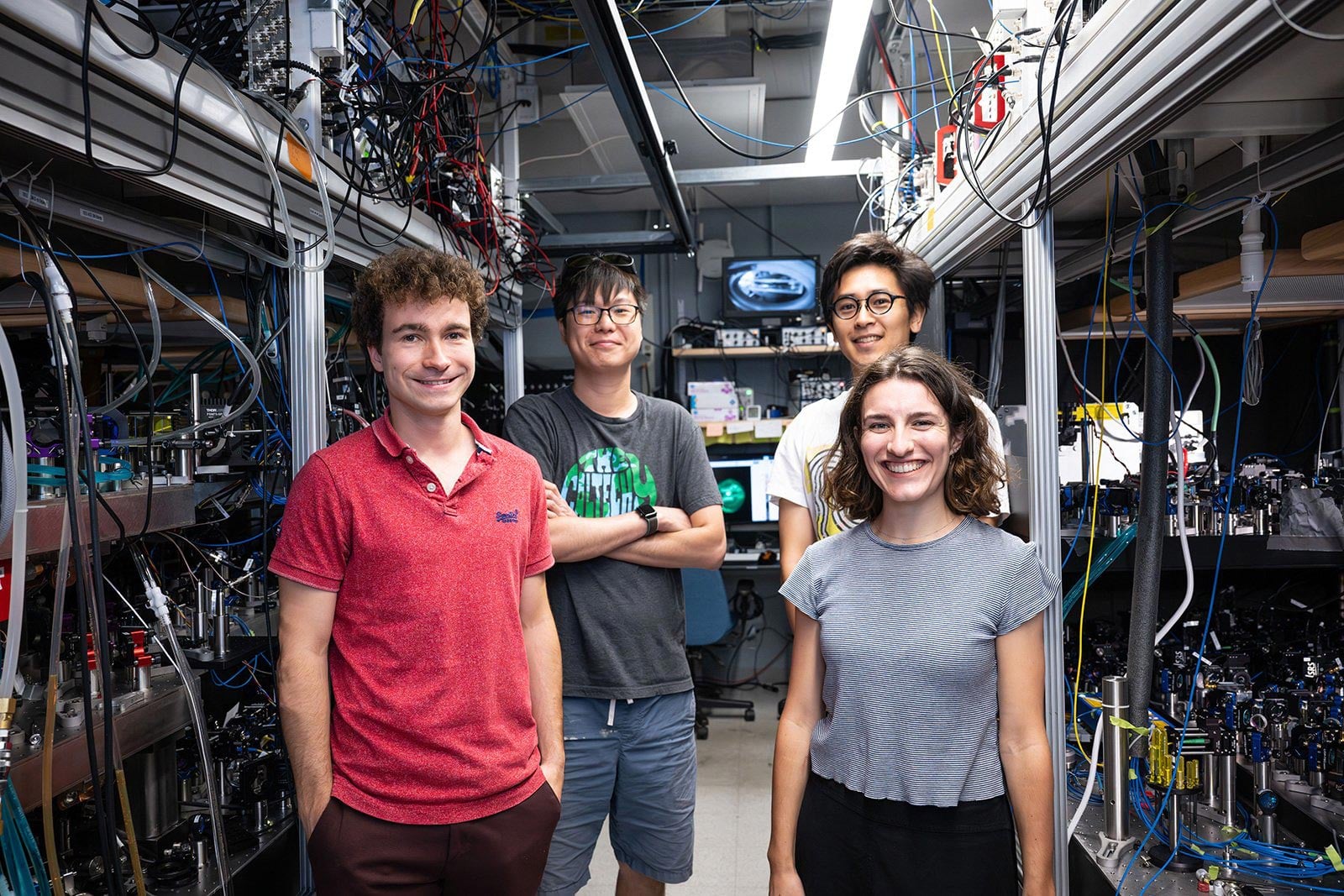
“This is an exciting moment for neutral-atom quantum computing,” says Manuel Endres, professor of physics at Caltech. “We can now see a pathway to large error-corrected quantum computers. The building blocks are in place.” Endres is the principal investigator of the research published in Nature. Three Caltech graduate students led the study: Hannah Manetsch, Gyohei Nomura, and Elie Bataille.
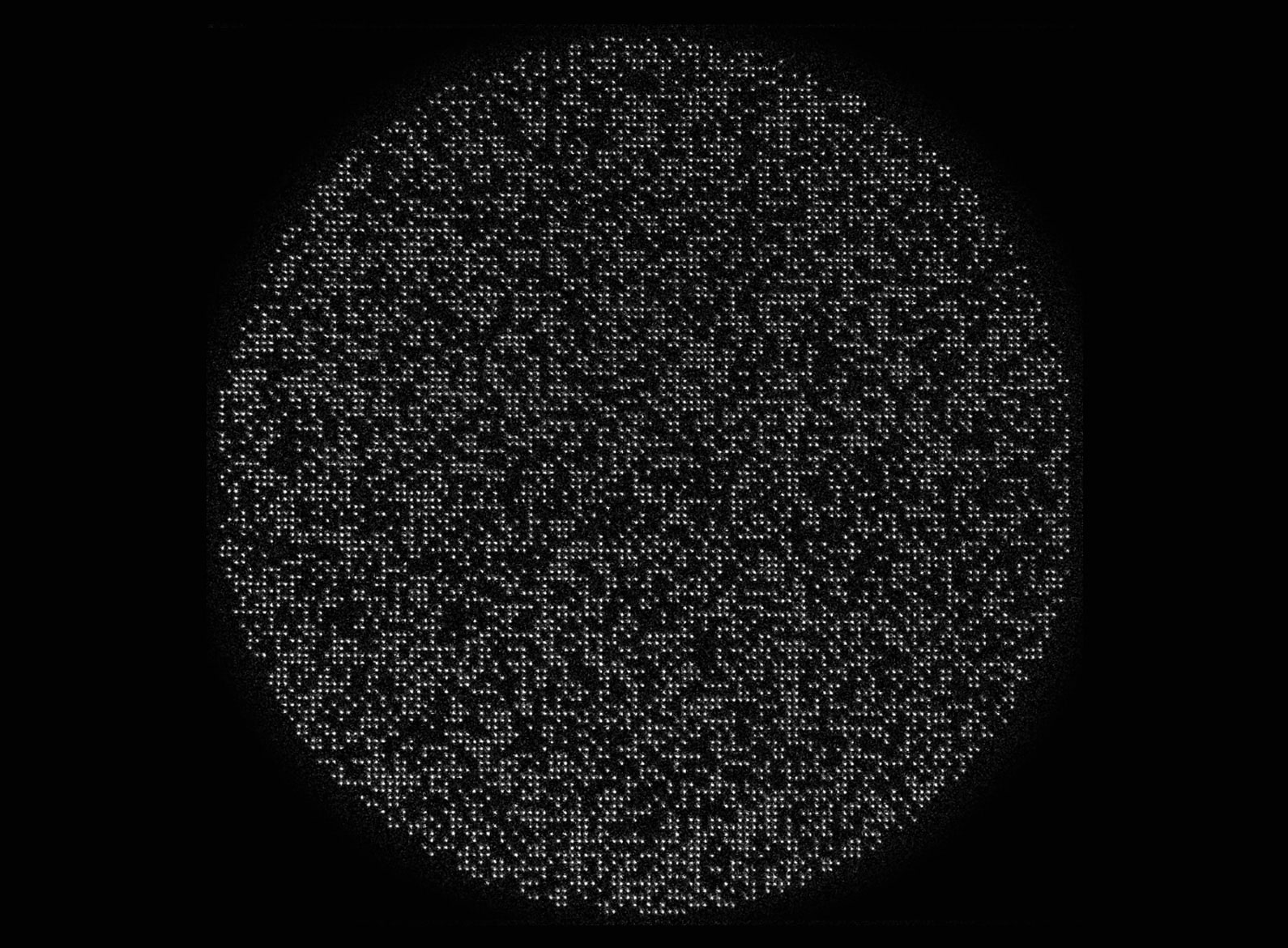
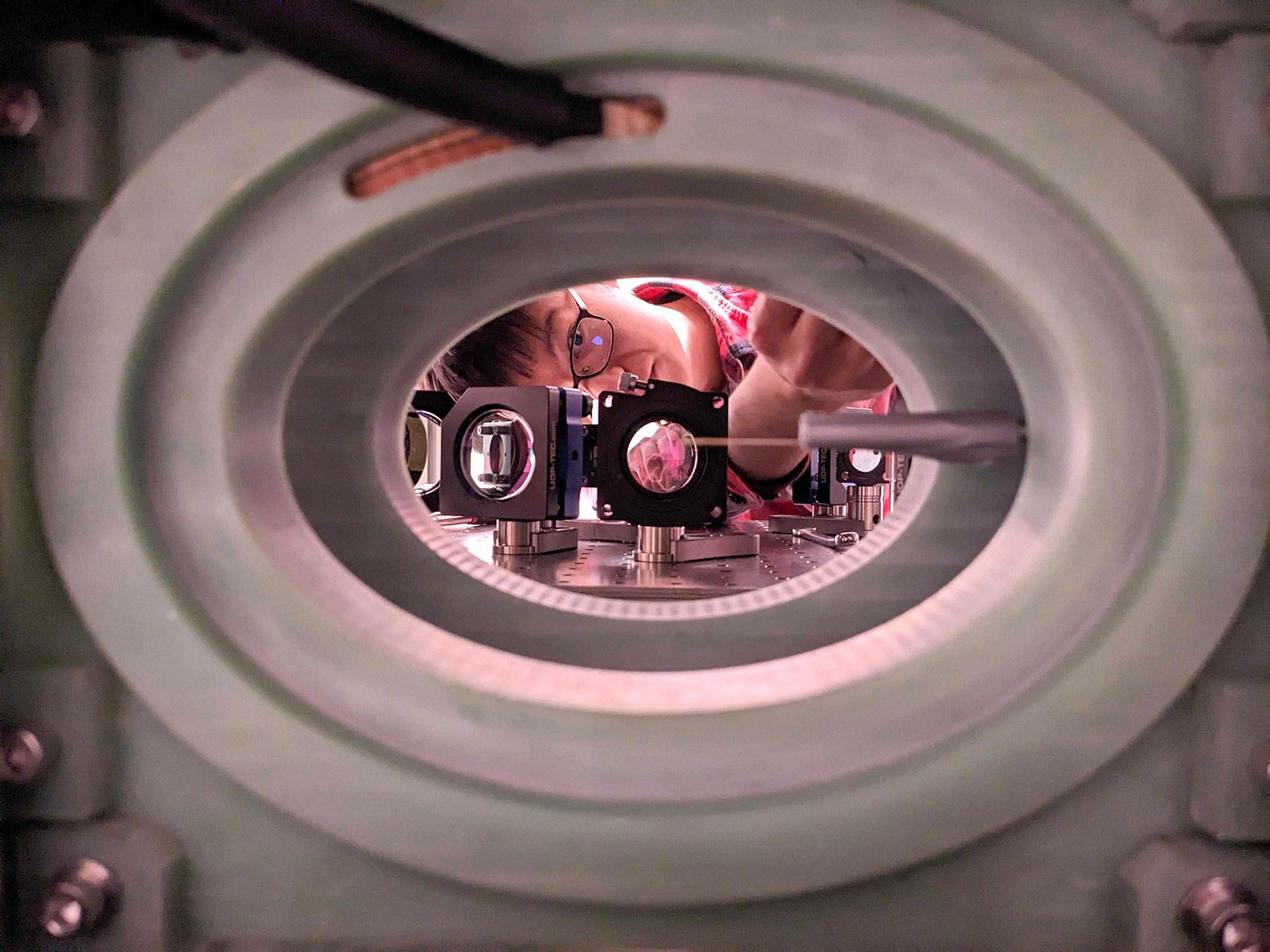
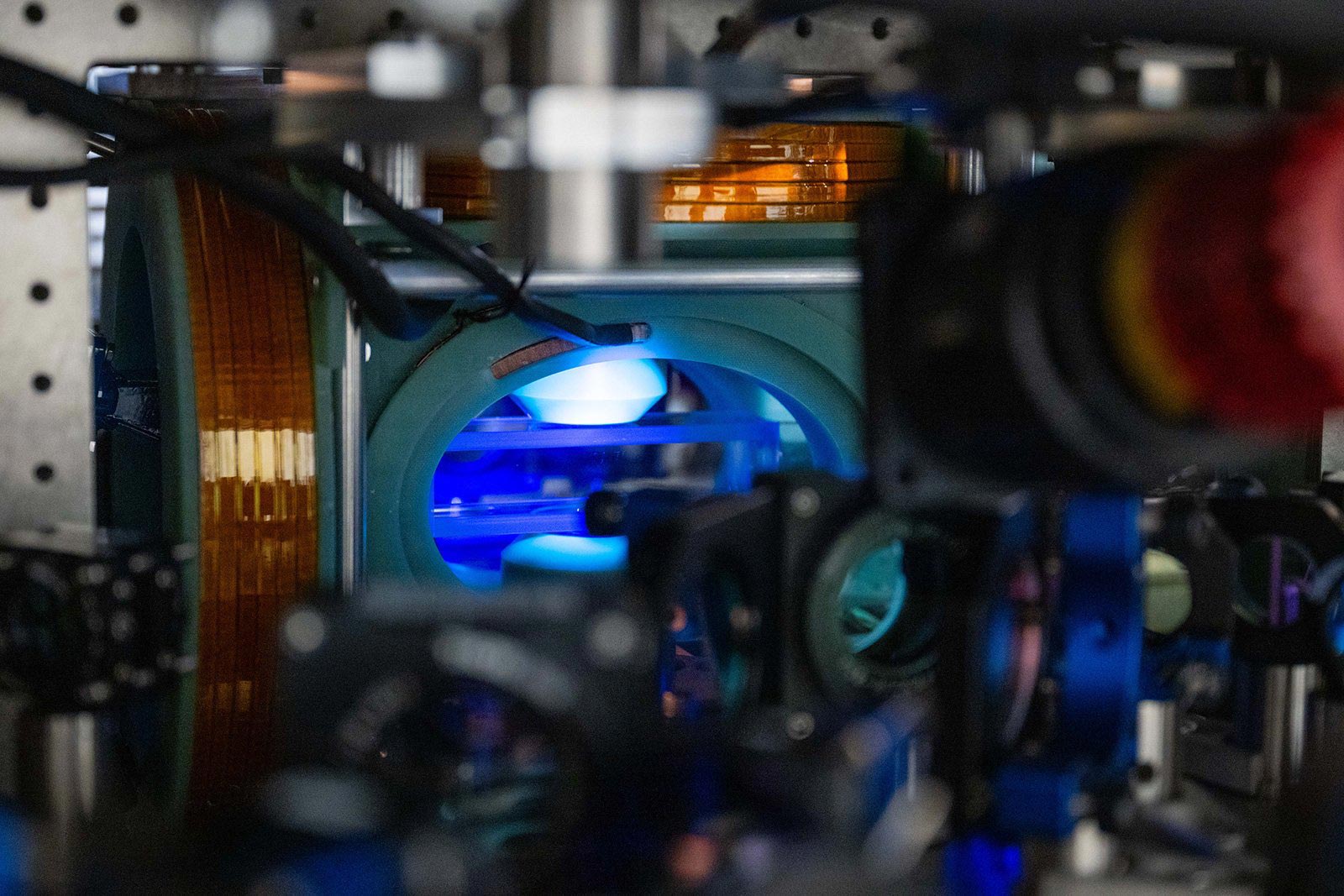
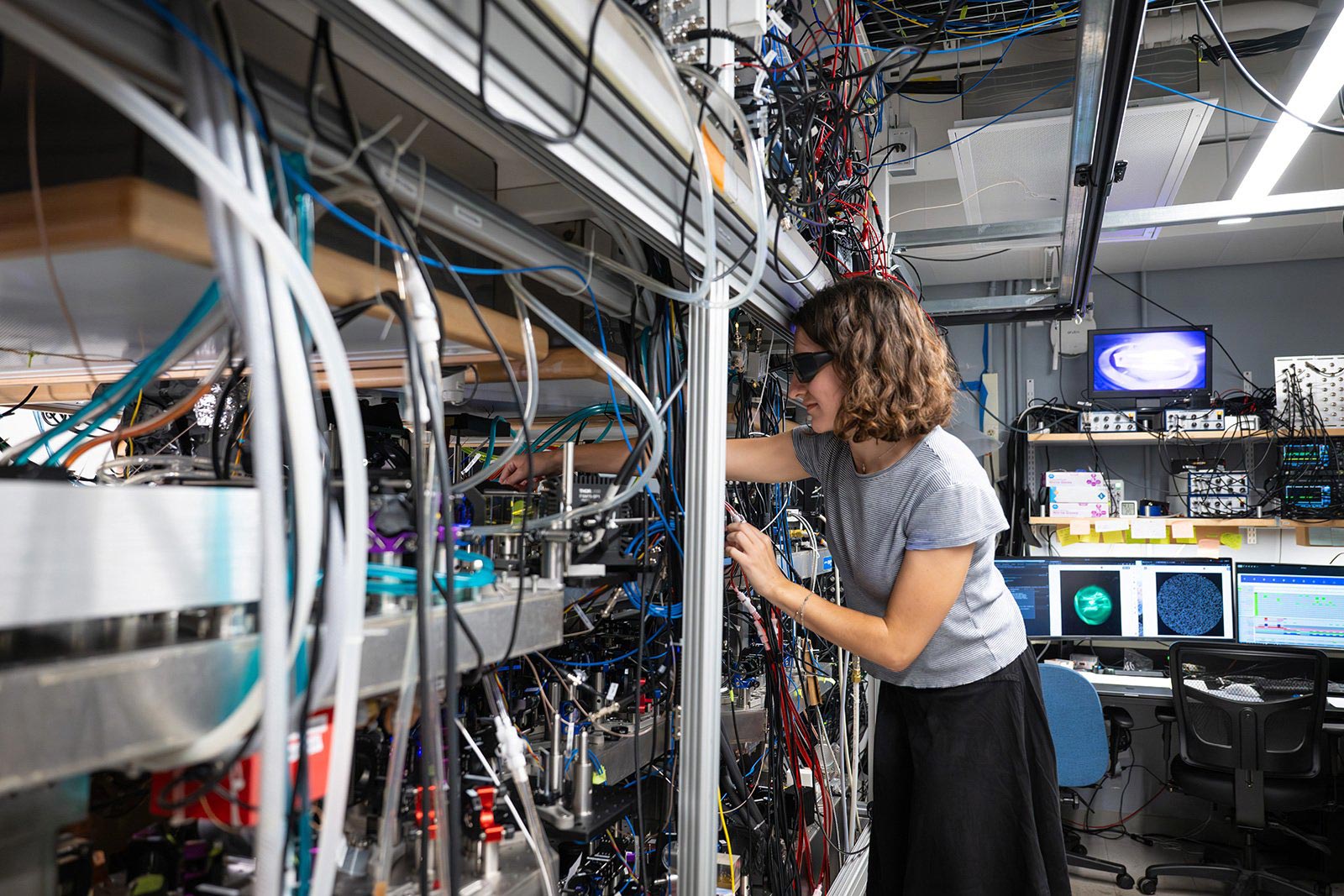
The team used optical tweezers—highly focused laser beams—to trap thousands of individual cesium atoms in a grid. To build the array of atoms, the researchers split a laser beam into 12,000 tweezers, which together held 6,100 atoms in a vacuum chamber. “On the screen, we can actually see each qubit as a pinpoint of light,” Manetsch says. “It’s a striking image of quantum hardware at a large scale.”
A key achievement was showing that this larger scale did not come at the expense of quality. Even with more than 6,000 qubits in a single array, the team kept them in superposition for about 13 seconds—nearly 10 times longer than what was possible in previous similar arrays—while manipulating individual qubits with 99.98 percent accuracy. “Large scale, with more atoms, is often thought to come at the expense of accuracy, but our results show that we can do both,” Nomura says. “Qubits aren’t useful without quality. Now we have quantity and quality.”
Moving Qubits Without Losing Coherence
The team also demonstrated that they could move the atoms hundreds of micrometers across the array while maintaining superposition. The ability to shuttle qubits is a key feature of neutral-atom quantum computers that enables more efficient error correction compared with traditional, hard-wired platforms like superconducting qubits.
Manetsch compares the task of moving the individual atoms while keeping them in a state of superposition to balancing a glass of water while running. “Trying to hold an atom while moving is like trying to not let the glass of water tip over. Trying to also keep the atom in a state of superposition is like being careful to not run so fast that water splashes over,” she says.
Toward Error Correction and Entanglement
The next big milestone for the field is implementing quantum error correction at the scale of thousands of physical qubits, and this work shows that neutral atoms are a strong candidate to get there. “Quantum computers will have to encode information in a way that’s tolerant to errors, so we can actually do calculations of value,” Bataille says. “Unlike in classical computers, qubits can’t simply be copied due to the so-called no-cloning theorem, so error correction has to rely on more subtle strategies.”
Looking ahead, the researchers plan to link the qubits in their array together in a state of entanglement, where particles become correlated and behave as one. Entanglement is a necessary step for quantum computers to move beyond simply storing information in superposition; entanglement will allow them to begin carrying out full quantum computations. It is also what gives quantum computers their ultimate power—the ability to simulate nature itself, where entanglement shapes the behavior of matter at every scale. The goal is clear: to harness entanglement to unlock new scientific discoveries, from revealing new phases of matter to guiding the design of novel materials and modeling the quantum fields that govern space-time.
“It’s exciting that we are creating machines to help us learn about the universe in ways that only quantum mechanics can teach us,” Manetsch says.
Reference: “A tweezer array with 6100 highly coherent atomic qubits” by Hannah J. Manetsch, Gyohei Nomura, Elie Bataille, Xudong Lv, Kon H. Leung and Manuel Endres, 24 September 2025, Nature.
DOI: 10.1038/s41586-025-09641-4
The new study was funded by the Gordon and Betty Moore Foundation, the Weston Havens Foundation, the National Science Foundation via its Graduate Research Fellowship Program and the Institute for Quantum Information and Matter (IQIM) at Caltech, the Army Research Office, the U.S. Department of Energy including its Quantum Systems Accelerator, the Defense Advanced Research Projects Agency, the Air Force Office for Scientific Research, the Heising-Simons Foundation, and the AWS Quantum Postdoctoral Fellowship.
Never miss a breakthrough: Join the SciTechDaily newsletter.
Follow us on Google and Google News.
4 Comments
You are creating machines to help us learn about the universe in ways that only quantum mechanics can teach us.
VERY GOOD!
Ask researchers to think deeply:
1. What is the physical reality of quantum?
2. Is quantum the smallest energy unit in the universe?
3. Is the physical reality of quantum mechanics a cat that is both dead and alive?
4. What is the difference between quantum materials and topological materials?
5. Is topological vortex a point defect? Can it be an energy unit?
6. Can physics experiments be conducted without the need for space to provide a venue?
When we pursue the ultimate truth of all things, the space in which our bodies and all things exist may itself be the final and deepest puzzle we need to explore. This is not only the pursuit of physics, but also the most magnificent exploration of the origin of the universe by human reason.
Based on the Topological Vortex Theory (TVT), space is an incompressible physical entity, and space-time vortices are the products of topological phase transitions at critical points in space. They create all things and shape the world through spin and self-organization. Topological vortices are point defects in spacetime. Point defects not only affect thermodynamic processes, but are also the core of dynamic processes.
In today’s physics, some so-called peer-reviewed journals—including Physical Review Letters, Nature, Science, and others—stubbornly insist on and promote the following:
1. Even though θ and τ particles exhibit differences in experiments, physics can claim they are the same particle. This is science.
2. Even though topological vortices and antivortices have identical structures and opposite rotational directions, physics can define their structures and directions as entirely different. This is science.
3. Even though two sets of cobalt-60 rotate in opposite directions and experiments reveal asymmetry, physics can still define them as mirror images of each other. This is science.
4. Even though vortex structures are ubiquitous—from cosmic accretion disks to particle spins—physics must insist that vortex structures do not exist and require verification. Only the particles that like God, Demonic, or Angelic are the most fundamental structures of the universe. This is science.
5. Even though everything occupies space and maintains its existence in time, physics must still debate and insist on whether space exists and whether time is a figment of the human mind. This is science.
6. Even though space, with its non-stick, incompressible, and isotropic characteristics, provides a solid foundation for the development of physics, physics must still insist that the ideal fluid properties of space do not exist. This is science.
and go on.
Is this the counterintuitive science they widely promote? What are the shames? Contemporary physics and so-called peer-reviewed publications (including Physical Review Letters, Science, Nature, etc.) stubbornly believe that two sets of counter rotating cobalt-60 are two mirror images of each other, constructing a more shocking pseudoscientific theoretical framework in the history of science than the “geocentric model”. This pseudo scientific framework and system have seriously hindered scientific progress and social development.
For nearly a century, physics has been manipulated by this pseudo scientific theoretical system and the interest groups behind it, wasting a lot of manpower, funds, and time. A large amount of pseudo scientific research has been conducted, and countless pseudo scientific papers have been published, causing serious negative impacts on scientific and social progress, as well as humanistic development.
You are creating machines to help us learn about the universe in ways that only quantum mechanics can teach us.
VERY GOOD!
Ask researchers to think deeply:
1. What is the physical reality of quantum?
2. Is quantum the smallest energy unit in the universe?
3. Is the physical reality of quantum mechanics a cat that is both dead and alive?
4. What is the difference between quantum materials and topological materials?
5. Is topological vortex a point defect? Can it be an energy unit?
6. Can physics experiments be conducted without the need for space to provide a venue?
When we pursue the ultimate truth of all things, the space in which our bodies and all things exist may itself be the final and deepest puzzle we need to explore. This is not only the pursuit of physics, but also the most magnificent exploration of the origin of the universe by human reason.
To solve some of the toughest challenges in physics, chemistry, and other fields, quantum computers will eventually need extremely large numbers of qubits. Qubits are highly delicate, and this fragility makes them prone to errors.
why?
How soon SINGULARITY…