
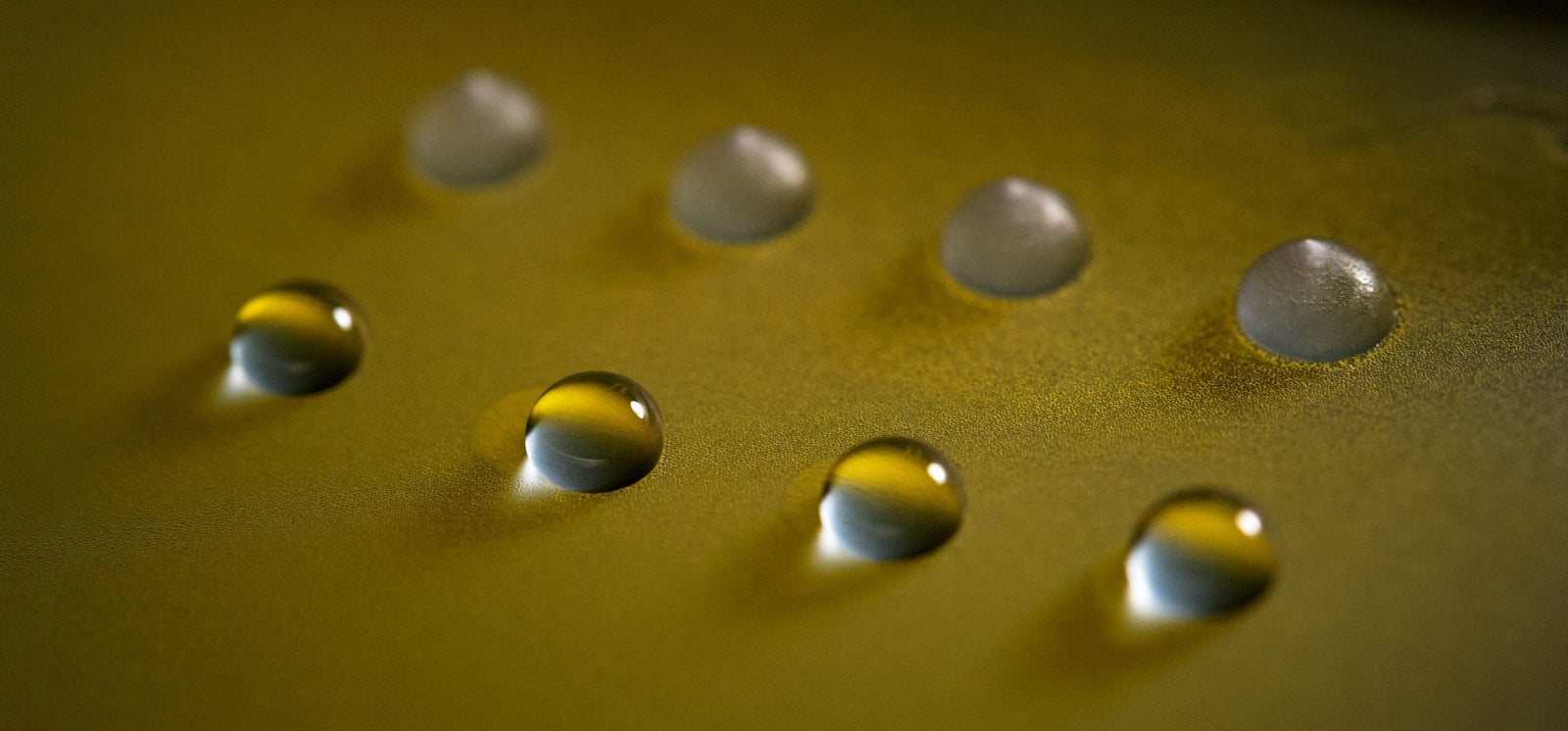
Fungi may hold a little-known key to ice formation in clouds.
Can fungi affect the weather? It may sound unlikely, but new research suggests they just might.
An international team of researchers, including Virginia Tech scientists Xiaofeng Wang and Boris A. Vinatzer, has identified fungal proteins that can trigger ice formation at relatively warm subzero temperatures. Their findings were published in Science Advances.
This discovery could open the door to new ways of influencing the weather.
Cloud seeding works by releasing particles known as ice nucleators into clouds. These particles cause water droplets to freeze into ice crystals. As more water attaches, the crystals grow larger and heavier. Eventually, they fall, melt as they pass through warmer air, and reach the ground as rain.
Silver iodide is the most commonly used ice-nucleating material, but it is highly toxic. The researchers suggest that fungal proteins could provide a safer alternative.
“If we learn how to cheaply produce enough of this fungal protein, then we could put that into clouds and make cloud seeding much safer,” said Vinatzer, professor in the School of Plant and Environmental Sciences.
An unusual evolutionary origin
The team also found evidence that the gene responsible for this ice nucleation protein likely came from bacteria. According to their analysis, a fungal ancestor acquired the gene through horizontal gene transfer at least hundreds of thousands, and possibly millions, of years ago.
“It is known that fungi can acquire genes from bacteria, but it’s not something that is common,” said Vinatzer, an affiliate with the Translational Plant Sciences Center. “So I never expected that this fungal gene had a bacterial origin.”

Scientists have known since the early 1990s that fungi can trigger ice formation. However, only recent advances in DNA sequencing and computational analysis have allowed researchers to examine the genomes of fungi in the Mortierellaceae family and identify the specific gene responsible.
Although the exact benefit of this gene for fungi remains unclear, researchers have found that it has been refined over time, making it more effective.
That improvement may also increase its value for practical uses.
Why fungal proteins may be especially useful
Fungal ice nucleating proteins differ from bacterial ones because they are cell-free and water-soluble. These properties make them especially promising for applications in freezing technologies and weather modification.
In frozen food production, for example, fungal proteins could offer a safer option. The fungus naturally releases the ice nucleating molecule, while bacterial approaches require the use of entire cells.
“That’s a big advantage in food production because you have just this one well-defined protein and you can get rid of everything else,” said Vinatzer, who is also affiliated with the Fralin Life Sciences Center. “There is the possibility to develop a safe, effective additive that helps in the preparation of frozen food.”
Fungal ice nucleation may also improve cryopreservation methods for biological materials such as tissues, sperm, eggs, and embryos.
“Adding a fungal ice nucleator, which is a relatively small molecule, makes the water around the cell freeze much earlier before it gets very cold, to protect the delicate cell inside,” Vinatzer said. “You couldn’t do that with the bacteria because you would have to add entire bacterial cells.”
Implications for climate science
Ice formation in clouds also plays a key role in climate modeling. These models estimate how much radiation clouds reflect back into space and how much reaches Earth. The presence of ice allows more radiation to pass through the clouds to the surface.
“Now that we know this fungal molecule, it will become easier to find out how much of these kinds of molecules are in clouds,” Vinatzer said. “And in the long run, this research could contribute to developing better climate models.”
Reference: “A previously unrecognized class of fungal ice-nucleating proteins with bacterial ancestry” by Rosemary J. Eufemio, Mariah Rojas, Kaden Shaw, Ingrid de Almeida Ribeiro, Hao-Bo Guo, Galit Renzer, Kassaye Belay, Haijie Liu, Parkesh Suseendran, Xiaofeng Wang, Janine Fröhlich-Nowoisky, Ulrich Pöschl, Mischa Bonn, Rajiv J. Berry, Valeria Molinero, Boris A. Vinatzer and Konrad Meister, 11 March 2026, Science Advances.
DOI: 10.1126/sciadv.aed9652
This study was funded by the National Science Foundation and the Department of Defense, and supported by the Air Force Office of Scientific Research.
Never miss a breakthrough: Join the SciTechDaily newsletter.
Follow us on Google and Google News.
2 Comments
Mites, {itchmites}, are also a play, in this, anything & everything, I believe, carries bacteria…Dr’s here in USA, are lack of knowledge, been carrying this for, 9 years, 3 months, ungodly pictures, I have, of phlegm..I cough up, I, call them this, Demonic, how can I get rid of this? HELP, PLEASE., MY HOME, IS TERRIBLE..Lack of knowing, in beginning, gas ate my body up inside…Thank You, O! Fungus running, you can feel it, run across my feet, nose, & face..Horrible
I suspect that the role of fungi and bacteria play an under-appreciated role in weather. Inversely, the importance of fugitive, man-made antibiotics may contribute to droughts in modern times.
When the science community is certain that the main ‘control knob’ for climate change has been identified, they stop looking for explanations for anomalous events.
A technician (regardless of their level of education) may complain that an experiment didn’t go as expected. On the other hand, a scientist (regardless of their level of education) is more likely to say something along the lines of, “That’s strange! I wonder why that happened?” An important distinction between a technician and a real scientist is the level of curiosity.