
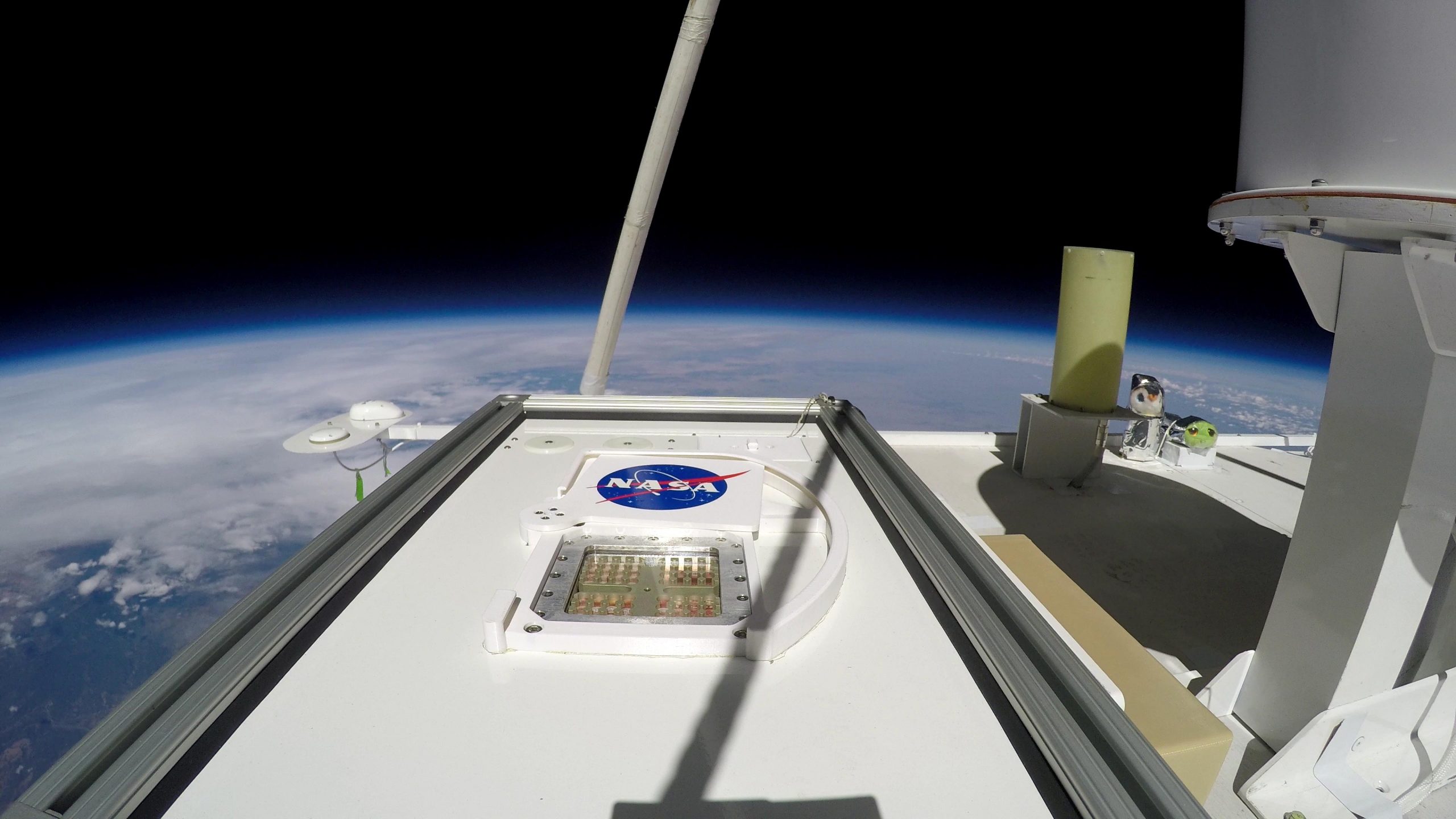
Study shows sending microbes to Earth’s stratosphere, to test their endurance to Martian conditions, can reveal their potential use and threats to space travel.
Some microbes on Earth could temporarily survive on the surface of Mars, finds a new study by NASA and German Aerospace Center scientists. The researchers tested the endurance of microorganisms to Martian conditions by launching them into the Earth’s stratosphere, as it closely represents key conditions on the Red Planet. Published in Frontiers in Microbiology, this work paves the way for understanding not only the threat of microbes to space missions, but also the opportunities for resource independence from Earth.
“We successfully tested a new way of exposing bacteria and fungi to Mars-like conditions by using a scientific balloon to fly our experimental equipment up to Earth’s stratosphere,” reports Marta Filipa Cortesão, joint first author of this study from the German Aerospace Center, Cologne, Germany. “Some microbes, in particular spores from the black mold fungus, were able to survive the trip, even when exposed to very high UV radiation.”
Microbial Hitchhikers
Understanding the endurance of microbes to space travel is vital for the success of future missions. When searching for extra-terrestrial life, we need to be sure that anything we discover has not just traveled with us from Earth.
“With crewed long-term missions to Mars, we need to know how human-associated microorganisms would survive on the Red Planet, as some may pose a health risk to astronauts,” says joint first author Katharina Siems, also based at the German Aerospace Center. “In addition, some microbes could be invaluable for space exploration. They could help us produce food and material supplies independently from Earth, which will be crucial when far away from home.”
Mars in a Box
Many key characteristics of the environment at the Martian surface cannot be found or easily replicated at the surface of our planet; however, above the ozone layer in Earth’s middle stratosphere, the conditions are remarkably similar.
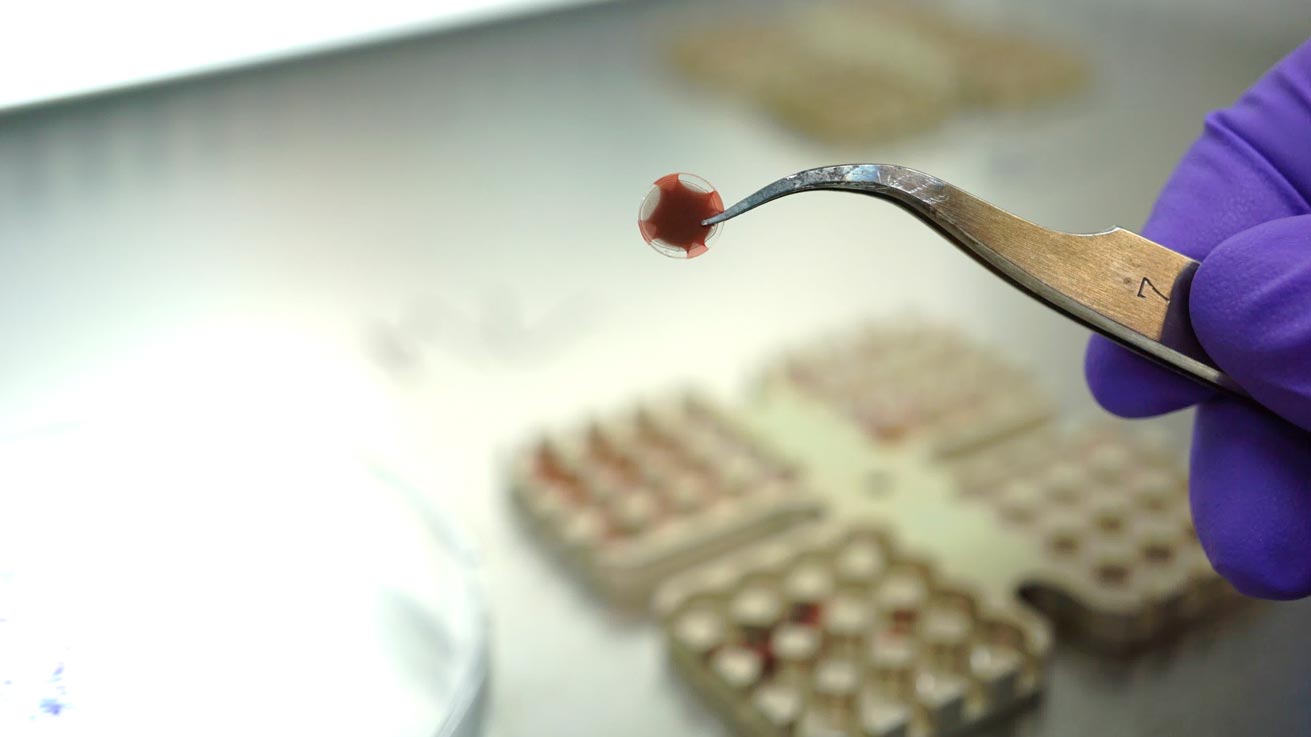
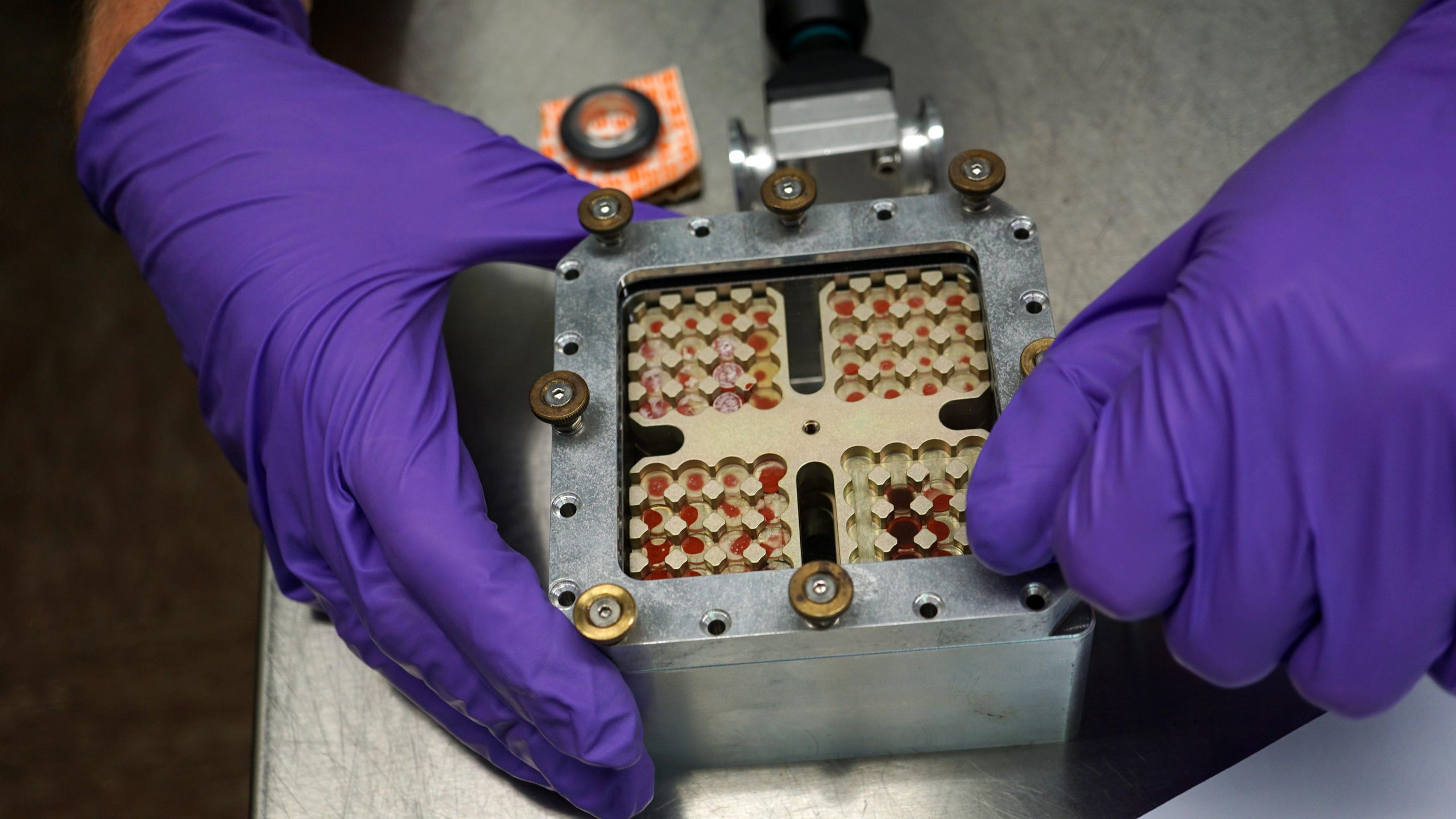
“We launched the microbes into the stratosphere inside the MARSBOx (Microbes in Atmosphere for Radiation, Survival and Biological Outcomes experiment) payload, which was kept at Martian pressure and filled with artificial Martian atmosphere throughout the mission,” explains Cortesão. “The box carried two sample layers, with the bottom layer shielded from radiation. This allowed us to separate the effects of radiation from the other tested conditions: desiccation, atmosphere, and temperature fluctuation during the flight. The top layer samples were exposed to more than a thousand times more UV radiation than levels that can cause sunburn on our skin.”
“While not all the microbes survived the trip, one previously detected on the International Space Station, the black mold Aspergillus niger, could be revived after it returned home,” explains Siems, who highlights the importance of this ongoing research.
“Microorganisms are closely connected to us; our body, our food, our environment, so it is impossible to rule them out of space travel. Using good analogies for the Martian environment, such as the MARSBOx balloon mission to the stratosphere, is a really important way to help us explore all the implications of space travel on microbial life and how we can drive this knowledge towards amazing space discoveries.”
Reference: “MARSBOx: Fungal and Bacterial Endurance From a Balloon-Flown Analog Mission in the Stratosphere” by Marta Cortesão, Katharina Siems, Stella Koch, Kristina Beblo-Vranesevic, Elke Rabbow, Thomas Berger, Michael Lane, Leandro James, Prital Johnson, Samantha M. Waters, Sonali D. Verma, David J. Smith and Ralf Moeller, 22 February 2021, Frontiers in Microbiology.
DOI: 10.3389/fmicb.2021.601713
Never miss a breakthrough: Join the SciTechDaily newsletter.
Follow us on Google and Google News.
3 Comments
Life finds a way.
I wonder how long Elon Musk and his fantastic colony would survive on Mars? Never once saw any energy calculations to show how all the things we take for granted on earth could be reproduced. When you hear about the ice caps containing “rocket fuel” you know the speaker is off their rocker.
The room sized Nasa nuclear reactor they have shown in Mars needs energy articles has about the same output of 10KWe as the primary energy use of every American. Since the earth actually covers most all of our true energy inputs (plus air,water, dirt,etc) with fossil fuels giving us a relatively comfortable life, the Mars citizen is going to need far more energy than the earth citizen since no easy water, energy, air, soil, protections exists there.
So Nasa will have to send maybe 10-100 nuclear reactors per person to make an earth like paradise colony where we take all these things for granted before adding in our recent 200 yr step up from drudgery. Basically they will be on a very long tether of constant resupplies costing the earth citizenry the entire world economy.
We didn’t even make it on earth in that infamous Arizona Earth 2 bubble. While a failure at the time, it demostrated mankinds hubris in thinking that Mars would be so easy to terraform.
I look forward to seeing Musk’s excellent adventure to Mars, a one way trip to bad reality.
I would build up on mars if my family was to benefit