
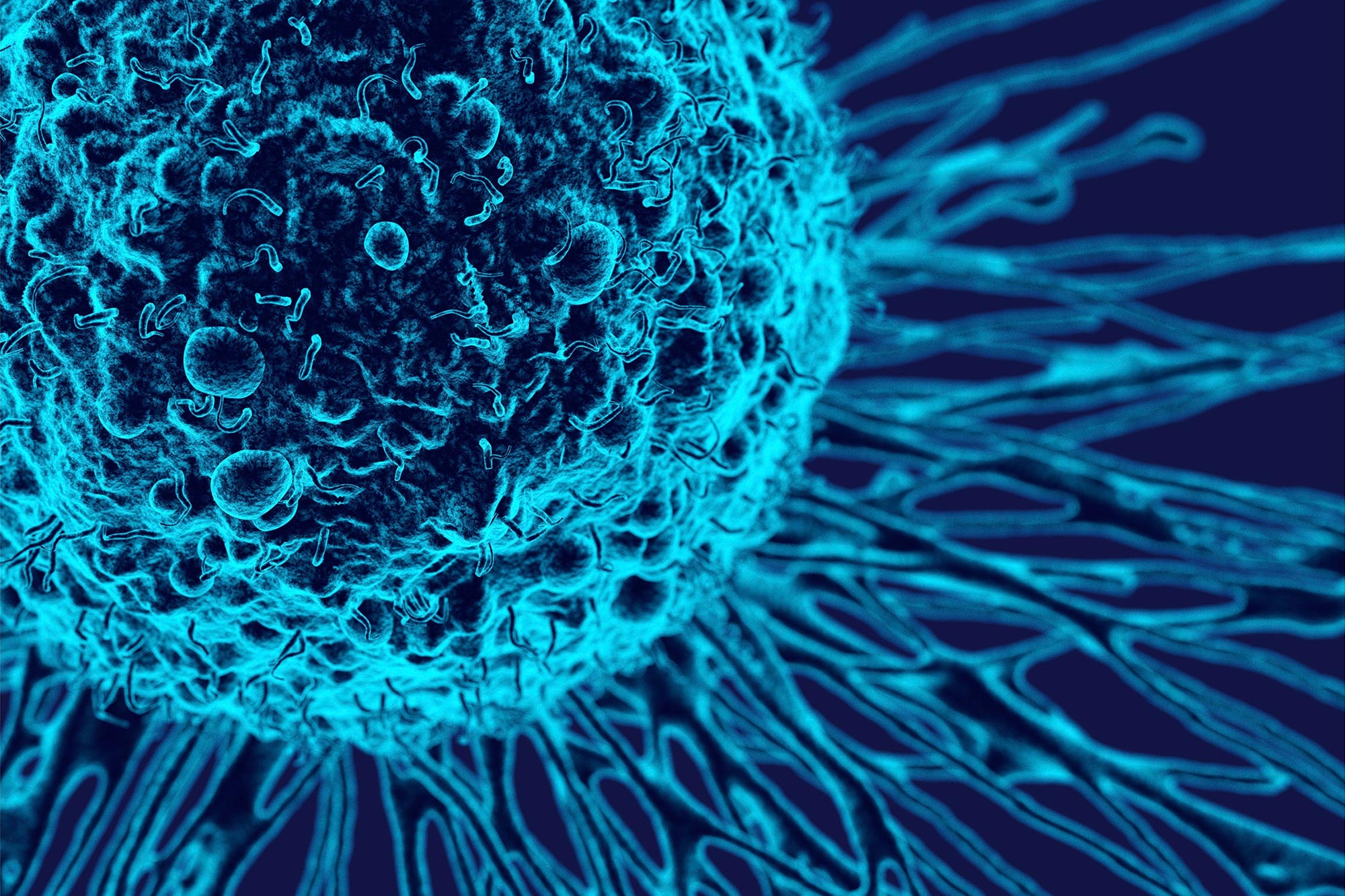
Researchers at NUS Medicine have engineered bacteria to deliver chemotherapy in a targeted manner.
Traditional chemotherapy frequently presents substantial difficulties, such as harsh side effects, harm to healthy cells, and restricted effectiveness.
Researchers at the Yong Loo Lin School of Medicine, National University of Singapore (NUS Medicine), have pioneered a groundbreaking cancer treatment method. This new technique offers a more precise, potent, and less harmful alternative to conventional chemotherapy. It not only enhances the efficacy of the treatment but also substantially lowers the dosage of drugs needed for cancer therapy.
Led by Associate Professor Matthew Chang, researchers at the NUS Synthetic Biology for Clinical and Technological Innovation (SynCTI) and the Synthetic Biology Translational Programme (Syn Bio TRP) at NUS Medicine identified a new method of drug delivery that offers hope for the development of a new clinical treatment for cancer patients. The findings, published in Nature Communications, showcase a novel method for delivering chemotherapy drugs directly to tumor sites by utilizing the natural interactions between bacteria and cancer cells.
Prodrug Strategy and Bacterial Innovation
Prodrugs are inactive molecules that transform into active drugs within the body, particularly in tumor environments, by leveraging unique tumor conditions, such as low oxygen or high acidity, to activate the drug precisely at the cancer site, minimizing damage to healthy tissues. However, current prodrug strategies exhibit limited target specificity and frequently depend on macromolecular carriers, which complicates both drug distribution and clearance.
To overcome these limitations, NUS Medicine researchers developed a prodrug delivery method that utilizes a commensal Lactobacillus strain that binds specifically to cancer cells via a surface molecule called heparan sulfate. These engineered bacteria carry a prodrug that converts to the chemotherapy drug SN-38 at the tumor site. In preclinical models of nasopharyngeal cancer, the engineered bacteria localized specifically in the tumor and released the chemotherapy drug directly at the cancer site, reducing tumor growth by 67% and increasing the effectiveness of the chemotherapy drug by 54%.
Potential for Wider Cancer Treatment Applications
One of the most promising aspects of this research is the potential broader applications across various types of cancer therapy, as the Lactobacillus strain identified by the researchers binds specifically to cancer cells. Lead Researcher Dr Shen Haosheng, Research Fellow at SynCTI said: “By harnessing the affinity between bacteria and cancer cells, we aim to revolutionise chemotherapy delivery. We are evaluating the binding affinity of several microbial strains to multiple cancer cell lines with the aim of developing a versatile delivery system using microbial strains to target chemotherapy drugs to various mucosal cancers, such as colorectal, bladder, stomach, oral, lung, and nasal cancer.”
“Cancer treatment often takes a tremendously heavy toll on patients. Our research represents a significant step toward developing a more targeted and less toxic approach to fighting cancer. We hope this can pave the way for therapies that are both mild and effective,” added A/Prof Chang, Dean’s Chair in Medicine and Director of SynCTI and NUS Medicine Syn Bio TRP.
Reference: “Prodrug-conjugated tumor-seeking commensals for targeted cancer therapy” by Haosheng Shen, Changyu Zhang, Shengjie Li, Yuanmei Liang, Li Ting Lee, Nikhil Aggarwal, Kwok Soon Wun, Jing Liu, Saravanan Prabhu Nadarajan, Cheng Weng, Hua Ling, Joshua K. Tay, De Yun Wang, Shao Q. Yao, In Young Hwang, Yung Seng Lee and Matthew Wook Chang, 21 May 2024, Nature Communications.
DOI: 10.1038/s41467-024-48661-y
Never miss a breakthrough: Join the SciTechDaily newsletter.
Follow us on Google and Google News.