
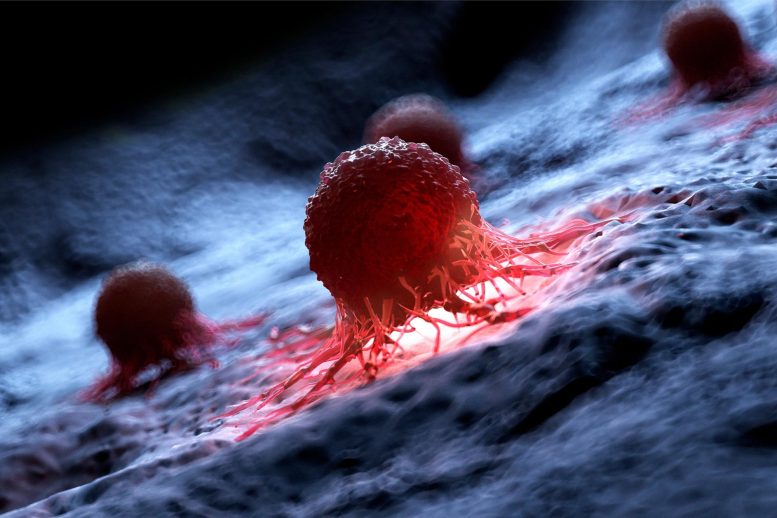
Scientists propose a strategy for early intervention to enhance treatment outcomes.
Hypomethylating agents (HMA) are currently used as a first-line treatment for individuals with myelodysplastic syndrome (MDS), a group of conditions where there is an inadequate generation of healthy mature blood cells in the bone marrow. However, the exact mechanism through which HMAs work is still unknown. Although this has not yet been completely proven, one possible concern is that they could activate a sleeping oncogene.
In a recent study, researchers from the National University of Singapore’s (NUS) Cancer Science Institute of Singapore (CSI Singapore) in close cooperation with Boston’s Brigham and Women’s Hospital (BWH) and Harvard Medical School (HMS) have shown that HMAs can and do activate the oncofetal protein SALL4.
Myelodysplastic syndromes are a group of cancers in which immature blood cells in the bone marrow do not develop properly or become healthy blood cells.
The research was published in the academic journal New England Journal of Medicine and was also carried out in partnership with the University of Tor Vergata in Rome, Italy, and the Institute of Hematology and Blood Diseases Hospital in Tianjin, China.
Turning On the Gene That Causes Cancer
SALL4 is a known oncogene, and the expression of SALL4 has been found to contribute to the development of MDS and leukemia. A study conducted by another research group in 2016 demonstrated that SALL4 activation in a liver cancer cell line was associated with hypomethylation, and Professor Daniel Tenen from CSI Singapore and his team demonstrated in 2021 that hepatitis B virus induced SALL4 demethylation in liver cancer through an RNA mediated mechanism. To examine possible upregulation of oncogenes in patients being treated with hypomethylating agents, Professor Tenen’s team collaborated with the other groups to study the association between HMA utilized and SALL4 activation, as well as the implications on survival outcomes.
A hypomethylating agent is a drug that inhibits DNA methylation, which is the modification of DNA nucleotides by addition of a methyl group. Currently two members of the class, azacitidine and decitabine, are FDA-approved for use in myelodysplastic syndrome in the United States.
The research team analyzed the bone marrow samples of 68 patients with MDS, taken before and after their HMA treatment. The scientists found that HMA therapy could result in the activation of the SALL4 oncogene, leading to poor survival outcomes for patients, even those in complete disease remission.
“Our findings from this pioneering study show that treatment using hypomethylating agents can activate and upregulate oncogenes, such as SALL4. This suggests the importance of monitoring SALL4 expression levels in patients receiving HMA therapy. While upregulation of SALL4 may likely influence the disease progression and be associated with a poorer diagnosis, it may also provide an opportunity to identify patients for early intervention with a drug targeting SALL4 pathways, thereby improving treatment and patient outcomes,” said Professor Tenen.
Early Intervention for Better Results
Interestingly, these findings by Professor Tenen’s group, working with the BWH and HMS teams, further support another study of theirs in 2021, in which they demonstrated that cancer cells with reactivated SALL4 by hypomethylation were efficiently treated with a drug designed to inhibit a SALL4 downstream pathway. These newly established principles may help alter the treatment paradigm for other cancers and diseases where HMAs are being used.
Moving forward, the team intends to carry out larger prospective studies to validate these findings and develop low-cost but accurate biomarker kits to monitor SALL4 expression. Through collaborative research across laboratories, the team aims to develop more effective and specific drugs that target SALL4 directly.
Reference: “Demethylation and Up-Regulation of an Oncogene after Hypomethylating Therapy” by Yao-Chung Liu, M.D; Junsu Kwon, Ph.D; Emiliano Fabiani, Ph.D; Zhijian Xiao, M.D; Yanjing V. Liu, Ph.D; Matilde Y. Follo, Ph.D; Jinqin Liu, M.D; Huijun Huang, M.D; Chong Gao, M.D; Jun Liu, M.D; Giulia Falconi, Ph.D; Lia Valentini, M.S; Carmelo Gurnari, M.D; Carlo Finelli, M.D; Lucio Cocco, M.D; Jin-Hwang Liu, Ph.D; Adrianna I. Jones, B.S; Junyu Yang, Ph.D; Henry Yang, Ph.D; Julie A.I. Thoms, Ph.D; Ashwin Unnikrishnan, Ph.D; John E. Pimanda, M.D; Rongqing Pan, Ph.D; Mahmoud A. Bassal, Ph.D; Maria T. Voso, M.D; Daniel G. Tenen, M.D. and Li Chai, M.D., 26 May 2022, New England Journal of Medicine.
DOI: 10.1056/NEJMoa2119771
Never miss a breakthrough: Join the SciTechDaily newsletter.
Follow us on Google and Google News.
3 Comments
Technoblade we are coming closer
Technoblade never dies!!!! Long live dave
Catch up. This is old news. The US gov/NIH wrote an article on this in 2017 https://www.ncbi.nlm.nih.gov/pmc/articles/PMC5411681/