
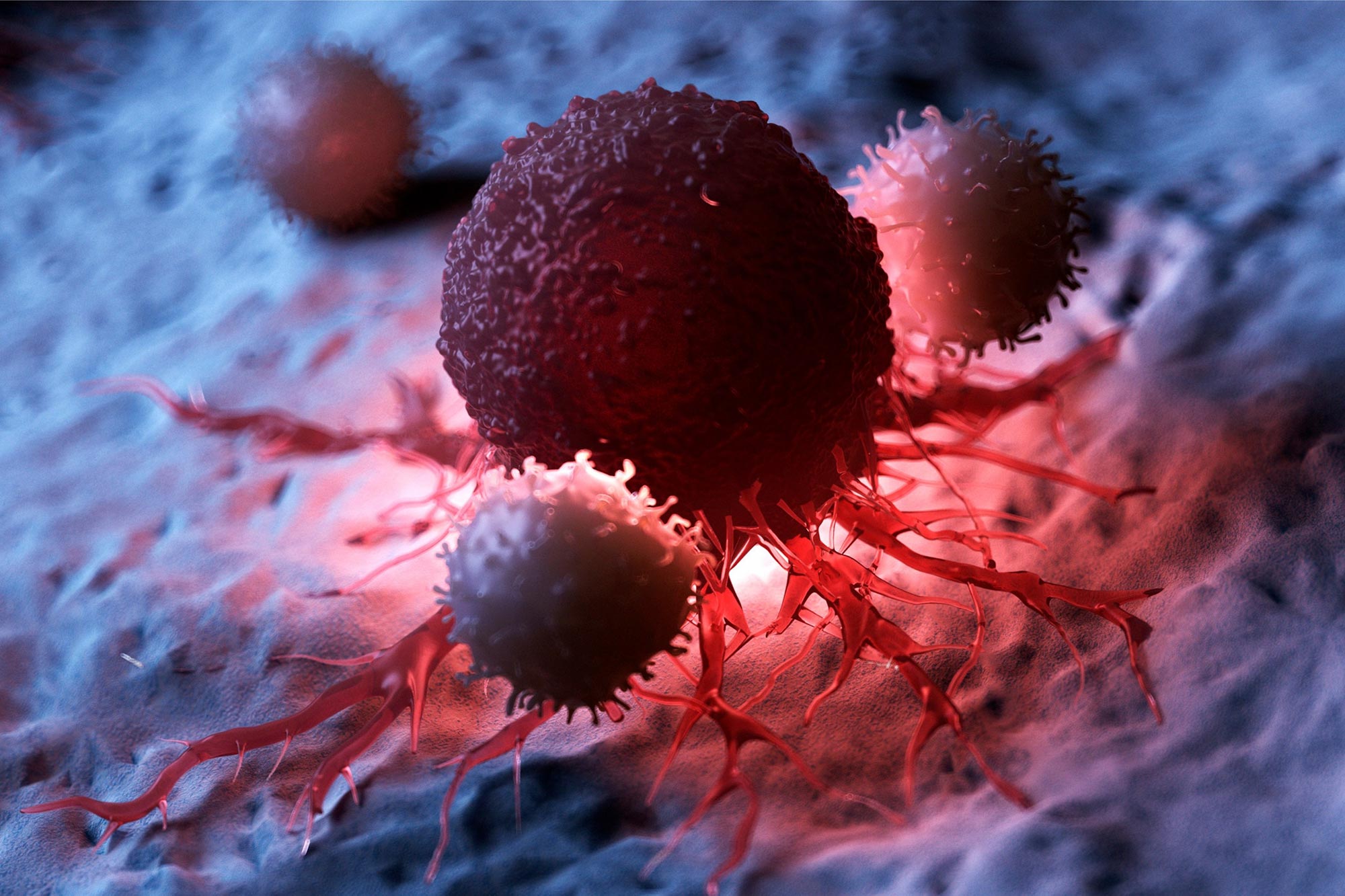
Researchers from the University of Houston identified CD8-fit T cells with high motility and serial killing abilities, potentially enhancing T-cell cancer therapies. The study used the TIMING approach and RNA sequencing, revealing molecular signatures that predict positive patient outcomes.
A group of cancer researchers from the University of Houston has identified a new type of T cells, which could enhance the results for patients undergoing T-cell therapies.
T cell-based immunotherapy holds immense potential in combating and often eradicating cancer. This approach activates and engineers a patient’s immune system, specifically their T cells, to identify, attack, and destroy cancer cells. As a result, the body’s own T cells function as living drugs.
While T-cell immunotherapy has revolutionized cancer treatment, there is still much to learn. Unfortunately, not all patients respond to these therapies, so a better understanding of the properties of engineered T cells is necessary to improve clinical responses.
One such study, supported by a grant from the National Institutes of Health, was reported in Nature Cancer on May 15 by the laboratory of Navin Varadarajan, M.D. Anderson Professor in the William A. Brookshire Department of Chemical and Biomolecular Engineering. The study uses the patented TIMING (Timelapse Imaging Microscopy in Nanowell Grids) approach which applies visual AI to evaluate cell behavior, movement, and ability to kill.

Discovery of CD8-Fit T Cells
“Our results showed that a subset of T cells, labeled as CD8-fit T cells, are capable of high motility and serial killing, found uniquely in patients with clinical response,” reports first author and recent UH graduate Ali Rezvan in Nature Cancer. In addition to the UH team, collaborators include Sattva Neelapu and Harjeet Singh, The University of Texas MD Anderson Cancer Center, Houston; Mike Mattie, Kite Pharma; Nabil Ahmed, Texas Children’s Hospital, Baylor College of Medicine, Houston; and Mohsen Fathi, CellChorus.
To discover the CD8-fit cells, the team used TIMING to track interactions between individual T cells and tumor cells across thousands of cells and integrated the results with single-cell RNA sequencing data.
“Chimeric antigen receptors (CAR) T cells used for the treatment of B cell malignancies can identify T-cell subsets with superior clinical activity. Using infusion products of patients with large B cell lymphoma, we integrated functional profiling using TIMING with subcellular profiling and scRNA-seq to identify a signature of multifunctional CD8 T cells (CD8-fit),” said Rezvan. “We profiled these cells using single-cell RNA sequencing to identify the CD8-fit molecular signature that could be used to predict durable patient outcomes to T-cell therapies and validated our findings with independent datasets.”
The team also found that the CD8-fit signature is present in pre-manufactured T cells, longitudinally persists in patients post-infusion, and most importantly, is associated with long-term positive clinical responses. According to the researchers, it is likely that these T cells can drive clinical benefit in other tumors.
“This work illustrates the excellence of graduate students Ali Rezvan and Melisa Montalvo; and post-doctoral researchers Melisa Martinez-Paniagua and Irfan Bandey among others,” said Varadarajan.
CellChorus, a spinoff from Varadarajan’s Single Cell Lab at UH, is developing the AI-powered TIMING platform. The company recently announced a $2.5 million Small Business Innovation Research grant from the National Center for Advancing Translational Sciences of the National Institutes of Health to advance TIMING for cell therapy applications.
Reference: “Identification of a clinically efficacious CAR T cell subset in diffuse large B cell lymphoma by dynamic multidimensional single-cell profiling” by Ali Rezvan, Gabrielle Romain, Mohsen Fathi, Darren Heeke, Melisa Martinez-Paniagua, Xingyue An, Irfan N. Bandey, Melisa J. Montalvo, Jay R. T. Adolacion, Arash Saeedi, Fatemeh Sadeghi, Kristen Fousek, Nahum Puebla-Osorio, Laurence J. N. Cooper, Chantale Bernatchez, Harjeet Singh, Nabil Ahmed, Mike Mattie, Adrian Bot, Sattva Neelapu and Navin Varadarajan, 15 May 2024, Nature Cancer.
DOI: 10.1038/s43018-024-00768-3
Never miss a breakthrough: Join the SciTechDaily newsletter.
Follow us on Google and Google News.