
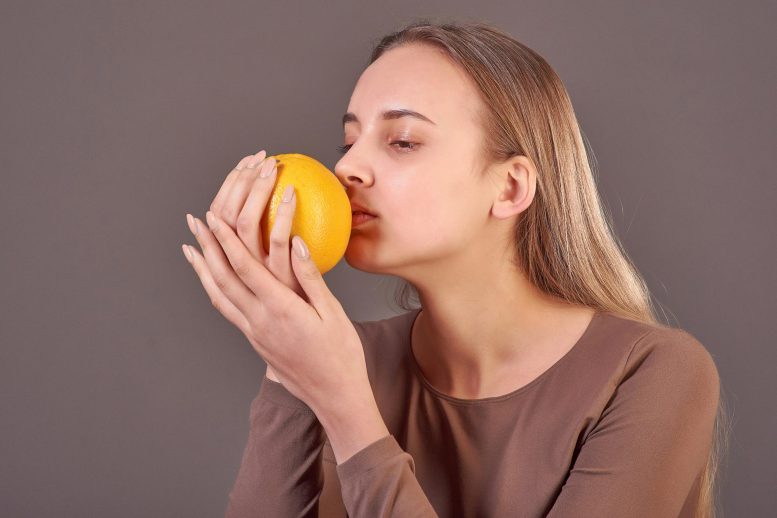
According to recent research, those who have smell disorders, such as those brought on by COVID-19, may experience social and physical implications. Fortunately, the report also provides solutions.
Food enjoyment is greatly influenced by smell. According to recent research from Aarhus University, many individuals have lost, diminished, or distorted senses of smell, which can have an impact on their health and quality of life.

According to Alexander Wieck Fjaeldstad, associate professor, MD, losing your sense of smell or having it altered has effects on more than just your eating and cooking habits. He was involved in the establishment of Denmark’s first smell and taste clinic, and he is the author of the study that was recently published in the scientific journal Foods.
“Reduced enjoyment when eating and the social consequences of it are very important to patients and often have serious consequences for their quality of life,” says Alexander Wieck Fjældstad.
The research also reveals that 39% of people with severe scent disorders have weight loss at a considerably higher rate than the general population, which can be harmful to their health.
Getting Cooking Over With As Fast As Possible
A questionnaire regarding cooking, scent, weight changes, and sensory awareness was completed by the 692 participants of the study. 251 people had a distorted sense of smell (parosmia), 271 people had lost or had their sense of smell diminished, and 166 people were in the control group.
According to the study, individuals with a distorted sense of smell are different from the control group in terms of their food choices as well as their ability and willingness to cook.
“The patients expressed a wish to get through cooking as quickly as possible. They don’t find cooking to be as enjoyable an activity as previously, they are less interested in cooking for others, and have lost the desire to try new foods. And less variation in food habits can affect health,” says Alexander Wieck Fjældstad.
Previous studies have also shown that the loss or distortion of the sense of smell can have consequences ranging from social insecurity and an increased risk of depressive symptoms to an increased risk of household accidents.
How To Rediscover a Sense of Enjoyment
Fortunately, the recently published study explains how foods with different basic tastes, textures, and mouthfeels can increase a patient’s enjoyment. When a food smell released in the oral cavity is not intercepted by the smell receptors in the nose, it is possible to compensate by focusing on other sensory inputs. In other words, the other senses can enhance the experience of eating so the patient gains greater food satisfaction, a better multisensory food experience, and improved quality of life.
“The patients find cooking challenging, but the study can help because it clarifies which ingredients are unpleasant or pleasant when your sense of smell is distorted,” says Alexander Wieck Fjældstad. He mentions dried fruits, chili, menthol, and rapeseed oil as good food options for patients who have a distorted sense of smell and taste. When eating these foods, the mouthfeel helps provide sensory stimuli when the sense of smell fails.
Patients with a distorted sense of smell in particular should avoid coffee, mushrooms, butter, ginger, black pepper, and toasted bread, as these foods generally provide significantly less pleasure. This is due to a combination of a higher incidence of distorted smell detection and the fact that some of these foods strongly stimulate the other chemical senses, which becomes unpleasant when the aroma is not present.
The consequences of a distorted sense of smell on cooking and which foods actually work for patients have not previously been focused on.
A Common Problem
Taste is a multi-sensory process where each sense contributes with different notes that together result in a complex symphony that makes us able to identify what we are eating, assess its freshness and edibility, and in the end, provides us with a sense of enjoyment. Few people realize how important a sense of smell is until they lose it.
However, in the wake of the Covid-19 pandemic, we have become even more aware of the importance of smell. Around 65% of the more than 300 million Covid-19 patients worldwide have experienced losing their sense of smell. For more than half of those patients, the loss or distortion may be long-term.
“In connection with Covid-19, many people experienced losing their sense of smell or having it distorted, but actually it has always been a common problem,” says Alexander Wieck Fjældstad.
Fifteen percent of the population has a reduced sense of smell. The problem increases with age and is often related to many well-known diseases such as diabetes, kidney disease, and several neurodegenerative diseases. About two percent of Danes suffer from a complete loss of sense of smell.
Reference: “The Effects of Olfactory Loss and Parosmia on Food and Cooking Habits, Sensory Awareness, and Quality of Life—A Possible Avenue for Regaining Enjoyment of Food” by Alexander Wieck Fjaeldstad and Barry Smith, 8 July 2022, Foods.
DOI: 10.3390/foods11121686
Never miss a breakthrough: Join the SciTechDaily newsletter.
Follow us on Google and Google News.
1 Comment
“It Could [sic] More Problematic Than You Think”
“To be, or not to be, that is the question: …”
I vote for the “be.”