
Close Menu
    Facebook X (Twitter) Instagram
    SciTechDaily
    • Biology
    • Chemistry
    • Earth
    • Health
    • Physics
    • Science
    • Space
    • Technology
    Facebook X (Twitter) Pinterest YouTube RSS
    SciTechDaily
    Home»Chemistry»Carbon Dioxide Reactor Synthesizes Martian Fuel
    Chemistry

    Carbon Dioxide Reactor Synthesizes Martian Fuel

    By University of CincinnatiSeptember 25, 2021No Comments5 Mins Read
    Facebook Twitter Pinterest Telegram LinkedIn WhatsApp Email Reddit
    Share
    Facebook Twitter LinkedIn Pinterest Telegram Email Reddit
    Tianyu Zhang Graphene Vial
    University of Cincinnati chemical engineering student Tianyu Zhang holds up a vial of graphene used as a catalyst to convert carbon dioxide into methane. Credit: Andrew Higley/UC Creative

    A gas station on Mars? Chemical engineers envision the possibilities.

    Engineers at the University of Cincinnati are developing new ways to convert greenhouse gases to fuel to address climate change and get astronauts home from Mars.

    UC College of Engineering and Applied Science assistant professor Jingjie Wu and his students used a carbon catalyst in a reactor to convert carbon dioxide into methane. Known as the “Sabatier reaction” from the late French chemist Paul Sabatier, it’s a process the International Space Station uses to scrub the carbon dioxide from the air the astronauts breathe and generate rocket fuel to keep the station in high orbit.

    But Wu is thinking much bigger.
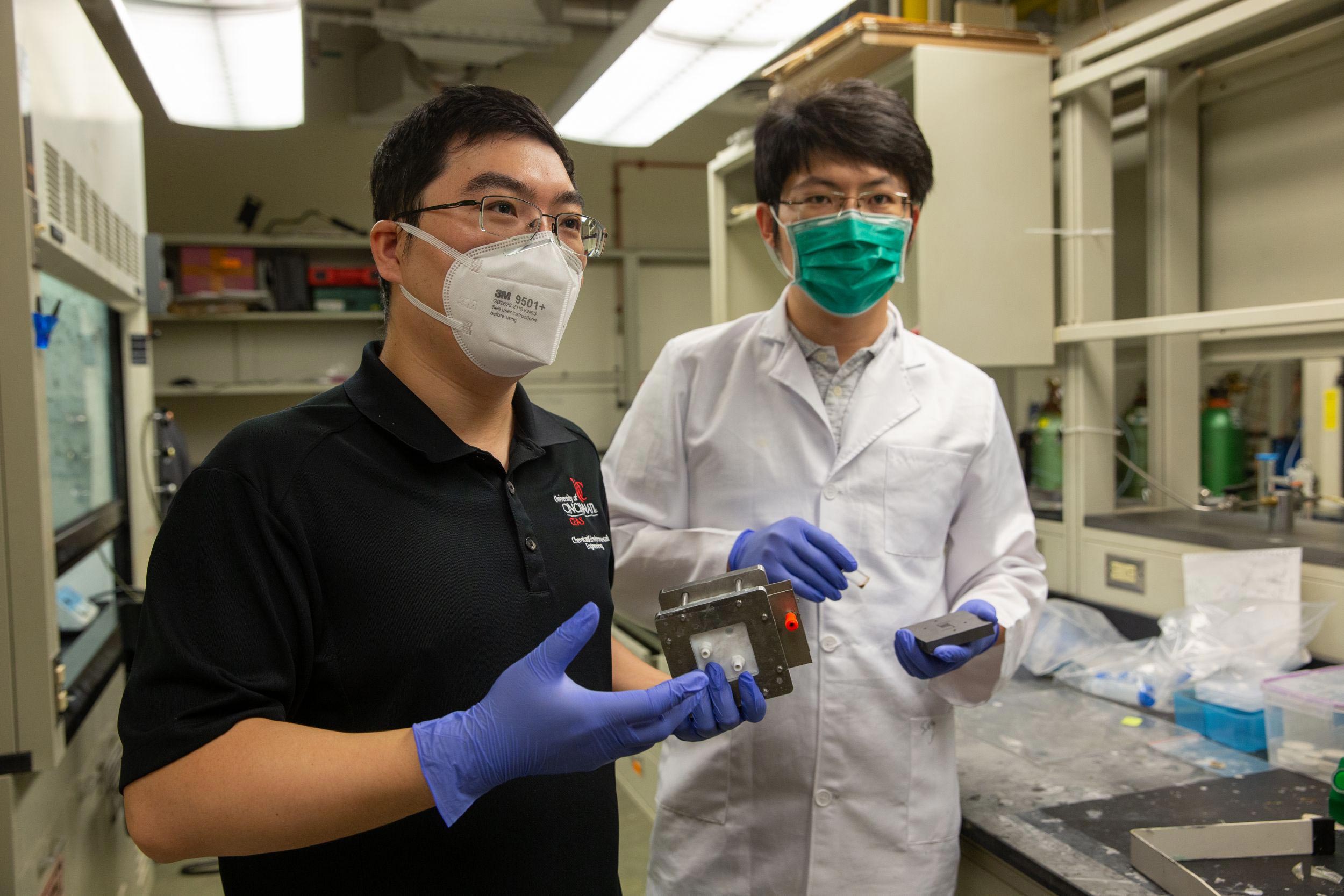
    Jingjie Wu and Tianyu Zhang
    UC chemical engineering assistant professor Jingjie Wu, left and doctoral student Tianyu Zhang are experimenting with different catalysts to convert carbon dioxide to storable fuel to address climate change. Credit: Andrew Higley/UC Creative

    The Martian atmosphere is composed almost entirely of carbon dioxide. Astronauts could save half the fuel they need for a return trip home by making what they need on the red planet once they arrive, Wu said.

    “It’s like a gas station on Mars. You could easily pump carbon dioxide through this reactor and produce methane for a rocket,” Wu said.

    UC’s study was published in the journal Nature Communications with collaborators from Rice University, Shanghai University, and East China University of Science and Technology.

    From Fuel Cells to Carbon Neutrality

    Wu began his career in chemical engineering by studying fuel cells for electric vehicles but began looking at carbon dioxide conversion in his chemical engineering lab about 10 years ago.

    Catalyst Converts Carbon Dioxide Into Methane
    UC chemical engineer Jingjie Wu holds up the reactor where a catalyst converts carbon dioxide into methane. UC’s research makes him optimistic that scientists will be able to remove carbon dioxide from the atmosphere. Credit: Andrew Higley/UC Creative + Brand

    “I realized that greenhouse gases were going to be a big issue in society,” Wu said. “A lot of countries realized that carbon dioxide is a big issue for the sustainable development of our society. That’s why I think we need to achieve carbon neutrality.”

    The Biden Administration has set a goal of achieving a 50% reduction in greenhouse gas pollutants by 2030 and an economy that relies on renewable energy by 2050.

    “That means we’ll have to recycle carbon dioxide,” Wu said.

    Catalysts and Carbon Recycling

    Wu and his students, including lead author and UC doctoral candidate Tianyu Zhang, are experimenting with different catalysts such as graphene quantum dots — layers of carbon just nanometers big — that can increase the yield of methane.

    “Right now we have excess green energy that we just throw away. We can store this excess renewable energy in chemicals.”

    Jingjie Wu, UC assistant professor of chemical engineering

    Wu said the process holds promise to help mitigate climate change. But it also has a big commercial advantage in producing fuel as a byproduct.

    “The process is 100 times more productive than it was just 10 years ago. So you can imagine that progress will come faster and faster,” Wu said. “In the next 10 years, we’ll have a lot of startup companies to commercialize this technique.”

    Expanding to Ethylene Production

    Wu’s students are using different catalysts to produce not only methane but ethylene. Called the world’s most important chemical, ethylene is used in the manufacture of plastics, rubber, synthetic clothing, and other products.

    “Green energy will be very important. In the future, it will represent a huge market. So I wanted to work on it,” Zhang said.
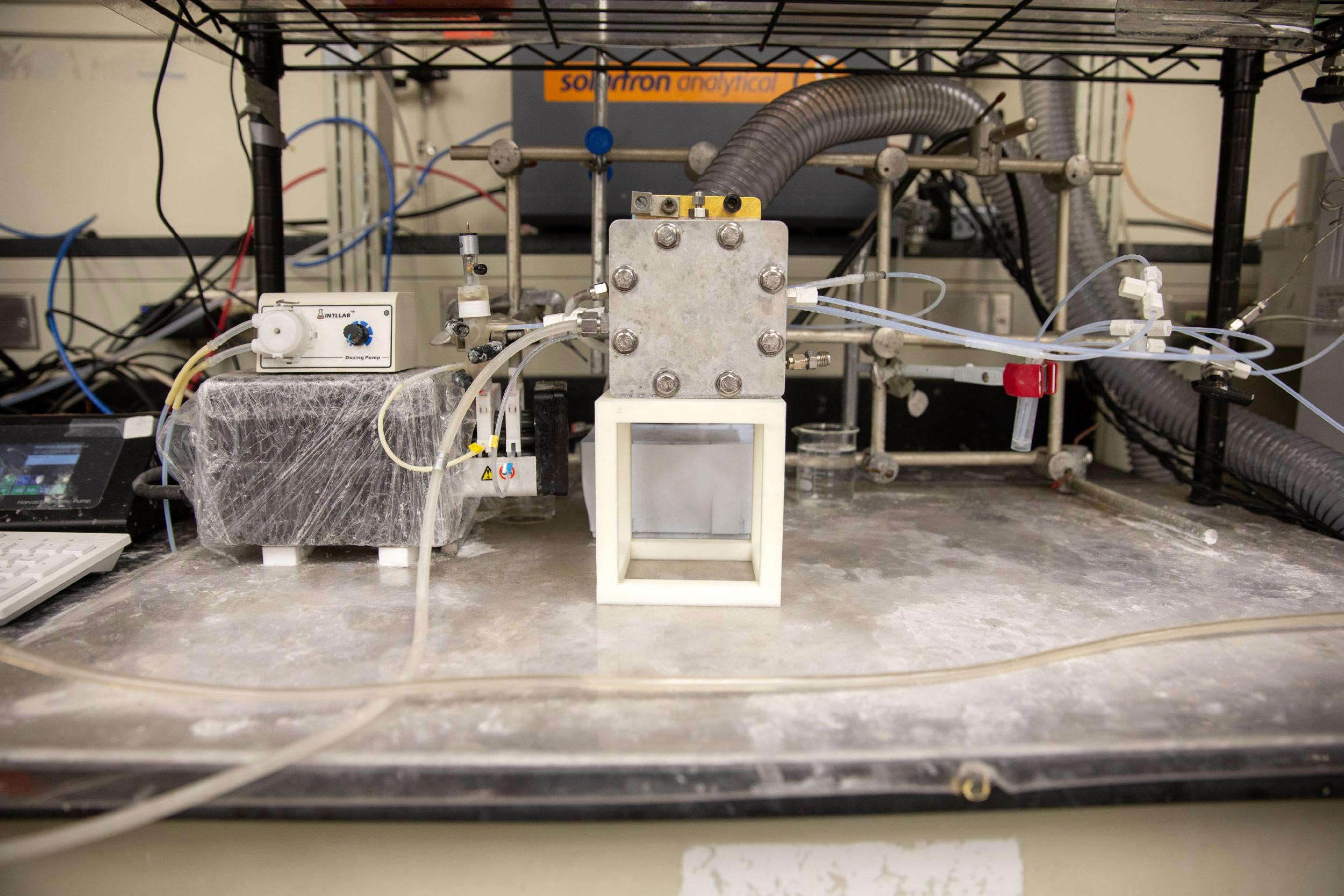
    Experimental Reactor Uses Graphene Quantum Dots
    An experimental reactor uses graphene quantum dots as a catalyst to convert carbon dioxide into methane. Credit: Andrew Higley/UC Creative

    Synthesizing fuel from carbon dioxide becomes even more commercially viable when coupled with renewable energy such as solar or wind power, Wu said.

    “Right now we have excess green energy that we just throw away. We can store this excess renewable energy in chemicals,” he said.

    Power Plants and Efficiency

    The process is scalable for use in power plants that can generate tons of carbon dioxide. And it’s efficient since the conversion can take place right where excess carbon dioxide is produced.
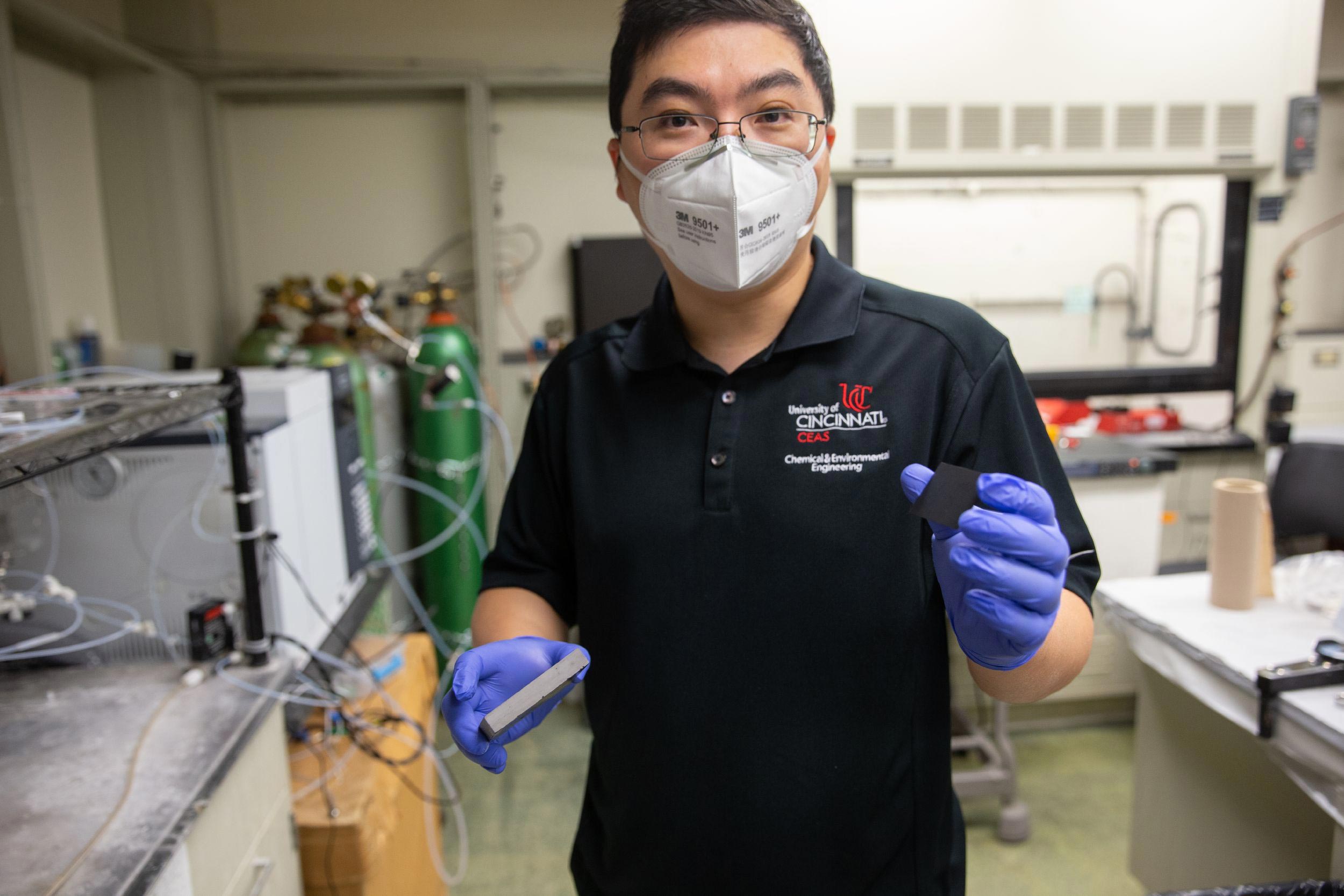
    Jingjie Wu
    UC chemical engineer Jingjie Wu is experimenting with different catalysts to convert carbon dioxide to fuels such as methane to address climate change. Credit: Andrew Higley/UC Creative

    Wu said advances in fuel production from carbon dioxide make him more confident that humans will set foot on Mars in his lifetime.

    “Right now if you want to come back from Mars, you would need to bring twice as much fuel, which is very heavy,” he said. “And in the future, you’ll need other fuels. So we can produce methanol from carbon dioxide and use it to produce other downstream materials. Then maybe one day we could live on Mars.”

    Reference: “Regulation of functional groups on graphene quantum dots directs selective CO2 to CH4 conversion” by Tianyu Zhang, Weitao Li, Kai Huang, Huazhang Guo, Zhengyuan Li, Yanbo Fang, Ram Manohar Yadav, Vesselin Shanov, Pulickel M. Ajayan, Liang Wang, Cheng Lian and Jingjie Wu, 6 September 2021, Nature Communications.
    DOI: 10.1038/s41467-021-25640-1

    Never miss a breakthrough: Join the SciTechDaily newsletter.
    Follow us on Google and Google News.

    Carbon Dioxide Catalysts Climate Change Energy Fuel Graphene Mars Popular Quantum Dots University of Cincinnati
    Share. Facebook Twitter Pinterest LinkedIn Email Reddit

    Related Articles

    Korean Scientists Transform CO₂ Into Liquid Gold

    MIT Breakthrough Makes Carbon Capture 6x More Efficient

    Cheap Catalyst Made Out of Sugar Has the Power To Destroy CO2

    More Efficient Than Natural Photosynthesis – New Photocatalytic System Converts Carbon Dioxide Into Valuable Fuel

    Not Just Bread and Beer: Microbes Can Ferment Carbon Dioxide To Make Fuel

    Using Sunlight to Alleviate Global Warming: Breakthrough in Decomposing CO2 With High Efficiency

    Solving a Riddle That Would Provide the World With Entirely Clean, Renewable Energy

    Make Like a Leaf: ‘Carbon Photosynthesis’ With Nanotechnology to Convert CO2 Into Fuels

    New Material Captures Carbon Dioxide and Efficiently Converts It to Useful Organic Materials

    Leave A Reply Cancel Reply

    • Facebook
    • Twitter
    • Pinterest
    • YouTube

    Don't Miss a Discovery

    Subscribe for the Latest in Science & Tech!

    Trending News

    Researchers Have Found a Dietary Compound That Increases Longevity

    Scientists Baffled by Bizarre “Living Fossil” From 275 Million Years Ago

    Your IQ at 23 Could Predict Your Wealth at 27, Study Finds

    320 Light-Years Away, a Planet Confirms a Fundamental Cosmic Assumption

    The Crown Jewel of Dentistry? Breakthrough Tech Could Transform Tooth Repair

    Python Blood Could Hold the Secret to Weight Loss Without Side Effects

    Naturally Occurring Bacteria Completely Eradicate Tumors in Mice With a Single Dose

    New “Nanozyme Hypothesis” Could Rewrite the Story of Life’s Origins

    Follow SciTechDaily
    • Facebook
    • Twitter
    • YouTube
    • Pinterest
    • Newsletter
    • RSS
    SciTech News
    • Biology News
    • Chemistry News
    • Earth News
    • Health News
    • Physics News
    • Science News
    • Space News
    • Technology News
    Recent Posts
    • Scientists May Have Found the Key to Jupiter and Saturn’s Moon Mystery
    • Scientists Uncover Hidden Clues to the Origin of the Genetic Code
    • Scientists Discover Unexpected Role of Alzheimer’s Protein in Cell Division
    • Scientists Uncover Brain Changes That Link Pain to Depression
    • A New Chapter in Chemistry? Scientists Uncover New Way Metals Bind Oxygen
    Copyright © 1998 - 2026 SciTechDaily. All Rights Reserved.
    • Science News
    • About
    • Contact
    • Editorial Board
    • Privacy Policy
    • Terms of Use

    Type above and press Enter to search. Press Esc to cancel.