
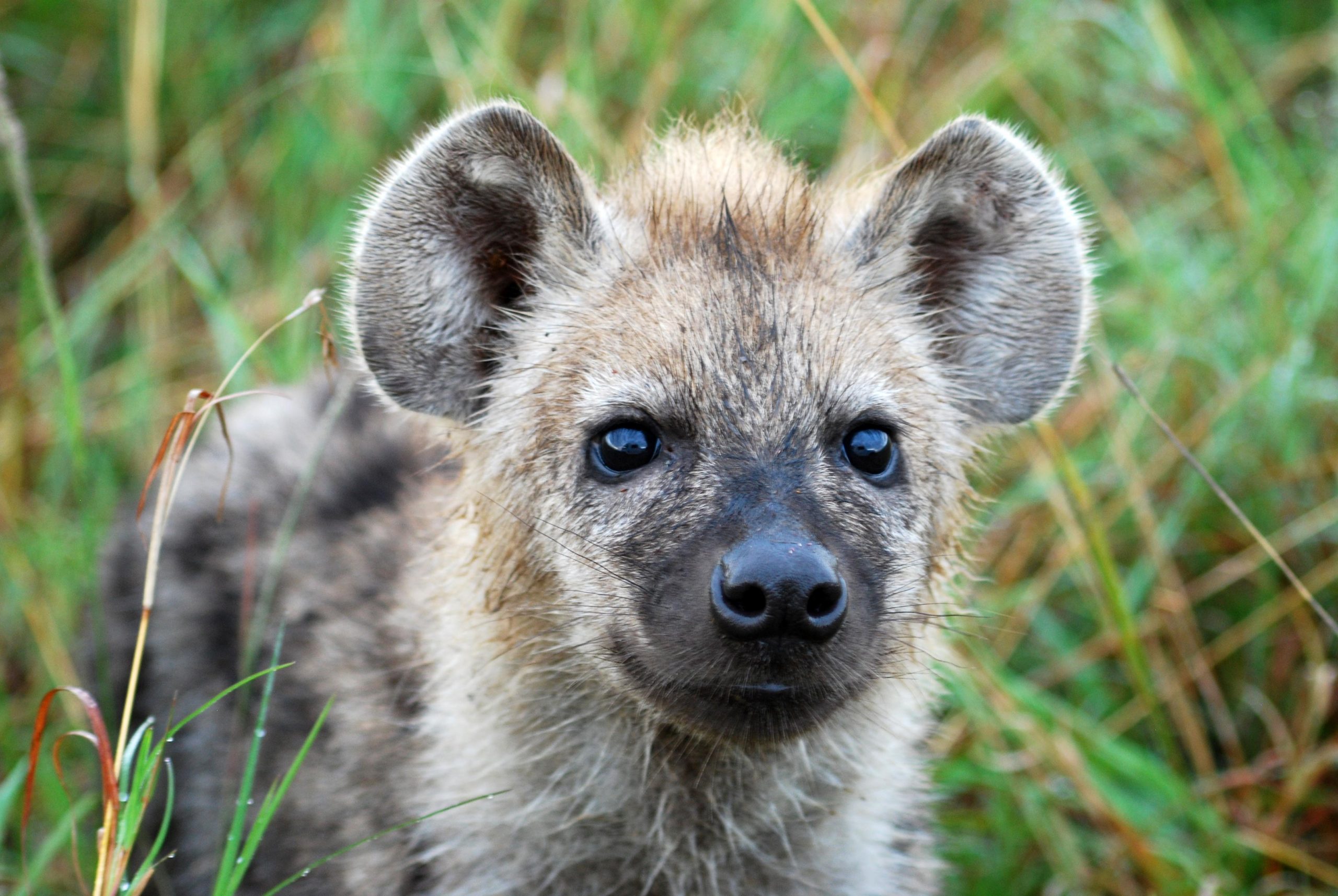
New research reveals that hyena cubs infected with the parasite Toxoplasma gondii display significantly bolder behavior near lions and face higher mortality as a result.
While the 1994 animated classic The Lion King includes somewhat accurate antagonistic relationships between lions and spotted hyenas, Disney left out a critical player in the circle of life: the parasite Toxoplasma gondii (T. gondii). Best known for its presence in house cats and a tendency to infect and alter the behaviors of rodents and humans, this parasite is also associated with bold behavior among wild hyena cubs and risk of death during interactions with lions, finds new CU Boulder research.
The findings, published last week in Nature Communications, reinforce previous research which has found the parasite can prompt profound behavioral changes in its hosts, and potentially in the 2 billion people worldwide estimated to be infected by it. While T. gondii has been well studied in laboratory settings with humans and wild-caught rodents, this is one of the first studies to examine how the parasite affects wild host behavior during interactions with wild cats.
The research uses a rich data set from more than three decades of continuous field research in the Maasai Mara National Reserve in Kenya. It reveals that hyena cubs, but not subadult or adults, infected by T. gondii behave more boldly in the presence of lions, and that infected cubs have a greater risk of being killed by lions.
“This project is one of a handful of long-term continuous studies on a long-lived mammal,” said Zach Laubach, co-lead author on the study and postdoctoral fellow in ecology and evolutionary biology. “Our findings suggest that infection early in life leads to bolder behavior and is particularly costly for young hyenas.”
Multiple strains of T. gondii are found throughout the world, infecting warm-blooded animals—including humans who have house cats—during different life stages through contaminated soil, drinking water, or eating meat of other infected animals. It can also be passed down from mother to baby.
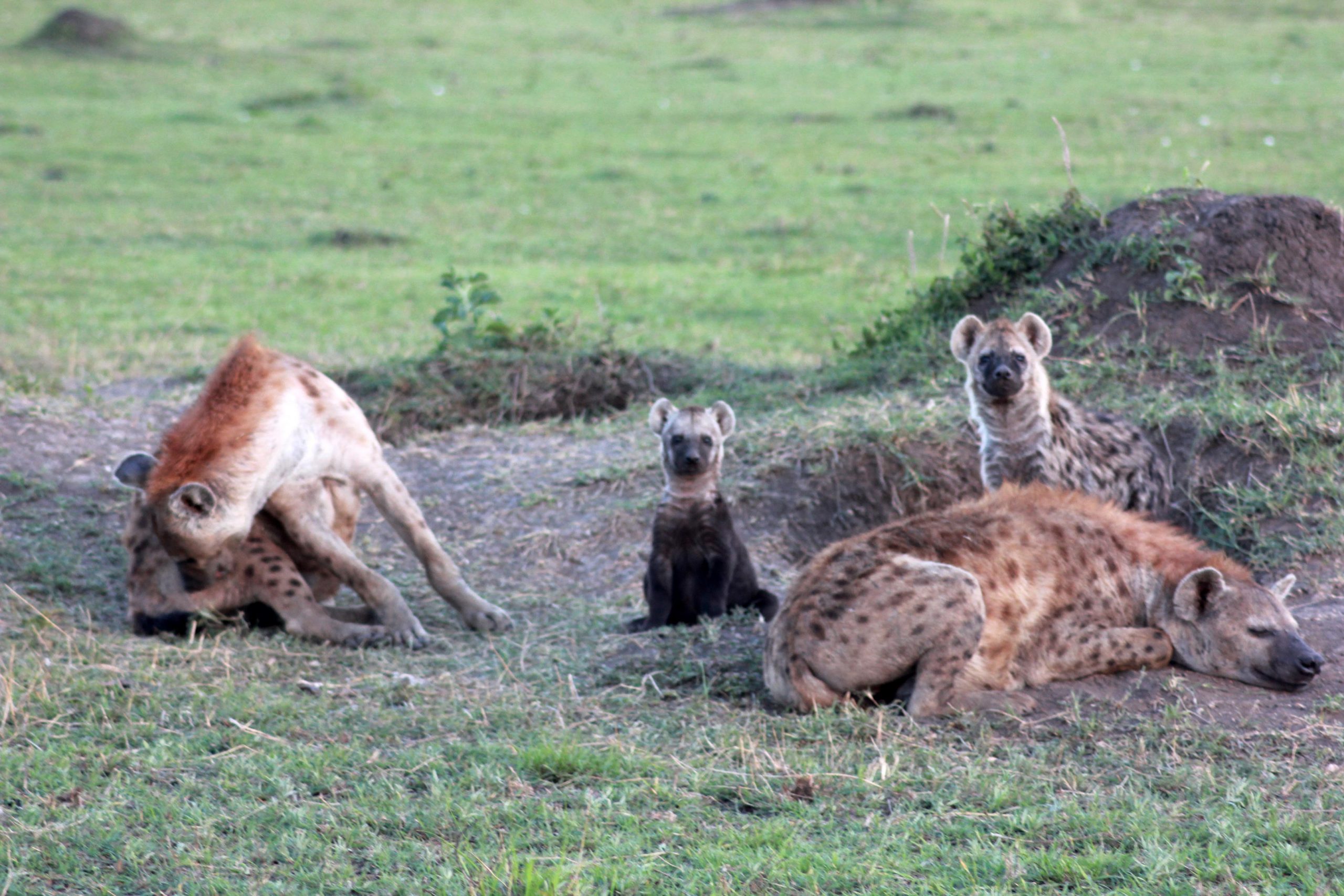
The researchers found that in the hyena populations they studied, infections are widespread but more common in older animals, meaning that it’s most likely that they become infected by consuming contaminated meat or water.
Higher Lion Mortality for Infected Cubs
For infected cubs—hyenas up to one year old—they found infected animals are bolder, approaching lions from closer distances than uninfected cubs, and that infection among cubs also corresponds to a higher probability of being killed by lions. In this study, lions were responsible for all hyena cub deaths among infected animals, but only 17% of uninfected cubs died before the age of one due to lion attacks.
This is a vulnerable time in the life cycle of spotted hyenas, who despite being proficient hunters, take a long time to develop and rely on support and protection from their mothers, according to Laubach.
“Hyena moms invest a ton of both time and resources into their offspring. They nurse until they’re about a year old and don’t reach independence until they’re about two or more years old,” said Laubach. “But after they’re one year old, we found no difference in how close they got to lions, regardless of infection status.”
Some scientists theorize that this parasite manipulates its hosts’ behavior (whether that host is a hyena or human) in order to get back to cats, where it can sexually reproduce. But the data from this study doesn’t provide enough evidence to disentangle the theory supporting an adaptive mechanism for the parasite from other plausible alternative theories. It does, however, show that T. gondii has a direct and detrimental impact on hyena fitness.
Measuring the Cost of Confidence
Maasai Mara National Reserve is a biological hot spot in southwestern Kenya, between Lake Victoria and the bustling city of Nairobi. For more than 30 years now, the Mara Hyena Project, led by co-author Kay Holekamp, has been gathering data on the health and behavior of spotted hyenas in one of the best places in the world to study a diverse array of large, carnivorous mammals.
“It’s really a one-of-a-kind system, especially for studying large carnivores in a natural setting, which is a rare opportunity,” said Laubach. “I can’t think of another place in the world where you can see the same numbers and diversity of species of large mammalian carnivores, it’s pretty spectacular.”
Social Strengths of Spotted Hyenas
Laubach notes that there are many misconceptions about hyenas. They’re quite social and live in large groups, some with more than 120 individuals. They’re also formidable in size and strength, at up to 170 pounds (77 kilograms) when full-grown (twice the size of a large dog) and they have one of the strongest jaws in the animal kingdom.
“They can eat bone, their bite can crack the femur of a giraffe,” said Laubach.
Yet hyenas and lions compete with one another for territory and food, and these interactions with lions are the leading natural cause of hyena injuries and mortality.
Because previous research has shown that T. gondii can impact behavior in animals in laboratory settings, what the researchers wanted to know was: How does T. gondii affect wild hyenas’ behaviors around lions, and what are the consequences?
Laubach and co-lead author Eben Gering analyzed archived data collected by numerous research assistants and graduate students. They gathered blood samples and documented the hyenas’ interactions with each other and when they interacted with lions. From the safety of their vehicle, researchers Benson (Malit) Pioon and Holekamp of the Mara Hyena Project administered tranquilizers to 166 hyenas, in order to draw and test their blood for the parasite. They found 108, or 65%, had been previously exposed.
Over the years, researchers spent many hours each morning and evening out in the field, recording hyena behaviors of individuals that can be identified by their unique spot patterns on their coats. The data revealed that infection with the parasite T. gondii was related to boldness and greater risk of lion mortality among hyena cubs but not older animals. The lack of an effect in older animals could be because they’ve had time to learn, while cubs have less than one year of experience to compete with the influence of the parasite.
“One limitation of this work is that it was an observational study. But limitations are interesting, because it points to what one might do next,” said Laubach. “We’d like to go back and tease apart how behaviors change in individuals by comparing how their behaviors differ before versus after infection.”
Reference: “Toxoplasma gondii infections are associated with costly boldness toward felids in a wild host” by Eben Gering, Zachary M. Laubach, Patty Sue D. Weber, Gisela Soboll Hussey, Kenna D. S. Lehmann, Tracy M. Montgomery, Julie W. Turner, Wei Perng, Malit O. Pioon, Kay E. Holekamp and Thomas Getty, 22 June 2021, Nature Communications.
DOI: 10.1038/s41467-021-24092-x
Additional authors on this publication include Eben Gering of Michigan State University and Nova Southeastern University; Patty Sue Weber, Gisela Soboll Hussey and Thomas Getty of Michigan State University; Kenna Lehmann and Kay Holekamp of Michigan State University and the Mara Hyena Project; Tracy Montgomery of Michigan State University, the Mara Hyena Project and the Max Planck Institute of Animal Behavior; Julie Turner of Michigan State University, the Mara Hyena Project and the Memorial University of Newfoundland; Wei Perng of the Colorado School of Public Health, CU Denver Anschutz Medical Campus; and Malit Pioon of the Mara Hyena Project.
Never miss a breakthrough: Join the SciTechDaily newsletter.
Follow us on Google and Google News.
1 Comment
I am understanding this correctly?
How isn’t the most logical explanation the fact that lions are the source of the parasite which then transmit it to bolder hyenas (which come closer to lions or the meat that they came in contact with and thus the parasites).
https://www.ncbi.nlm.nih.gov/pmc/articles/PMC6356113/
“We found high seropositivity in carnivorous species: 100% (15 of 15 samples) in adult African lions, 93% (38 of 41 samples) in adult spotted hyenas and one striped hyena sample was positive, whereas all four samples from the insectivorous bat-eared fox were negative. Juvenile hyenas (11 of 19 sera) had significantly lower seropositivity than adults (38 of 41 sera).”
This would immediately explain why hyenas that tested positive are “bolder” and have higher rates of lion mortality. But somehow the theory that this parasite can perform mind control is given as an explanation.
I guess someone is looking for attention or funding, this is atrocious.