
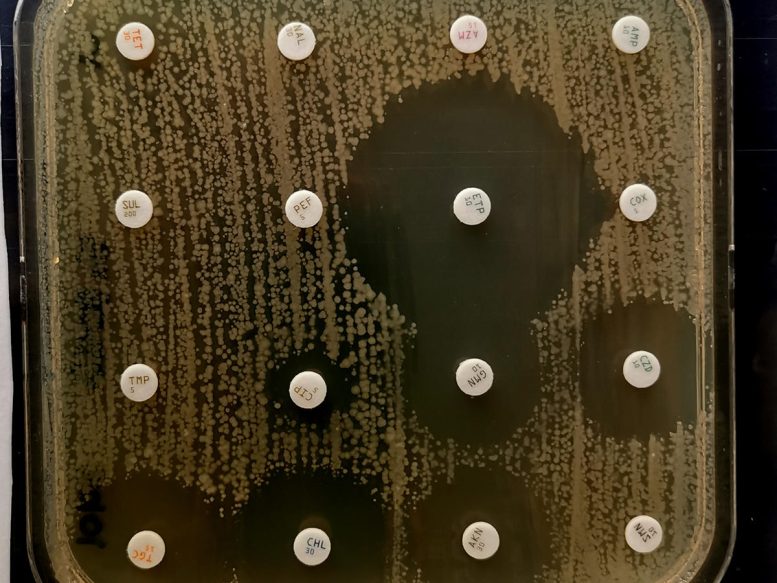
Extensively drug-resistant (XDR) strains of Shigella sonnei have been spreading in France, primarily among men who have sex with men (MSM), and are linked to antibiotic overuse in South Asia.
The emergence of extensively drug-resistant (XDR) strains of Shigella sonnei has been detected by scientists at the Institut Pasteur’s French National Reference Center for Escherichia coli, Shigella, and Salmonella. Shigellosis, a highly contagious diarrheal disease caused by Shigella bacteria, is prevalent not only in industrializing countries but also in industrialized countries like France, where the researchers have been monitoring its spread for several years.
The analysis of bacterial genome sequencing and case characteristics (with most cases being reported in male adults) indicates that these strains, originally from South Asia, predominantly transmit among men who have sex with men (MSM).
This observation needs to be taken into account by clinicians and laboratories when testing for sexually transmitted infections (STIs) in MSM, and systematic antibiograms should be performed if a Shigella strain is isolated to improve treatment for patients infected with XDR strains. The results were published recently in the scientific journal Nature Communications.
Shigellosis is a highly contagious diarrheal disease that spreads through fecal-oral transmission. Among the different types of Shigella, Shigella sonnei is the species that mainly circulates in industrialized countries. Shigella sonnei infections can cause short-term diarrhea (3-4 days) that resolves on its own. Antibiotic treatment is, however, necessary for moderate to severe cases (bloody diarrhea, risk of complications) or to prevent person-to-person transmission in epidemic situations. The acquisition of antibiotic resistance mechanisms by Shigella bacteria, therefore, restricts therapeutic options.
In this study, scientists from the National Reference Center for Escherichia coli, Shigella, and Salmonella (CNR-ESS) at the Institut Pasteur demonstrate an increase in antibiotic resistance in S. sonnei isolates collected in France over the past 17 years. The study is based on an analysis of more than 7,000 S. sonnei isolates and epidemiological information gathered in connection with national shigellosis surveillance conducted by the CNR-ESS between 2005 and 2021.
The CNR-ESS analyzes all the bacterial isolates sent by its network of private and public partner laboratories throughout France. Over this period, isolates described as “extensively drug-resistant” (XDR) were identified for the first time in 2015. The scientists then observed that the proportion of XDR isolates, which are resistant to virtually all the antibiotics recommended for treating shigellosis, increased significantly and reached a peak in 2021 when 22.3% of all S. sonnei isolates (99 cases) were XDR.
Evolutionary Origins and Spread of XDR Strains
Genome sequencing revealed that all these French XDR strains belonged to the same evolutionary lineage, which became resistant to a key antibiotic (ciprofloxacin) in around 2007 in South Asia. In several geographical regions of the world, including France, the strains then acquired different plasmids coding for resistance to other first-line antibiotics (especially third-generation cephalosporins and azithromycin).
For severe cases, the only antibiotics that are still effective are carbapenems or colistin, which must be administered intravenously, resulting in more aggressive treatment that requires more complex monitoring in a hospital environment.
XDR isolates were observed in France in various contexts: in travelers returning from South Asia or South-East Asia, during an outbreak at a school in 2017 (more than 90 cases, leading to school closure; the index case had returned from South-East Asia) and in men who have sex with men (MSM). The latter were infected by an epidemic clone that has been spreading throughout Europe since 2020 but has also been found in North America and Australia. This subgroup of XDR strains circulating in MSM was the most widespread, accounting for 97% of XDR strains in France in 2021.
Frequent use of antibiotics in South and South-East Asia, together with repeat treatment for STIs in some people potentially exposed to this risk, increase the likelihood of selection of XDR Shigella strains. Further research is needed to understand the different clinical forms of infection, and especially whether there are asymptomatic forms that might cause the bacteria to spread more widely. Therapeutic trials are also crucial to identify effective oral antibiotics for treating these XDR Shigella strains.
Reference: “Rapid emergence of extensively drug-resistant Shigella sonnei in France” by Sophie Lefèvre, Elisabeth Njamkepo, Sarah Feldman, Corinne Ruckly, Isabelle Carle, Monique Lejay-Collin, Laëtitia Fabre, Iman Yassine, Lise Frézal, Maria Pardos de la Gandara, Arnaud Fontanet and François-Xavier Weill, 28 January 2023, Nature Communications.
DOI: 10.1038/s41467-023-36222-8
Never miss a breakthrough: Join the SciTechDaily newsletter.
Follow us on Google and Google News.