
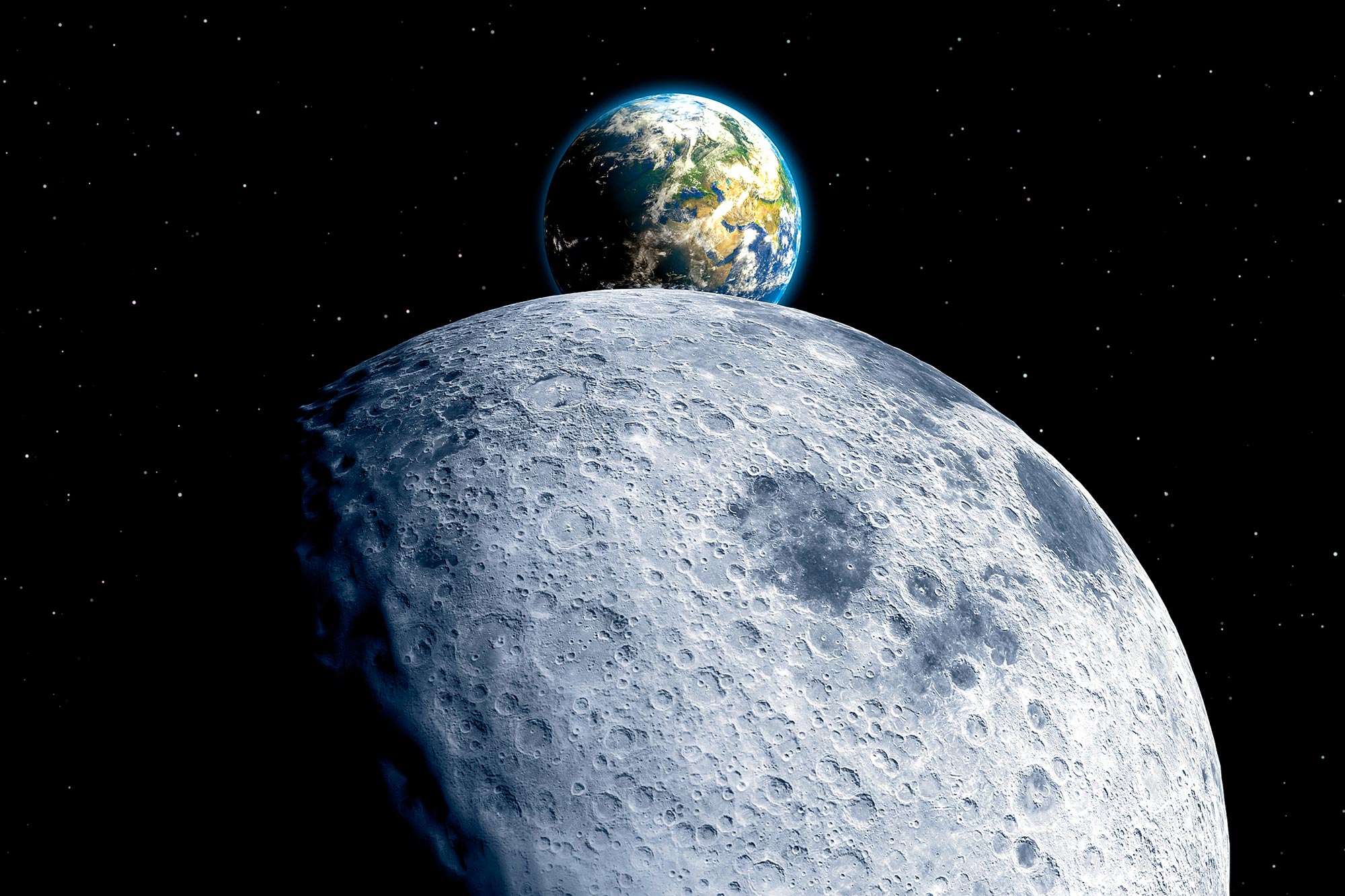
China’s Chang’e-6 mission has made lunar history by retrieving the first-ever samples from the Moon’s mysterious farside, specifically the massive South Pole–Aitken Basin.
These ancient rocks have revealed a staggering story of planetary violence and hidden geologic forces, exposing billion-year-old volcanic eruptions, a surprising resurgence of the Moon’s magnetic field, and a bone-dry, chemically depleted mantle.
Uncovering the Moon’s Mysterious Asymmetry
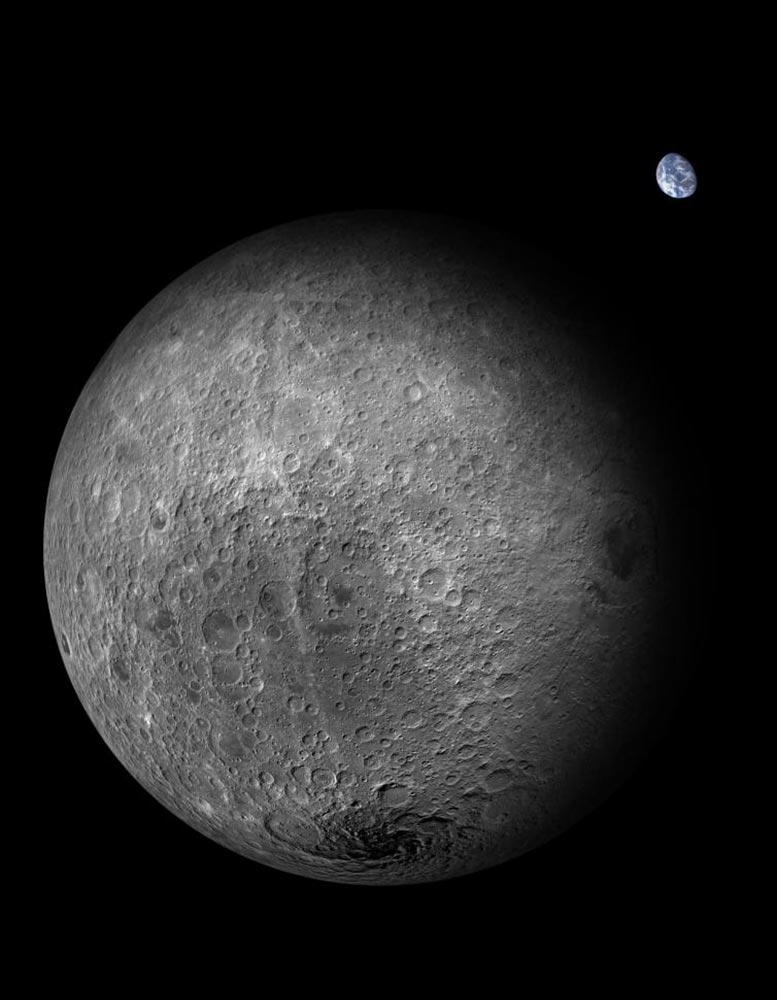
The near and far sides of the Moon look dramatically different, with major contrasts in landscape, crust thickness, and volcanic activity. For years, scientists were unsure what caused these differences. That changed with China’s Chang’e-6 mission, which launched on May 3, 2024, and brought back 1,935.3 grams of lunar soil from the far side’s South Pole–Aitken Basin (SPA). This enormous crater is the Moon’s oldest, deepest, and largest known impact site, stretching 2,500 kilometers across. The samples successfully returned to Earth on June 25, 2024.
Earlier research suggested that the SPA formed around 4.25 billion years ago after a massive collision released energy equivalent to more than a trillion atomic bombs. However, how this ancient impact affected the Moon’s geology and heat distribution remained one of the biggest open questions in planetary science.
Landmark Discoveries from Lunar Samples
Over the past year, teams from several leading Chinese institutions, including the Institute of Geology and Geophysics (IGG) and the National Astronomical Observatories (NAOC) of the Chinese Academy of Sciences (CAS), as well as Nanjing University, analyzed the samples and uncovered four groundbreaking findings. These results were featured in four separate cover stories published in Nature.
According to Prof. Fuyuan Wu, a member of the Chinese Academy of Sciences and a researcher at IGG, the profound geological consequences of the impact that formed the SPA are, for the first time, revealed collectively in these four Nature papers.
The cover stories focus on the following areas:
Prolonged Volcanic Activity: Analysis identified two distinct volcanic phases on the lunar farside—4.2 billion and 2.8 billion years ago—indicating that volcanic activity persisted for at least 1.4 billion years, far longer than previously thought.
Fluctuating Magnetic Field: Measurements of paleomagnetic intensities in basalt clasts revealed a rebound in the Moon’s magnetic field 2.8 billion years ago, suggesting that the lunar dynamo, which generates magnetic fields, fluctuated episodically rather than fading steadily.
Asymmetric Water Distribution: The farside mantle was found to have significantly lower water content than the nearside mantle, indicating that volatile elements are unevenly distributed within the lunar interior—adding another aspect to the Moon’s asymmetry.
Mantle Depletion Signatures: Geochemical analysis of basalt points to an “ultra-depleted” mantle source, likely resulting from either a primordial depleted mantle or massive melt extraction triggered by large impacts. This highlights the role of major impacts in shaping the Moon’s deep interior.
Collaborations Yield Groundbreaking Results
The first analysis of the samples was published by NAOC and its collaborators, detailing the samples’ physical, mineralogical, and geochemical properties. The Guangzhou Institute of Geochemistry at CAS subsequently confirmed 2.8-billion-year-old farside volcanic activity, linking it to a highly depleted mantle. IGG, in turn, dated the SPA to 4.25 billion years ago, providing a critical reference point for studying early Solar System impacts.
These findings not only illuminate the evolution of the Moon’s farside but also underscore the transformative impact of the Chang’e-6 mission, paving the way for deeper insights into planetary formation and evolution.
Reference: “Ultra-depleted mantle source of basalts from the South Pole–Aitken basin” by Qin Zhou, Wei Yang, Zhuyin Chu, Honggang Zhu, Saihong Yang, Xingguo Zeng, Ding-Shuai Xue, Li-Hui Jia, Guangliang Zhang, Hongbo Zhang, Yanhao Lin, Huijuan Zhang, Heng-Ci Tian, Peng Peng, Dan-Ping Zhang, Lixin Gu, Chunlai Li and Fu-Yuan Wu, 9 July 2025, Nature.
DOI: 10.1038/s41586-025-09131-7
Never miss a breakthrough: Join the SciTechDaily newsletter.
Follow us on Google and Google News.