
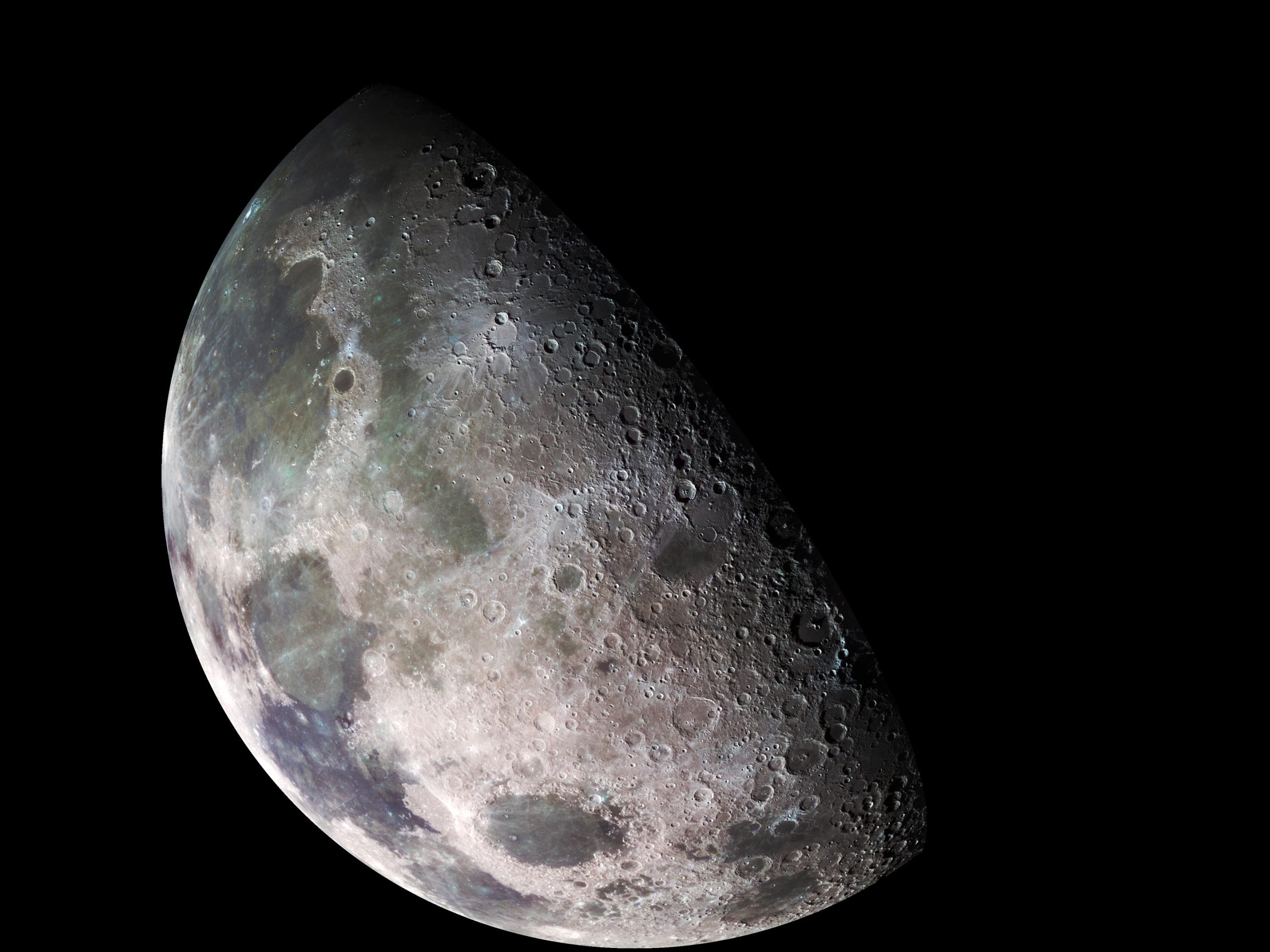
Exploring lunar samples from the far side’s South Pole-Aitken Basin, researchers have uncovered key differences in volcanic activity and crustal features between the Moon’s two sides.
These new findings provide insights into the Moon’s geological past and enhance methods for dating lunar craters.
Investigating the Lunar Far Side
The Moon exhibits a striking global dichotomy, with its near and far sides differing in geomorphology, topography, chemical composition, crustal thickness, and volcanic activity.
To delve deeper into this contrast, Professor Yigang Xu and his team at the Guangzhou Institute of Geochemistry, Chinese Academy of Sciences, studied lunar soil samples collected from the far side’s South Pole-Aitken (SPA) Basin. These samples were retrieved by the Chang’e-6 mission.
Their findings were published in Science on November 15.

Insights From Chang’e-6 Mission Samples
“The samples returned by Chang’e-6 provide a best opportunity to investigate the lunar global dichotomy,” remarked Professor Xu.
Volcanic activity has shaped much of the lunar surface, with lava flows forming rocks called mare basalts. These are far more abundant on the near side, where they cover approximately 30% of the surface, compared to just 2% on the far side. To fully understand this dichotomy, it is essential to examine samples from both sides of the Moon.
The Chang’e-6 lunar soils contain two types of mare basalts: low-Ti and very low-Ti (VLT). The predominant low-Ti basalt represents the local basalt unit around the landing site, whereas the VLT basalt possibly came from the unit to the east of the landing site (Figure 1B).

Advanced Dating Techniques Reveal New Insights
The high-precision Pb-Pb dating of Zr-bearing minerals and Rb-Sr dating of plagioclase and late-stage mesostasis of the low-Ti basalt yield consistent isochron ages of 2.83 Ga (Figure 2), indicating that “young magmatism also exits on the lunar far side,” according to the study.
Compared to the near-side samples returned by the Apollo and Chang’e-5 missions, the Chang’e-6 low-Ti basalt has a low μ value and 87Sr/86Sr and a very high εNd value (Figure 3), suggesting a very depleted mantle source.
Crustal thickness has been suggested as a key factor in accounting for asymmetry in the abundance of volcanism between the lunar near side and far side. However, this model has been questioned since the SPA basin on the far side, which has an anomalously thin crust, appears deep and significantly underfilled by volcanism.

Mantle Composition and Volcanic Activity
Based on the investigation of Chang’e-6 low-Ti basalt, Xu’s team suggested that the composition of the mantle source is another important factor controlling the generation of lunar volcanic activity.
“Although the SPA basin has a thin crust, the depleted and refractory mantle source beneath the SPA basin hinders partial melting to a large degree,” said Xu.

Implications for Lunar Chronology and Crater Statistics
This work also provides an additional calibration point at 2.83 Ga for the lunar crater chronology and implies a constant impact flux after 2.83 Ga. This newly calibrated chronology model improves the age estimation tool based on crater statistics for both the Moon and other terrestrial bodies, and also has additional implications for the evolution of lunar impactors, potentially related with early planet migration in the early Solar System.
Reference: “A sample of the Moon’s far side retrieved by Chang’e-6 contains 2.83-billion-year-old basalt” by Zexian Cui, Qing Yang, Yan-Qiang Zhang, Chenyuan Wang, Haiyang Xian, Zhiming Chen, Zhiyong Xiao, Yuqi Qian, James W. HeadIII, Clive R. Neal, Long Xiao, Fanglu Luo, Jinyou Chen, Pengli He, Yonghua Cao, Qin Zhou, Fangfang Huang, Linli Chen, Bo Wei, Jintuan Wang, Ya-Nan Yang, Shan Li, Yiping Yang, Xiaoju Lin, Jianxi Zhu, Le Zhang and Yi-Gang Xu, 15 November 2024, Science.
DOI: 10.1126/science.adt1093
This work was financially supported by the Chinese Academy of Sciences and the lunar research program of GIGCAS.
Never miss a breakthrough: Join the SciTechDaily newsletter.
Follow us on Google and Google News.