
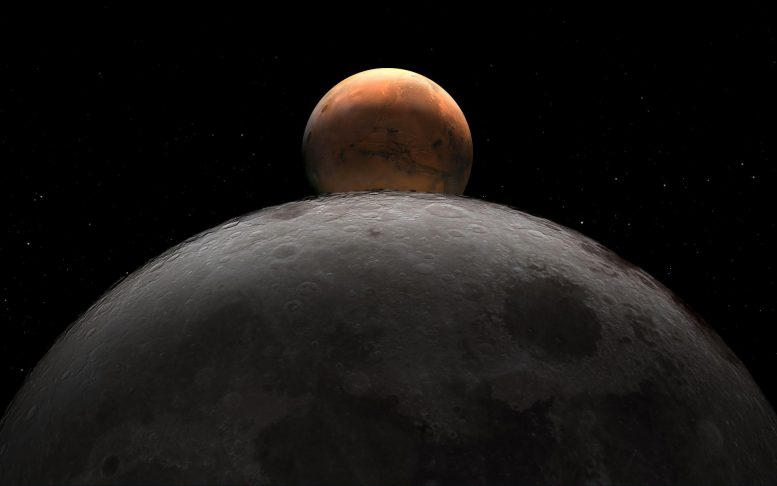
NASA has established the Moon to Mars Program Office at its Washington headquarters to oversee human exploration activities on the Moon and Mars. The office will be led by Amit Kshatriya and will focus on hardware development, mission integration, and risk management for programs such as the Artemis missions. Key areas of development include the Space Launch System rocket, Orion spacecraft, human landing systems, spacesuits, and the Gateway, among others. The new office will also coordinate planning and analysis for future human missions to Mars. This is part of NASA’s ongoing efforts to establish a long-term lunar presence and prepare for human exploration of the Red Planet.
NASA has established the new Moon to Mars Program Office at NASA Headquarters in Washington to carry out the agency’s human exploration activities at the Moon and Mars for the benefit of humanity. Amit Kshatriya will serve as the agency’s first head of the office, effective immediately.
This new office resides within the Exploration Systems Development Mission Directorate, reporting to its Associate Administrator Jim Free.
“The Moon to Mars Program Office will help prepare NASA to carry out our bold missions to the Moon and land the first humans on Mars,” said NASA Administrator Bill Nelson. “The golden age of exploration is happening right now, and this new office will help ensure that NASA successfully establishes a long-term lunar presence needed to prepare for humanity’s next giant leap to the Red Planet.”
Key Objectives and Responsibilities
As directed by the 2022 NASA Authorization Act, the Moon to Mars Program Office focuses on hardware development, mission integration, and risk management functions for programs critical to the agency’s exploration approach that uses Artemis missions at the Moon to open a new era of scientific discovery and prepare for human missions to Mars. This includes the Space Launch System rocket, Orion spacecraft, supporting ground systems, human landing systems, spacesuits, Gateway, and more related to deep space exploration. The new office will also lead planning and analysis for long-lead developments to support human Mars missions.

Kshatriya previously served as acting deputy associate administrator for Common Exploration Systems Development, providing leadership and integration across several of the programs that now fall within the new office.
Lakiesha Hawkins will serve as the deputy for the Moon to Mars Program Office. As deputy, Hawkins will support Kshatriya in all aspects of the office’s day-to-day management and operations. Stephen Creech will serve as the technical deputy for the office. In this capacity, Creech will be responsible for ensuring technical issues are identified and brought to resolution across all of the offices and programs under the Moon to Mars Program Office.
Strategic Alignment with Exploration Goals
Updates to the mission directorate also include the Strategy and Architecture Office which develops the integrated master plan based on the agency’s Moon to Mars Objectives, alongside NASA’s Science, Space Technology, and Space Operations Mission Directorates. With these changes, NASA will continue to lead the nation in exploration while also building a coalition of international partners in deep space with the Artemis Accords.
Since establishing its Exploration Systems Mission Directorate in September 2021, NASA has worked diligently to assess and align its two human spaceflight organizations while remaining focused on Artemis and other agency mission priorities including International Space Station operations, commercial crew and cargo, and more.
The Space Operations Mission Directorate remains responsible for all low-Earth orbit space operations and is focused on the space station, space communications, and navigation supporting all NASA human and science exploration missions, as well as a continued development of a vibrant and expanding commercial space economy closer to home. Space Operations also manages the Launch Services Program, Commercial Crew Program, Commercial Low Earth Orbit Development Program, Human Spaceflight Capabilities, and other associated resources.
Other organizational updates include a business function for each mission directorate to manage administrative processes and financial formulation, and the exploration operations function will report to the Moon to Mars Program to maximize efficiency for integrated risk management with the relevant hardware programs supporting Artemis missions.
Through Artemis, NASA will land the first woman and the first person of color on the Moon, paving the way for a long-term, sustainable lunar presence to explore more of the lunar surface than ever before and prepare for future astronaut missions to Mars. This is NASA’s Moon to Mars exploration approach.
Never miss a breakthrough: Join the SciTechDaily newsletter.
Follow us on Google and Google News.
2 Comments
There’s a Starship launch date, if you people are interested.
NASA needs to focus less on planning and more on action.