
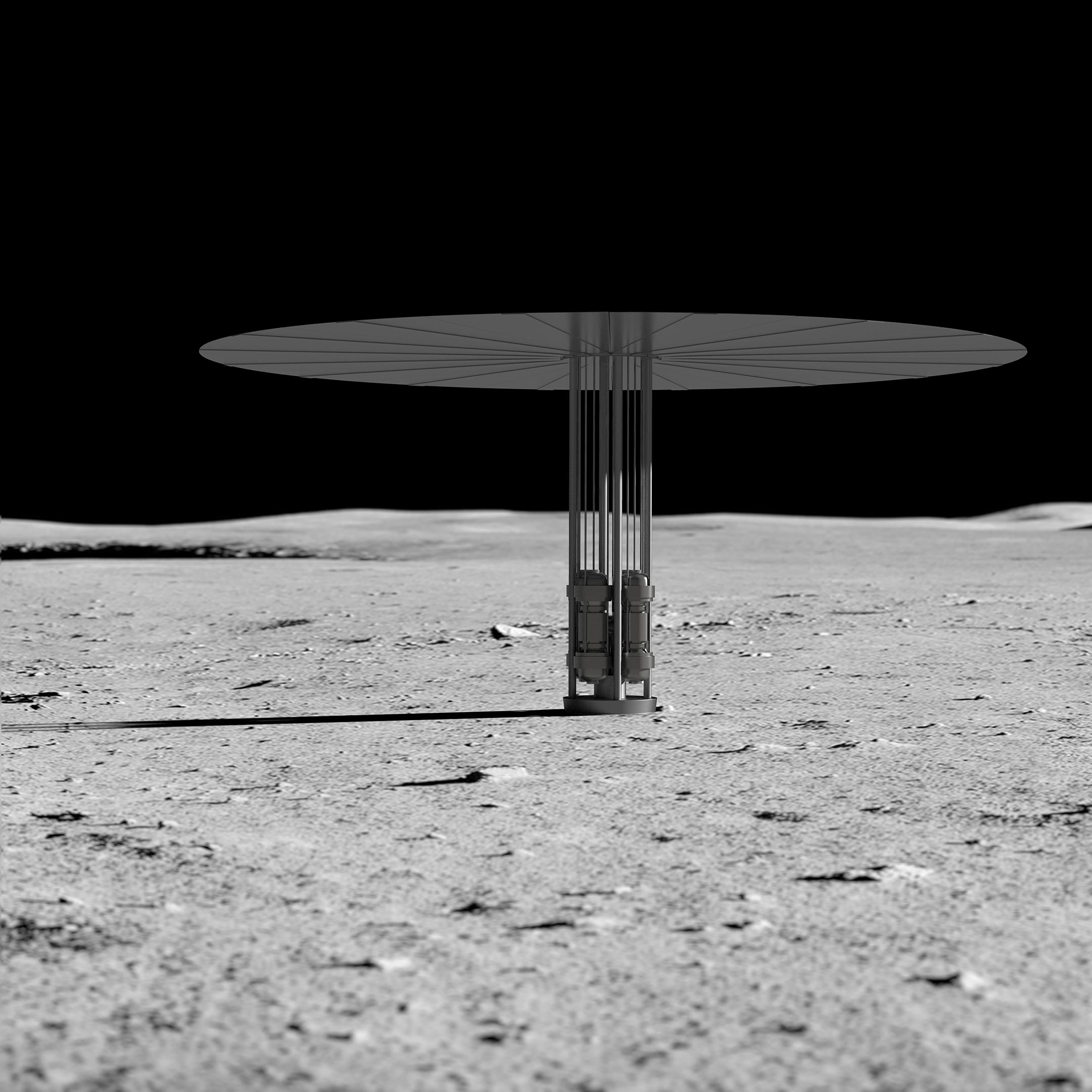
It might sound like science fiction, but scientists are preparing to build colonies on the moon and, eventually, Mars. With NASA planning its next human mission to the moon in 2024, researchers are looking for options to power settlements on the lunar surface. According to a new article in Chemical & Engineering News, the weekly newsmagazine of the American Chemical Society, nuclear fission reactors have emerged as top candidates to generate electricity in space.
When it comes to powering an astronauts’ settlement, there are many factors to consider, writes correspondent Tien Nguyen in collaboration with ACS Central Science. The power source must be capable of being transported safely from Earth and of withstanding the harsh conditions of other worlds. Past space missions have used solar power as a scalable and renewable source of electricity, but the dark craters of the moon or the dusty surface of Mars may not offer enough light. The limited lifespans of battery and fuel cell technologies typically relegate them to backup options. Nuclear devices that run on decaying plutonium-238 have been used to power spacecraft since the 1960s, including Mars rovers and the space probes Voyager and Cassini, but they don’t provide enough energy for a settlement. In contrast, nuclear fission reactors that split uranium-235 atoms, which are used by power plants here on Earth, could provide a reliable power source for a small space settlement for several years, scientists estimate.
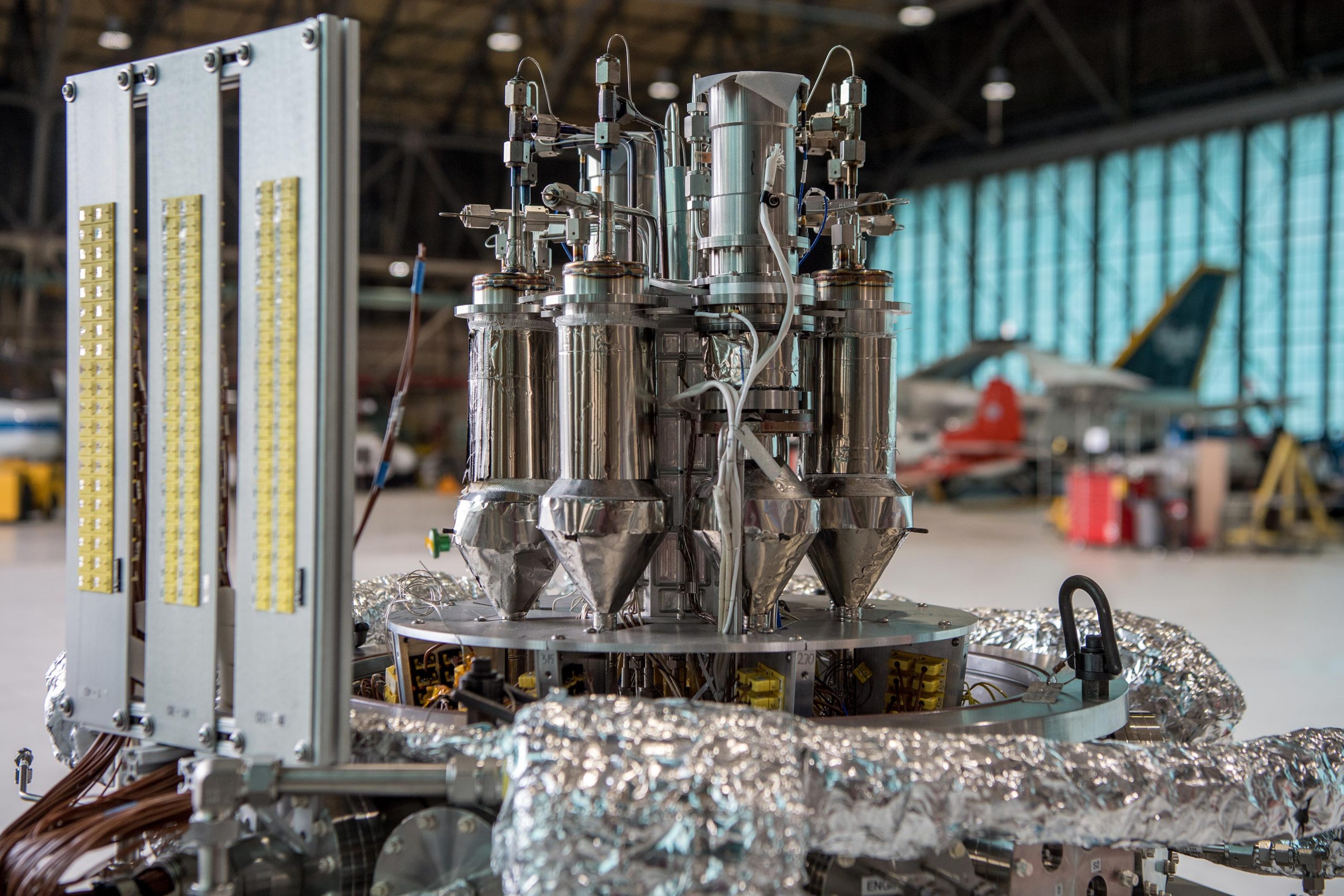
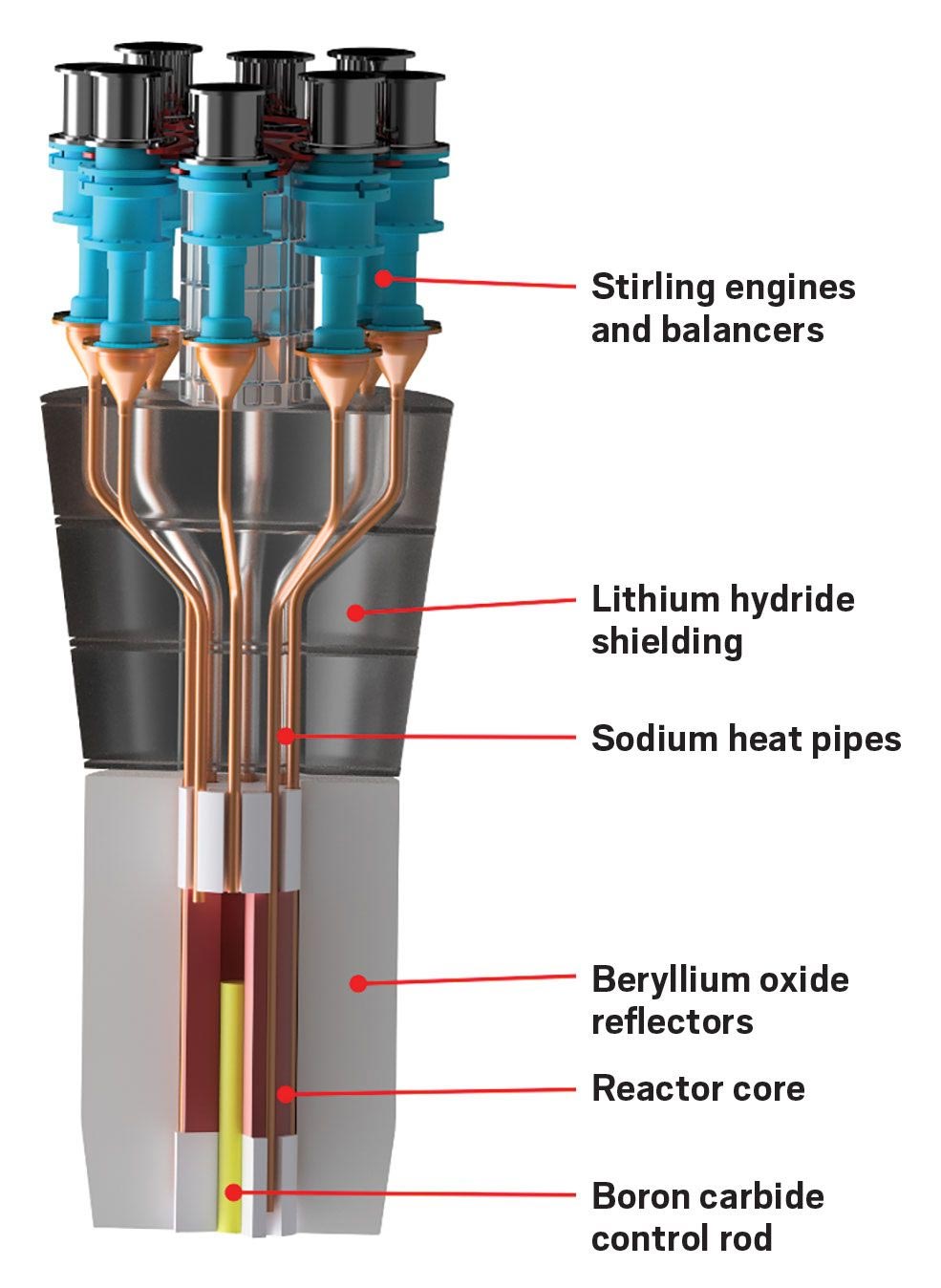
Despite funding and design setbacks, researchers are reinvigorating efforts to create a nuclear reactor for space travel and settlement. In the early 2010s, a team of scientists from Los Alamos National Laboratory, NASA, and the U.S. Department of Energy came together with the goal of developing a new nuclear fission system that could produce at least 10 kilowatts of energy. With a core containing molybdenum and highly enriched uranium, the reactor uses nuclear fission to generate heat, which is converted to electricity by simple piston-driven engines. The prototype, which was tested in 2018, produced up to 5 kilowatts of electricity. The researchers hope to optimize the technology to achieve the desired 10-kilowatt output. They also say that transporting uranium in space can be done safely, as the alpha particles emitted by the core are weak and can be fully contained by proper shielding.
Reference: “Powering Human Settlements in Space” by Tien Nguyen, 15 May 2020, ACS Central Science.
DOI: 10.1021/acscentsci.0c00382
“Why NASA Thinks Nuclear Reactors Could Supply Power for Human Colonies in Space” by Tien Nguyen, 15 May 2020, Chemical & Engineering News.
Link
The American Chemical Society (ACS) is a nonprofit organization chartered by the U.S. Congress. ACS’ mission is to advance the broader chemistry enterprise and its practitioners for the benefit of Earth and its people. The Society is a global leader in providing access to chemistry-related information and research through its multiple research solutions, peer-reviewed journals, scientific conferences, eBooks and weekly news periodical Chemical & Engineering News. ACS journals are among the most cited, most trusted and most read within the scientific literature; however, ACS itself does not conduct chemical research. As a specialist in scientific information solutions (including SciFinder® and STN®), its CAS division powers global research, discovery and innovation. ACS’ main offices are in Washington, D.C., and Columbus, Ohio.
Never miss a breakthrough: Join the SciTechDaily newsletter.
Follow us on Google and Google News.
12 Comments
Gotta love engineers putting the control rod at the bottom – if there’s a failure it drops away from the reactor!
“this compact reactor was designed with simplicity in mind”, the simplest way to a meldown.
I would think failsafe was a basic principle, apparently not.
Molten salt reactors do not meltdown or explode, even with complete system failure. They are also much more efficient, produce much safer waste at a small fraction of the volume, and can even burn the waste of the current light water reactors.
no mowing parts?? and how exactly do a stirling engine operate?
They meant there are no moving parts in reactor itself. I think it’s obvious.
very cynical but very typical for you to think you’ve got a more informed opinion than the engineers on this project.
It is logical to utilize this power source, can we just do it and stop talking about. No risk…no gain.
Not only do you want to ruin mother earth but you now want to ruin the other planets too. Leave the moon etc alone. It doesn’t belong to you.
Fortunately, it doesn’t belong to you either, so you can’t catch me there. It doesn’t matter how pristine space remains, if we can’t go there.
Natalie, I’d be curious to know how you define “ruin”. Will our presence there be ruinous, or is it something else?
Billy – I am not sure that Natalie can even answer your question. People who are under-educated always know more than people who have the education and experience.
Don’t YA LOVE it when people with no background in Science or Engineering believe that they are smart enough to be on the same continent as those who have MENSA IQ’s and who have devoted their lives to their passion? That these people feel they even have the right to criticize the work of the best minds in the world.
I guess it gives them joy at some level to THINK they have challenged smarter people which is actually funny. I meet them all the time and I don’t argue with stupid because they are incapable of holding a real conversation because they will never understand.
Stupid lives on!
The reactor, stirling engines, piping, etc. are much heavier than the Control Rod. Perhaps the Control Rod is firmly mounted to the base, and the reactor et. al. are held up on jacks to make the thing go. Any problem, lower jacks. Extreme failedsafeidness.