
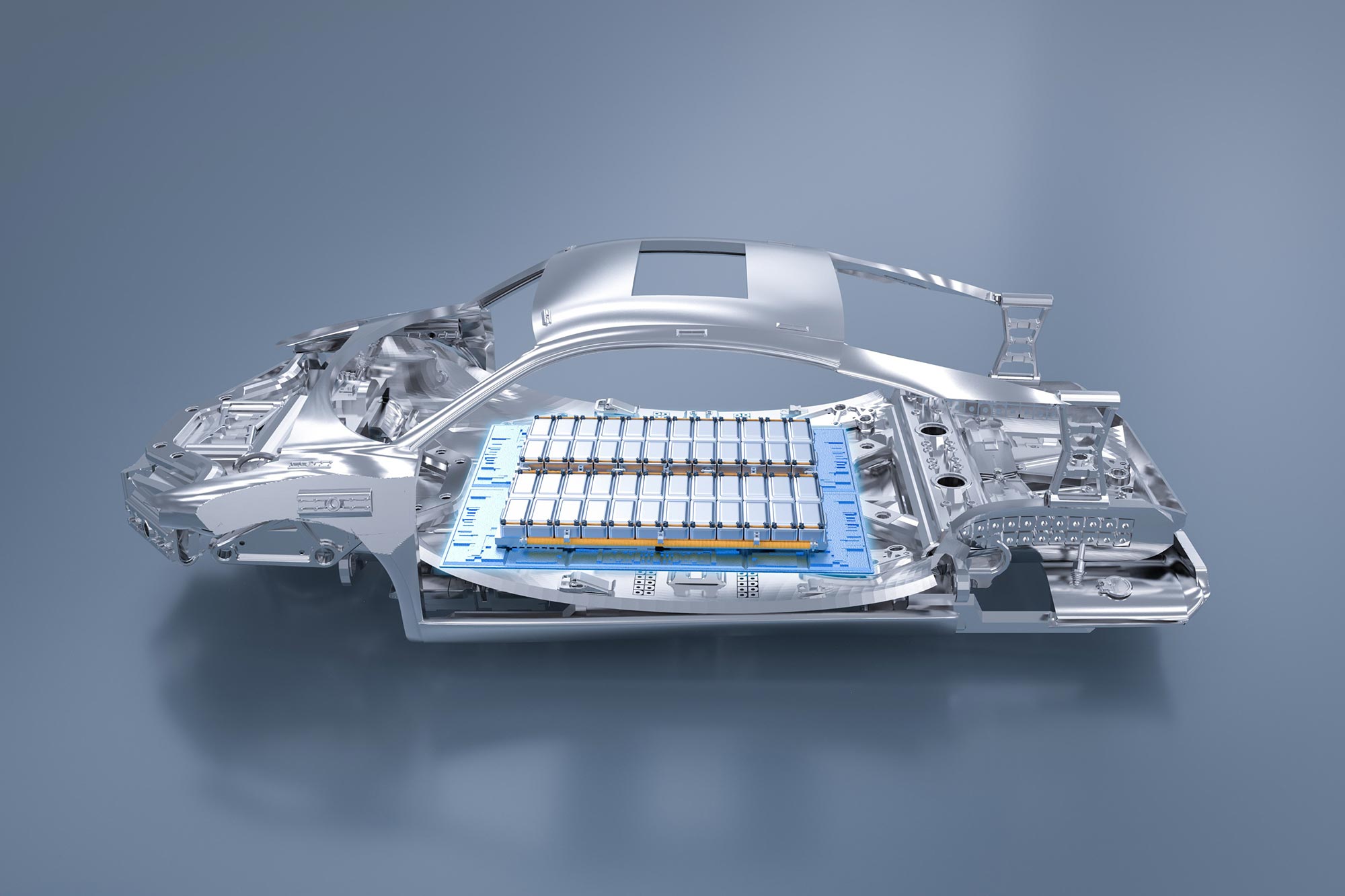
Researchers have developed a sustainable lithium-ion battery using manganese, which could revolutionize the electric vehicle industry.
Published in ACS Central Science, the study highlights a breakthrough in using nanostructured LiMnO2 with monoclinic symmetry to improve battery performance and stability without the typical voltage decay. This innovation not only enhances fast-charging capabilities but also addresses the long-standing issue of manganese dissolution.
Manganese-Based Li-ion Batteries
Lithium-ion (or Li-ion) batteries are heavy hitters when it comes to the world of rechargeable batteries. As electric vehicles become more common in the world, a high-energy, low-cost battery utilizing the abundance of manganese (Mn) can be a sustainable option to become commercially available and utilized in the automobile industry.
Currently, batteries used for powering electric vehicles (EVs) are nickel (Ni) and cobalt (Co)-based, which can be expensive and unsustainable for a society with a growing desire for EVs. By switching the positive electrode materials to a lithium/manganese-based material, researchers aim to maintain the high performance of Ni/Co-based materials but with a low-cost, sustainable twist.
Researchers will publish their results today (August 26) in ACS Central Science.
Innovations in Electrode Materials
Li-ion batteries are not new players in the field of rechargeable electronics, but there are always ways to innovate and improve already reliable methods. LiMnO2 as an electrode material has been studied in the past but has always been limited by restrictive electrode performance.
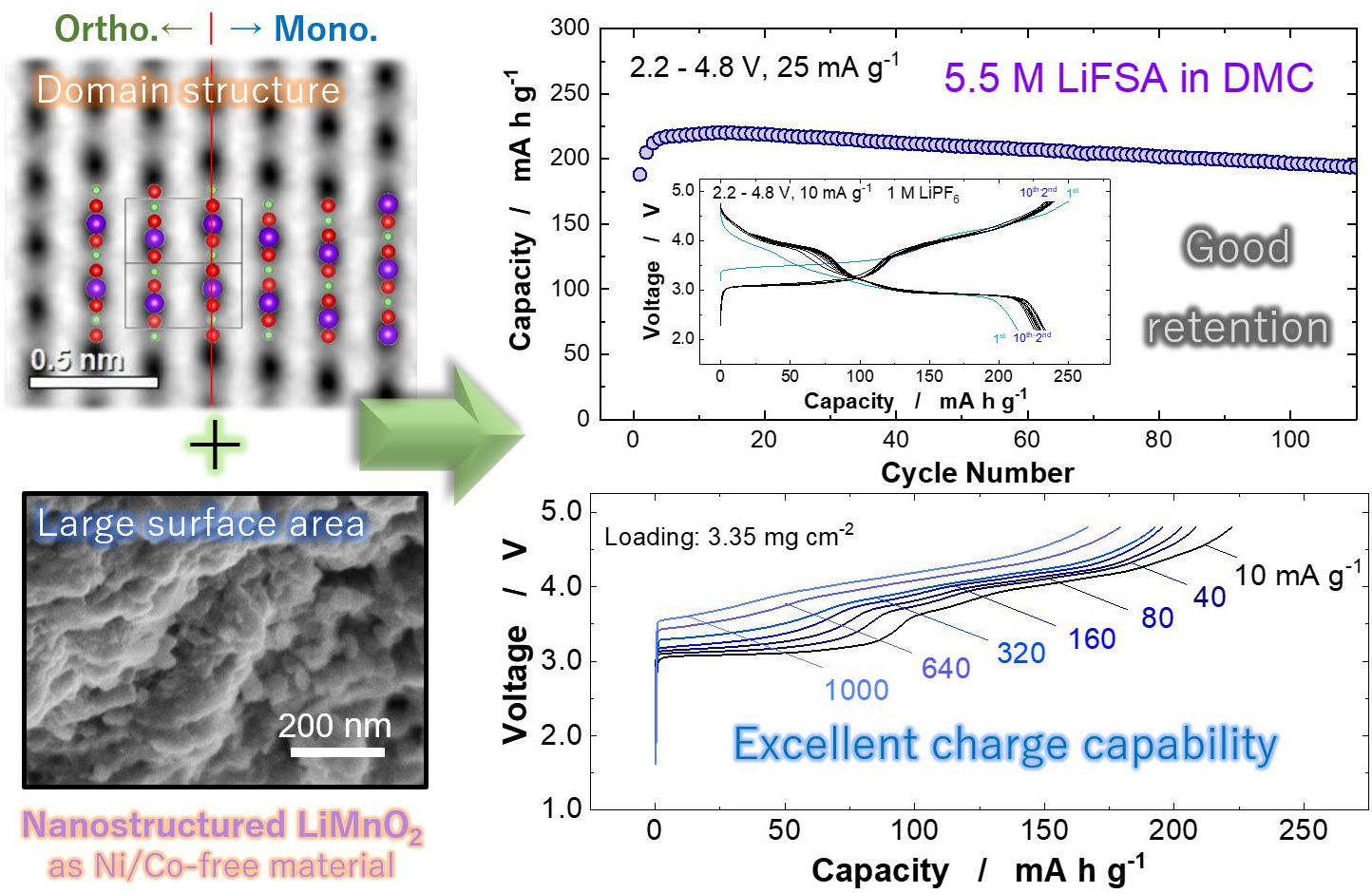
“Through the systematic study on different LiMnO2 polymorphs, it is found that the monoclinic layered domain effectively activates structural transition to the spinel-like phase. From this finding, nanostructured LiMnO2 with the monoclinic layered domain structures and high surface area has been directly synthesized by using a simple solid-state reaction,” said Naoaki Yabuuchi, author and researcher of the study.
Breakthrough in Monoclinic LiMnO2 Structures
A monoclinic system refers to the type of group symmetry of a solid crystalline structure. A Li/Mn arrangement with the monoclinic symmetry appears to be key in making LiMnO2 a feasible option for a positive electrode material. Without the structural phase transition the monoclinic domain allows, electrode performance would be limited thanks to the sub-optimal crystalline structure of LiMnO2 and accompanying phase transitions.
Enhancing EV Battery Performance
After observing and testing the various polymorphs, it was determined the needed structure can be synthesized directly from two components without having to use an intermediary step. The resulting material is competitive with nickel based layered materials and boasts excellent fast-charging abilities, which is indispensable for electric vehicles.
The nanostructured LiMnO2 with the monoclinic layered domain is synthesized by a simple calcination process to yield a product with high-energy density, reaching 820 watt-hours per kilogram (Wh kg-1), compared to about 750 Wh kg-1 for nickel-based layered materials and 500 Wh kg-1 for other low-cost lithium-based materials.
Stability and Longevity of Nanostructured LiMnO2
There is also no reported voltage decay using nanostructured LiMnO2, which is common in manganese-based materials. Voltage decay is a phenomenon in which the voltage decreases gradually, over time reducing the performance and responsiveness of an electronic. However, it does not seem to be an observable issue in the case of nanostructured LiMnO2, which is the subject of the study.
Addressing Practical Challenges
Though there are promising results, a practical issue can be observed: the dissolution of manganese. Over time, manganese can dissolve due to many factors, such as phase changes or reacting with acidic solutions. Fortunately, this can be curbed or completely mitigated by the use of a highly concentrated electrolyte solution and a lithium phosphate coating.
Researchers hope their findings contribute to a more sustainable energy source than fossil fuels, especially concerning electric vehicles. The performance of LiMnO2, with its competitive energy density compared to nickel-based materials, demonstrates the potential alternative materials can have to produce environmentally friendly products that are sustainable both in production and as a long-term investment. An ideal future for nanostructured LiMnO2-based electrode materials would involve commercialization and industrial production in the luxury electric vehicle industry.
Reference: “A Practical and Sustainable Ni/Co-Free High-Energy Electrode Material: Nanostructured LiMnO2” by Yuka Miyaoka, Takahito Sato, Yuna Oguro, Sayaka Kondo, Koki Nakano, Masanobu Nakayama, Yosuke Ugata, Damian Goonetilleke, Neeraj Sharma, Alexey M. Glushenkov, Satoshi Hiroi, Koji Ohara, Koji Takada, Yasuhiro Fujii and Naoaki Yabuuchi, 26 August 2024, ACS Central Science.
DOI: 10.1021/acscentsci.4c00578
Yuka Miyaoka, Yuna Oguro, Yosuke Ugata and Naoaki Yabuuchi of the Department of Chemistry and Life Science at Yokohama National University with Yosuke Ugata and Naoaki Yabuuchi also of the Advanced Chemical Energy Research Center at Yokohama National Univeristy, Takahito Sato of the Department of Applied Chemistry at Tokyo Denki University, Sayaka Kondo, Koki Nakano and Masanobu Nakayama of the Frontier Research Institute for Materials Science at Nagoya Institute of Technology, Damian Goonetilleke and Neeraj Sharma of the School of Chemistry at the University of New South Wales, Alexey M. Glushenkov of the Research School of Chemistry at the Australian National University, Satoshi Hiroi and Koji Ohara of the Faculty of Materials for Energy at Shimane University, Koji Takada and Yasuhiro Fujii of the Tosoh Corporation contributed to this research.
JSPS, Grant-in-Aid for Scientific Research, JST, MEXT Program: Data Creation and Utilization-Type Material Research and Development Project, JST Adopting Sustainable Partnerships for Innovative Research Ecosystem (ASPIRE), JST The Green Technologies for Excellence (GteX) Program, the Australian Research Council, the Photon Factory Program Advisory Committee, the Japan Synchrotron Radiation Research Institute (JASRI), the Aichi Synchrotron Radiation center, the Australian Nuclear Science and Technology Organisation (ANSTO) made this research possible.
Never miss a breakthrough: Join the SciTechDaily newsletter.
Follow us on Google and Google News.
2 Comments
As long as lithium is involved, these things are gonna burn and be unsafe and unclean.
Hello, we are lithium battery pack custom factory https://em3evbattery.com/
I searched this article and would like to exchange a friendship link with your website first.