
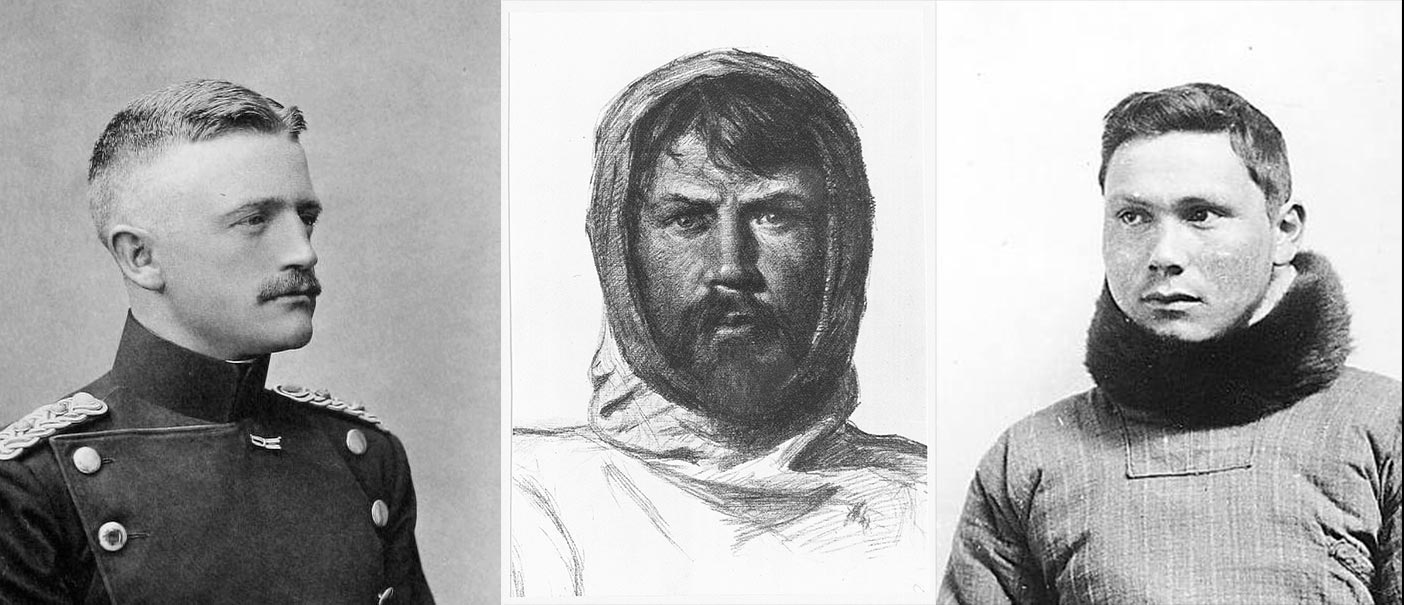
The Denmark Expedition set out to explore unknown Inuit land in 1906. Three members died.
Chemical analysis of a black spot in a diary sheds new light on the destiny and tragic death of legendary Inuit polar expedition member Jørgen Brønlund in Northeast Greenland in 1907.
Jørgen Brønlund was one of the participants in the legendary Mylius Erichsen’s Denmark Expedition to Greenland 1906-08. In 1907, he died in a small cave of hunger and frostbite, but before that, he made one last note in his diary:
“Perished 79 Fjord after trying to return home over the ice sheet, in November Month I come here in waning moonlight and could not continue from Frost in the Feet and the Dark.”
The Danish expedition had traveled to Northeast Greenland the year before to explore and map the most northerly Greenland and also to determine whether the 50,000 square kilometer (19,000 square mile) Peary Land was a peninsula or an island. If an island, it would accrue to the Americans. If a peninsula, it would be part of Danish territory.
Peary Land
Peninsula in northeast Greenland, named after the American polar explorer R.E. Peary, who believed that the area was an island and thus not part of Denmark. This was disproved by the Denmark Expedition, and Peary Land remained Danish. Peary Land is uninhabited.
Three participants died
It was after a failed attempt to get into the Independence Fjord that Jørgen Brønlund and two other participants on the expedition’s sled team 1 eventually had to give up.
A few days before Brønlund died, the two others from sled team 1 died: Expedition commander Mylius Erichsen and Niels Peter Høegh Hagen. Neither their corpses nor diaries have since been found.
Jørgen Brønlund’s body and diary were found, and almost ever since, the diary has been kept at the Royal Library in Copenhagen.
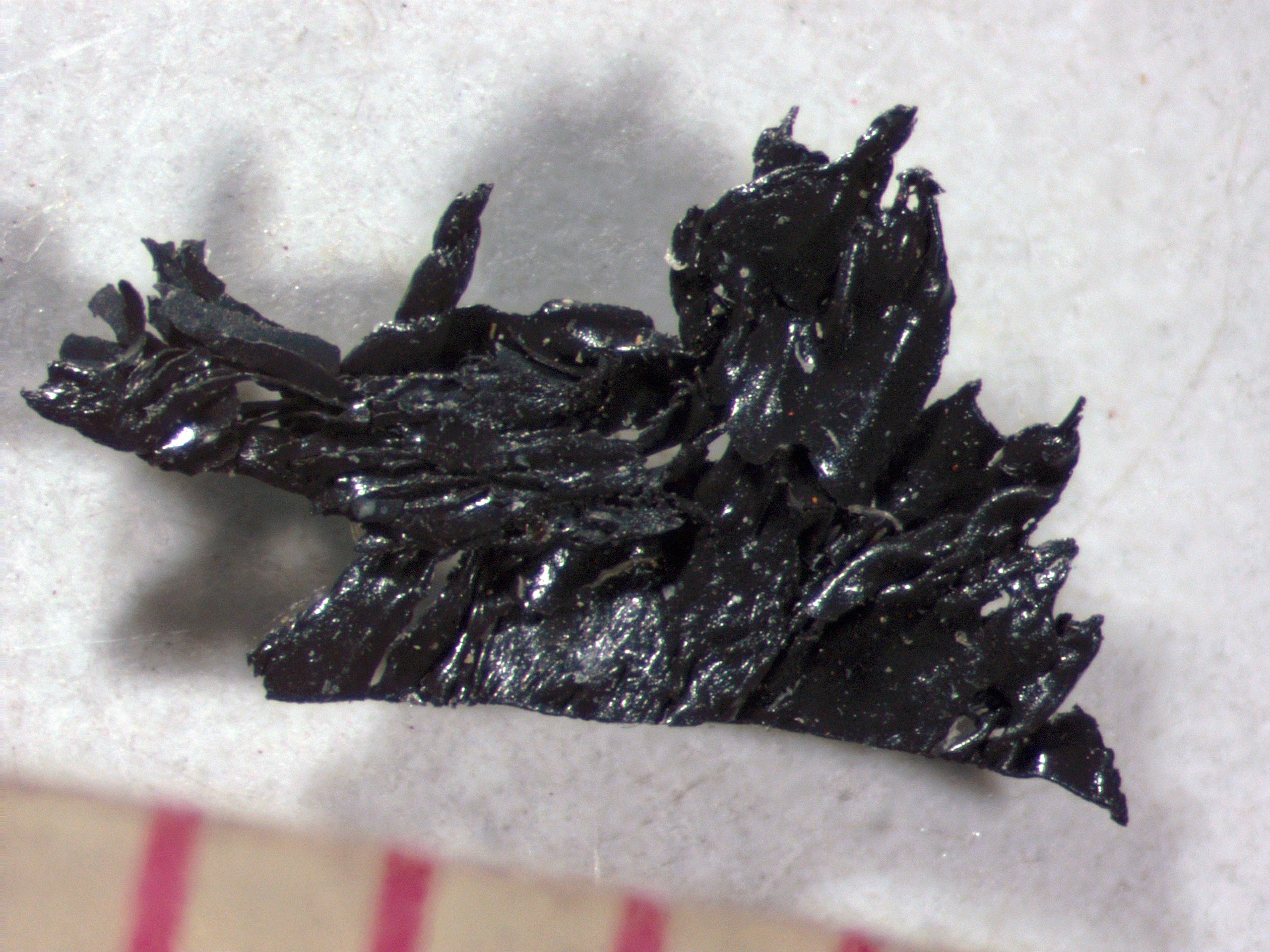
The Last Page of the Diary
Now chemists from the University of Southern Denmark have had the opportunity to analyze a very specific part of the diary’s last page; more specifically, a black spot below Jørgens Brønlund’s last entry and signature.
The analysis reveals that the spot consists of the following components: burnt rubber, various oils, petroleum, and feces.
This new knowledge gives a unique insight into Brønlund’s last hours, says professor of chemistry, Kaare Lund Rasmussen, Department of Physics, Chemistry and Pharmacy at the University of Southern Denmark.
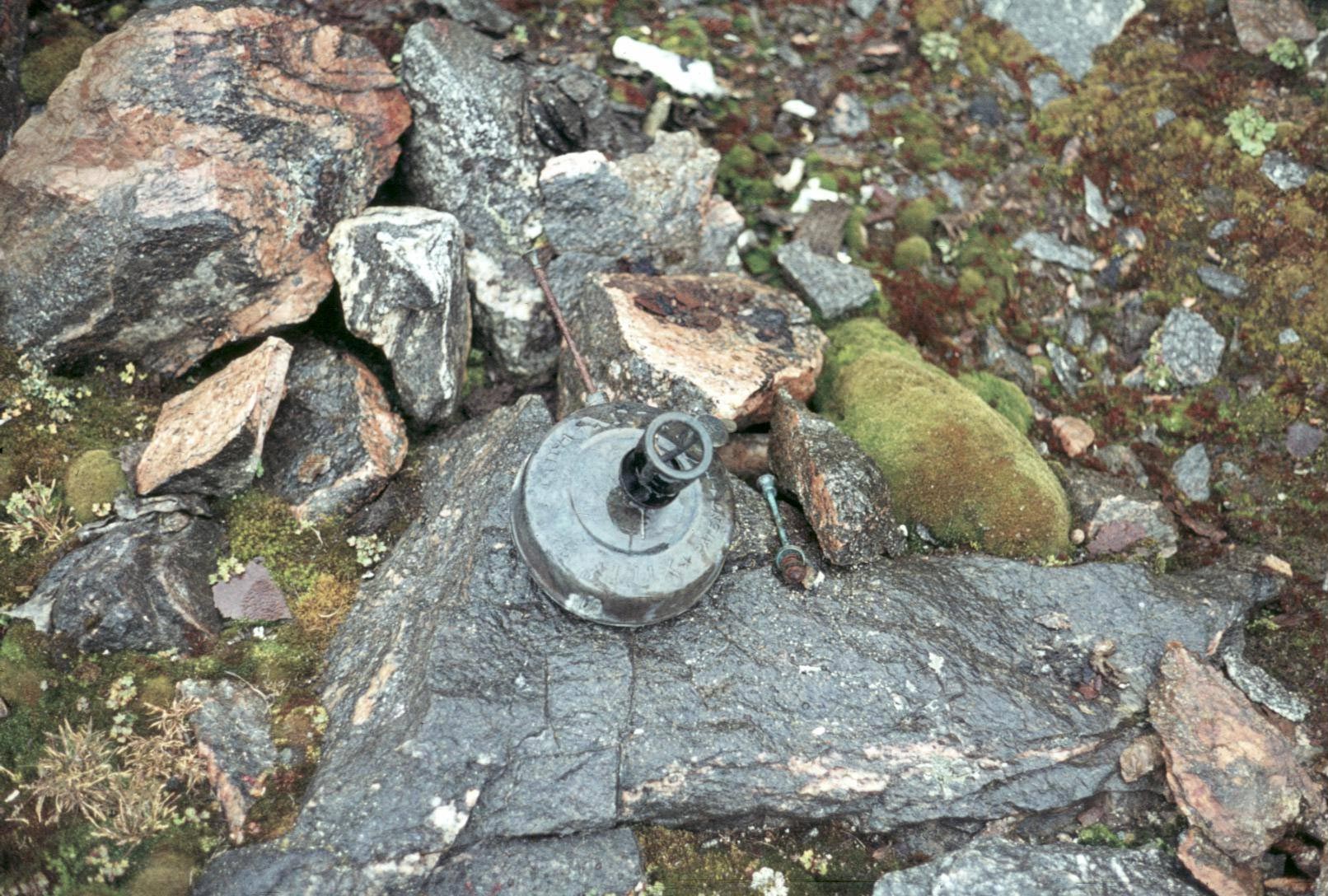
One Last Attempt To Light a Fire
I see for me, how he, weakened and with dirty, shaking hands, fumbled in an attempt to light the burner, but failed, he says.
As the last survivor of sled team 1, Brønlund had reached a depot on Lambert’s Land and had at his disposal a LUX petroleum burner, matches, and petroleum. But there was no metabolized alcohol to preheat the burner.
He had to find something else to get the burner going. You can use paper or oiled fabric, but it is difficult. We think he tried with the oils available, because the black spot contains traces of vegetable oil and oils that may come from fish, animals, or wax candles, says Kaare Lund Rasmussen.
Found After Four Months
The spot’s content of burnt rubber probably comes from a gasket in the Lux burner. The gasket may have been burned long before Brønlund’s crisis in the cave, but it may also have happened during his last vain attempt to light a fire.
Brønlund’s corpse and diary were found four months later, when spring came, by Johan Peter Koch and Tobias Gabrielsen, who had left Danmarkshavn to find the missing members of sled team 1.
The diary was found at Brønlund’s feet and was taken back to Denmark and is now kept at the Royal Library in Copenhagen.
Brønlund’s Lux burner was found in 1973 by the Danish Defense Sirius Patrol. After the re-burial of Brønlund in 1978, it was donated to the Arctic Institute in Copenhagen.
Reference: “In the darkest hour: Analyses of a black spot on the last page of the diary of polar explorer Jørgen Brønlund (d. 1907)” by K. L. Rasmussen, T. Delbey, L. Skytte, J. La Nasa, M. P. Colombini, D. B. Ravnsbæk, B. Jørgensen, F. Kjeldsen, B. Grønnow and S. Larsen, 16 November 2020, Archaometry.
DOI: 10.1111/arcm.12641
Never miss a breakthrough: Join the SciTechDaily newsletter.
Follow us on Google and Google News.
6 Comments
“Petroleum”. Is that kerosine (paraffin) or petrol? The photo of the “burner” looks as if it is a kerosine stove normally pre-heated by methanol or some solid fuel (metaldehyde). The pump with its attached washer can be seen next to the stove, so who removed it form the stove? If the leather washer had failed (split/torn/worn out) there would have been no way to pump up the pressure to maintain the flame even if pre-heating using burnt paper or some other substrate (dead moss or lichen?) mixed with kerosine had been possible.
Despite modern “camping gas” stoves, that type of kerosine stove is still the best for use when camping in sub-zero conditions. For those interested, Mikkelsen’s book “Two against the Ice” is a fascinating account of a subsequent Danish expedition (1909-12) to attempt to find out what had happened to Erichsen’s sledge party #1. In 1910 Rasmussen and Freuchen crossed the Greenland ice-cap from Thule also in search of “Peary Land” and seeking to find relics from the Erichsen Expedition.
Mikkelson in “Two against the Ice” describes finding reports in cairns built by Erichsen outlining the travels and travails of sledge party #1.
Just 15 years later aircraft engineering was such that Amundsen and Ellsworth were able to use two Dornier aircraft to attempt to fly to the North Pole. Now we can visit Greenland via satellite imagery of remarkable clarity. How times have changed and the great haunted places of the world have become diminished.
Blimps were the best idea. 🙂 What went wrong? Winds too high?
Great story, in this 1906 fascinating story.
Explorers of the two poles were often incredibly naive and often poorly equipped. One expedition found the ship officers bringing the family silver services and no real arctic clothing at all. The crew of the Jeannette perished after their improperly constructed vessel was crushed by the ice. A statistical table of the various expeditions and voyages would be enlightening if available or made available.
Plenty of Greenland whalers used “improperly constructed ships” and Ferdinand Magellan and Sir Francis Drake circumnavigated the world in ships that would be hard put to be registered as ocean-going vessels these days.
The “Jeanette” was crushed by the pressure ridges formed by screw ice off Wrangel Island, as was Steffanson’s “Karluck”about 30 yearrs later.
Real Arctic clothing back in Franklin’s/De Long’s days? Ask the Innuit of the day. Not that many Innuit advisers to the navies of the time in the UK or USA in those days.
Enlighten me