
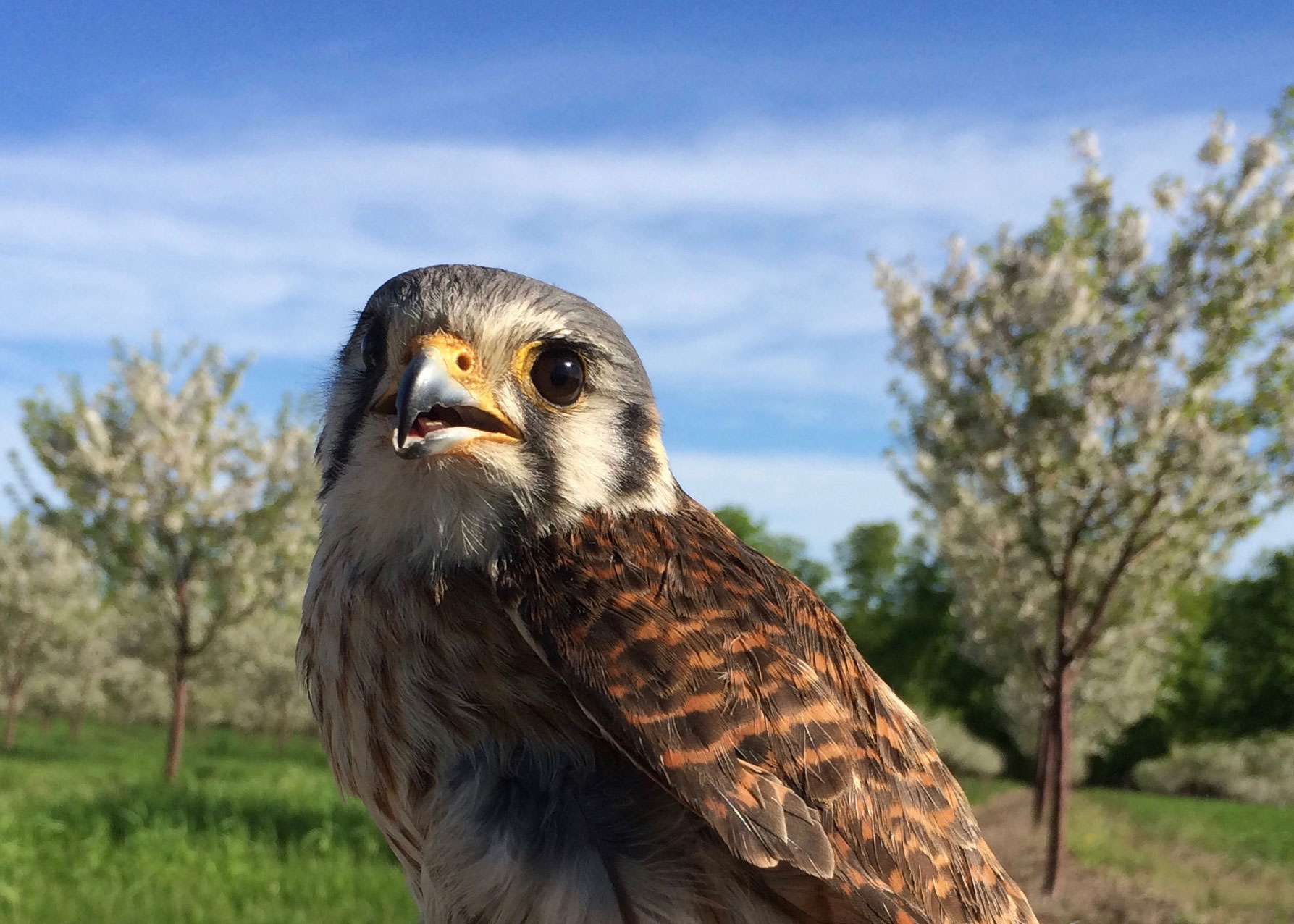
By keeping hungry birds away from crops and preventing their droppings from contaminating fruit, kestrels may provide farmers with more than one benefit.
The cherry harvest ended months ago, but some growers in northern Michigan are already looking ahead to next season. Their attention is focused on the expected return of a small bird of prey that may help protect future crops.
The American kestrel is the smallest falcon in the United States. As a predator, it naturally discourages smaller birds that often feed on fruit in orchards. New research now suggests that these birds of prey may provide another advantage as well. By keeping fruit-eating birds away, kestrels may also help improve food safety.
Raptors deter orchard pests
This conclusion comes from a Michigan State University study published in the Journal of Applied Ecology.
“They’re cool to watch in flight,” said lead author Olivia Smith. Kestrels often hover in place while scanning the ground for insects, mice, and small birds.
When kestrels chase away birds that peck at cherries, they also reduce the chances that those birds will leave droppings on the fruit. According to the researchers, this natural behavior may help limit contamination in orchards.
The findings suggest that encouraging kestrels to live near orchards could help farmers produce safer crops while also protecting yields.
Conventional bird controls fall short
“It’s hard to keep birds out of crops,” said Smith, an assistant professor of horticulture and member of MSU’s Ecology, Evolution, and Behavior Program.
Farmers often rely on tools such as nets, noise makers, scarecrows, and sprays to discourage birds. However, these methods can be expensive and may not always be effective.
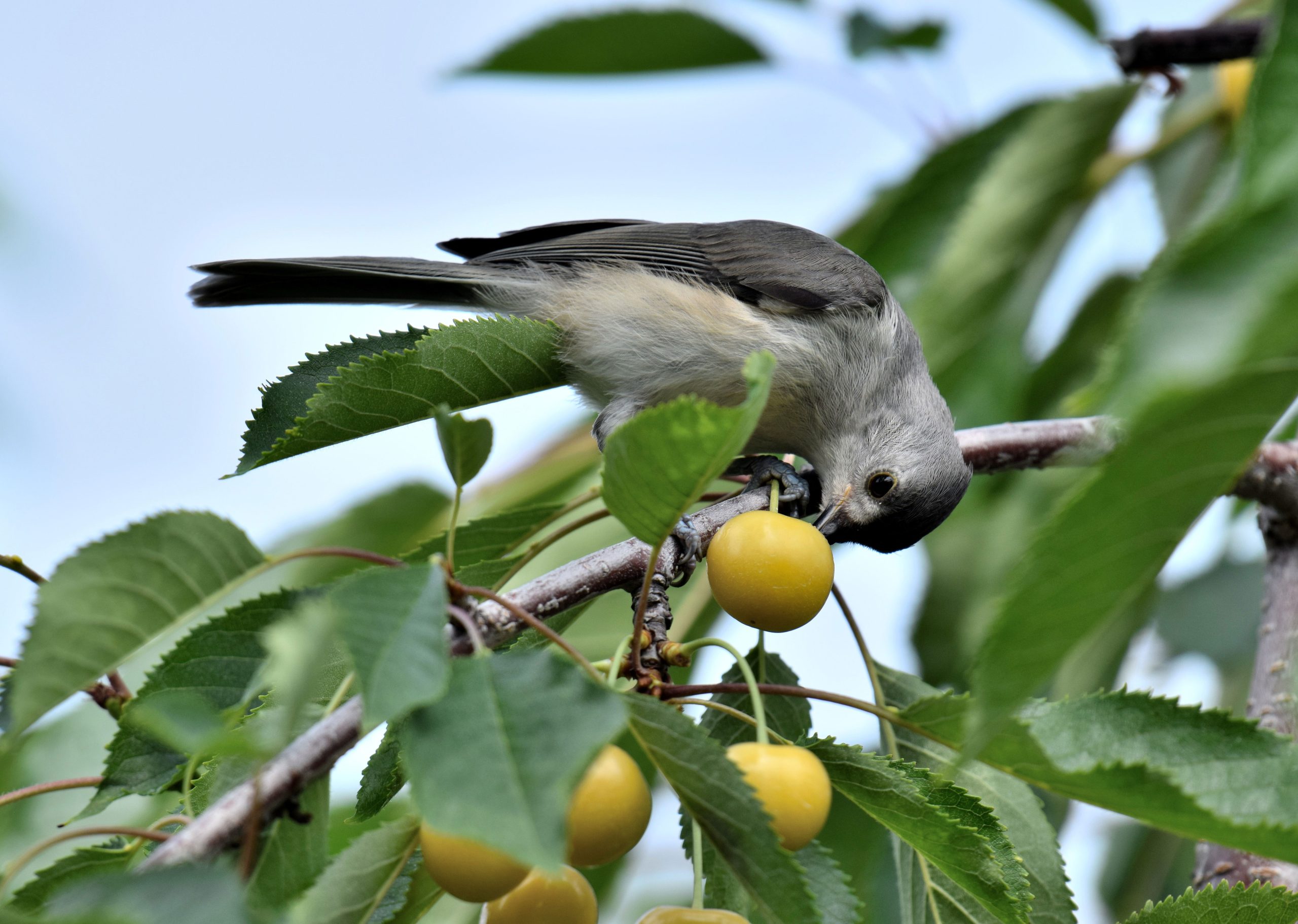
Even when these strategies are used, sweet cherry growers in states including Michigan, Washington, California, and Oregon still lose between 5% and 30% of their harvest to birds each year.
Birds create another challenge as well. In addition to eating fruit, they leave droppings behind. Some experts worry that these droppings may carry pathogens that can cause illness in people.
Nest boxes bring kestrels in
To explore whether predators could help address these problems, researchers tested a simple idea. They installed nest boxes to attract kestrels to orchards.
The team studied eight sweet cherry orchards in northern Michigan. Because kestrels typically raise their chicks in tree cavities or other small openings, they quickly began using the nest boxes provided.
As harvest season approached, researchers carefully recorded all birds seen or heard within the orchards.
The results were clear. Birds such as robins, grackles, and starlings were far less likely to visit orchards where kestrels were nesting. By driving away these fruit-eating birds, kestrels reduced cherry damage more than tenfold.
Fewer birds, fewer droppings
The presence of kestrels also appeared to reduce another problem. Researchers found fewer signs of bird droppings on cherry trees in orchards where kestrels were present. Overall, kestrels were linked to a threefold reduction in droppings on branches.

“Certainly, kestrels poop too,” said senior author Catherine Lindell, associate professor emerita of Integrative Biology and a member of MSU’s Center for Global Change and Earth Observations.
However, she noted that the reduction in fruit-eating birds more than compensates for the droppings produced by kestrels themselves. Trees located closer to kestrel nest boxes were less likely to show signs of contamination.
Food safety implications emerge
Researchers also examined droppings collected in the orchards using DNA analysis. About 10% contained Campylobacter, a bacterium that commonly causes foodborne illness. Typical symptoms include diarrhea, fever, and stomach cramps.
Even so, the researchers emphasize that cherries themselves are not known to cause such outbreaks. No foodborne illness events linked to Campylobacter have been traced to cherries.
Smith also noted that the role of birds in contaminating crops remains uncertain. Only one documented outbreak has been linked to birds, a 2008 Campylobacter outbreak caused by migratory cranes in pea fields in Alaska.
Still, the findings suggest that kestrels might help improve food safety in crops that have been associated with outbreaks, including leafy greens.
“They’re really good at keeping the amount of poop down,” Smith said. “That means fewer opportunities for transmission.”
“This won’t solve all the bird problems farmers face,” she added. Kestrels are more common in some regions than others, which could limit how widely this strategy works.
“But it’s a low-cost, low-maintenance tool for growers to use in their bird management toolbox,” Lindell said.
Reference: “Falcons reduce pre-harvest food safety risks and crop damage from wild birds” by Olivia M. Smith, Pedro A. P. Rodrigues, Sarah A. Groendyk, Olivia J. Utley, Ashley de Borchgrave d’Altena, Samantha Carbonell, Kayla L. Davis, Talia Swartout, Sofia Varriano, Niesa Kettler, Rinosh Mani, Shannon D. Manning, Jennifer C. Owen, William E. Snyder and Catherine A. Lindell, 26 November 2025, Journal of Applied Ecology.
DOI: 10.1111/1365-2664.70209
Smith was supported by an EEB Presidential Postdoctoral Fellowship co-advised by Lindell and EEB faculty member Jen Owen. This work was also funded by a grant to Smith from the U.S. Department of Agriculture (2021-67012-35133).
Never miss a breakthrough: Join the SciTechDaily newsletter.
Follow us on Google and Google News.
1 Comment
I don’t like you! I don’t like your article! Was that a joke? . . . in so far as the article’s “presentation” seems to be about crediting the “authors” when even the photos of the two women might otherwise logically have had something to do with the subject matter. Besides, the disadvantages to introducing birds of prey, are, and always have been an overriding factor!