

Close Menu
    Facebook X (Twitter) Instagram
    SciTechDaily
    • Biology
    • Chemistry
    • Earth
    • Health
    • Physics
    • Science
    • Space
    • Technology
    Facebook X (Twitter) Pinterest YouTube RSS
    SciTechDaily
    Home»Biology»Circadian Rhythm Research Could Turn Early Birds Into Night Owls – Or Vice Versa
    Biology

    Circadian Rhythm Research Could Turn Early Birds Into Night Owls – Or Vice Versa

    By American Institute of PhysicsMay 4, 2021No Comments3 Mins Read
    Facebook Twitter Pinterest Telegram LinkedIn WhatsApp Email Reddit
    Share
    Facebook Twitter LinkedIn Pinterest Telegram Email Reddit
    Up Late Night Owl Concept
    Understanding the intricate network of genes that regulate sleep cycles in humans, animals, and plants can contribute to advancements in human health and crop production.

    Understanding the complex network of genes controlling sleep cycles in people, animals, plants can lead to advances in human health, crop production.

    How body clocks work could lead to science that can turn an early bird into a night owl or vice versa as well as other advances, like helping crops grow all year long.

    In Applied Physics Reviews, by AIP Publishing, scientists at Penn State report on their work advancing knowledge about circadian rhythms, the natural process that governs sleep and waking patterns in humans, animals, and plants.

    Researchers have identified a set of genes, called clock genes, that control these rhythms. But a more complicated network of genes than previously known appears related to circadian rhythms. More fully understanding this network is key to understanding how the rhythms work and could potentially be changed.

    Mapping the Circadian Genome with Statistics

    The authors detail a statistical model they are using to help identify all the genes involved in this network. With the help of scientists from other disciplines, they hope to fully understand how these genes work together to make one person more productive in the early morning while another thrives in the middle of the night.
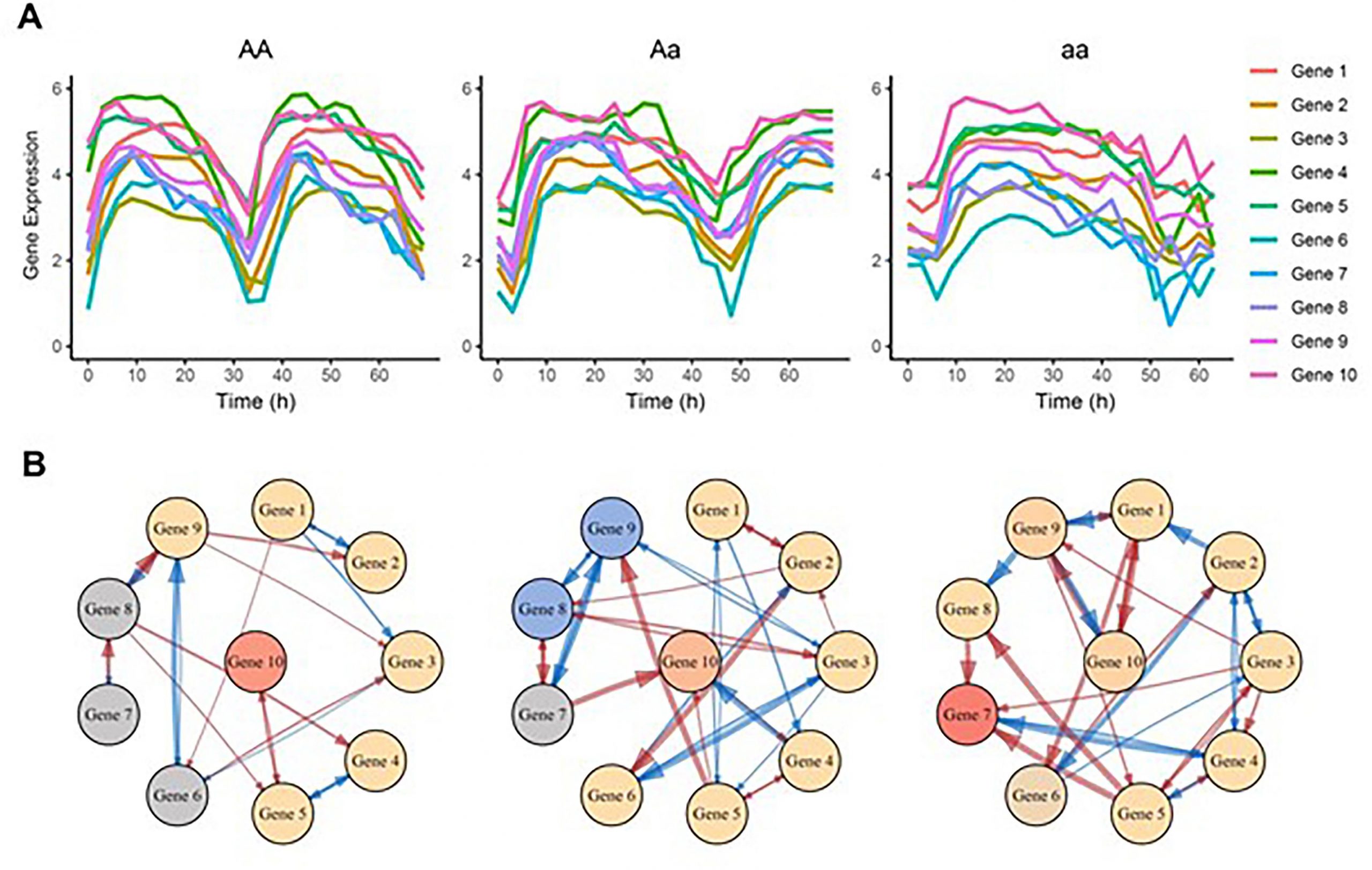
    Gene Network That Controls Circadian Rhythms
    This figure illustrates a gene network that controls circadian rhythms. Instead of there simply being one clock gene, a more complex network is involved. Credit: Rongling Wu

    Doing so could lead to the creation of medicines that would help someone who is naturally a day person but required to work nights, or one who struggles to be productive first thing in the morning.

    “If we understand the gene for a night owl, we can develop a drug to activate that gene for an early bird who has to live a lifestyle like a night owl,” said author Rongling Wu, director of the Center for Statistical Genetics at Penn State.

    Health Risks of Circadian Disruption

    There are also possible health benefits. Disrupted circadian rhythms have been linked to health issues including depression, anxiety, weight gain, and cardiovascular disease.

    And while most people probably think of circadian rhythms in humans, plants and animals have them, too. A breakthrough in understanding the clock-gene network could help increase crop production.

    For example, wheat, which tends to “rest” during the middle of the day, could be modified to grow all day long and be harvested more quickly. Or a crop that does not grow well in northern areas with less daylight and colder temperatures could have genes altered to make it ignore those conditions.

    “We can increase our production,” Wu said. “If we can activate the correct gene, we can use all of that time. But we need to bring together different researchers from other fields to better understand such a complex problem.”

    Reference: “Statistical mechanics of clock gene networks underlying circadian rhythms” by Lidan Sun, Ang Dong Christopher Griffin and Rongling Wu, 4 May 2021, Applied Physics Reviews.
    DOI: 10.1063/5.0029993

    Never miss a breakthrough: Join the SciTechDaily newsletter.
    Follow us on Google and Google News.

    American Institute of Physics Circadian Rhythm Genetics Neuroscience Sleep Science
    Share. Facebook Twitter Pinterest LinkedIn Email Reddit

    Related Articles

    Clockwork Biology: cAMP Molecules Illuminate Circadian Rhythm Mysteries

    Scientists Discover Source of Jet Lag’s Harmful Health Consequences

    Circadian Rhythms Control Immune Cells That Clear Away Alzheimer’s Disease Protein

    Scientists Discover How Behavioral Rhythms Are Fine-Tuned In the Brain

    New Research Shows the Moon Influences Our Sleep

    Intense Brain Activity Drives Need for Sleep, Not Just How Long You’ve Been Awake

    Sleeping Longer On Weekends Doesn’t Erase Sleep Debt

    Secreted Peptide Dilp8 Essential to Insect Growth Rate

    “Area X” of Zebra Finch May Provide Insights to Human Speech Disorders

    Leave A Reply Cancel Reply

    • Facebook
    • Twitter
    • Pinterest
    • YouTube

    Don't Miss a Discovery

    Subscribe for the Latest in Science & Tech!

    Trending News

    Bone-Strengthening Discovery Could Reverse Osteoporosis

    Scientists Uncover Hidden Trigger Behind Stem Cell Aging

    Scientists Find Way to Reverse Fatty Liver Disease Without Changing Diet

    Could Humans Regrow Limbs? New Study Reveals Promising Genetic Pathway

    Scientists Reveal Eating Fruits and Vegetables May Increase Your Risk of Lung Cancer

    Scientists Reverse Brain Aging With Simple Nasal Spray

    Scientists Uncover Potential Brain Risks of Popular Fish Oil Supplements

    Scientists Discover a Surprising Way To Make Bread Healthier and More Nutritious

    Follow SciTechDaily
    • Facebook
    • Twitter
    • YouTube
    • Pinterest
    • Newsletter
    • RSS
    SciTech News
    • Biology News
    • Chemistry News
    • Earth News
    • Health News
    • Physics News
    • Science News
    • Space News
    • Technology News
    Recent Posts
    • AI Meets Quantum Computing and the Predictions Get Scary Accurate
    • Wind Farms Are Disrupting Ocean Currents, Moving Millions of Tons of Mud Each Year
    • Scientists Discover Massive Magma Reservoir Beneath Tuscany
    • Scientists Create “Neurobots” – Living Machines With Their Own Nervous Systems
    • Europe’s Most Active Volcano Just Got Stranger – Here’s Why Scientists Are Rethinking It
    Copyright © 1998 - 2026 SciTechDaily. All Rights Reserved.
    • Science News
    • About
    • Contact
    • Editorial Board
    • Privacy Policy
    • Terms of Use

    Type above and press Enter to search. Press Esc to cancel.