
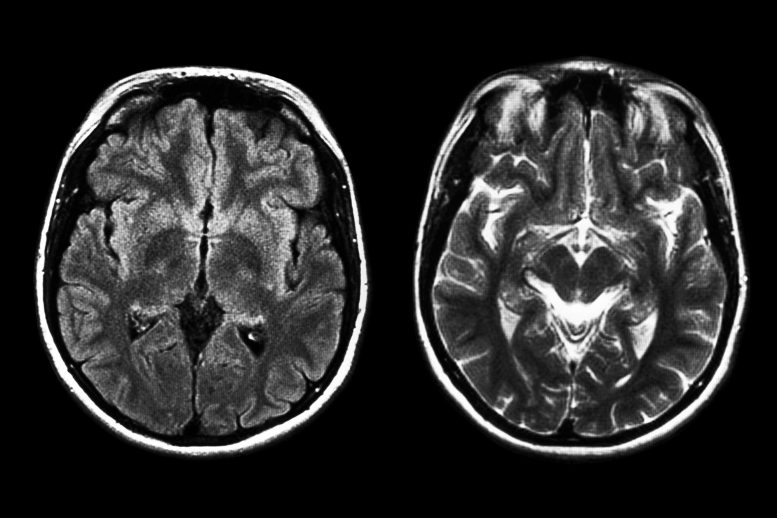
Researchers discover differences in DNA methylation inside brain region important for inhibitory control in people with cocaine use disorder.
Scientists tend to view substance addiction as primarily a disease of the brain. When we enjoy sex, food, music, or hobbies, regions of our brain within the reward pathway are flooded with pleasure-inducing dopamine. Drugs like cocaine copy this effect, except up to ten times more strongly. Healthy brains aren’t at the mercy of such dopamine rushes, however: there, the prefrontal cortex weighs options and can decide to forego pleasurable activities when it’s not the time or place. In contrast, such ‘inhibitory control’ is impaired in the addicted brain, making it hard to resist. But what are the biochemical changes in the prefrontal cortex that cause this impairment?
“We detected a trend towards stronger biological aging of the brain in individuals with cocaine use disorder compared to individuals without cocaine use disorder. This could be caused by cocaine-related disease processes in the brain, such as inflammation or cell death.” Dr. Stephanie Witt
Now, in the journal Frontiers in Psychiatry, scientists from Germany and Canada have shown that in humans, cocaine use disorder (CUD) leads to changes in the ‘methylome’ of a subregion within the prefrontal cortex, Brodmann Area 9, thought to be important for self-awareness and inhibitory control. Typically, a greater degree of DNA methylation leads to the ‘dialing down’ of nearby genes.
“As DNA methylation is an important regulatory mechanism for gene expression, the identified DNA methylation alterations might contribute to functional changes in the human brain and thereby to the associated behavioral aspects of addiction,” said first author Eric Poisel, a PhD student at the Central Institute of Mental Health in Mannheim, Germany.
Because the study of the brain methylome is invasive, the study was done on the cryo-preserved brains of 42 deceased male donors, of whom half had had CUD while the other half had not. This is important, because most earlier studies in this field were done on the brains of rats.
Brain Cells May Age Faster in People Addicted to Cocaine
The researchers found evidence that cells in Brodmann Area 9 appear biologically ‘older’ in people with CUD, evidence that these cells age faster than in people without substance use disorders. Here, they used patterns of DNA methylation as a measure of the biological age of cells in Brodmann Area 9. The biological age of cells, tissues, and organs can be greater or less than their chronological age, depending on diet, lifestyle, and exposure to disease or harmful environmental factors. Scientists can thus estimate the biological age from methylome data with established mathematical algorithms.
“We detected a trend towards stronger biological aging of the brain in individuals with cocaine use disorder compared to individuals without cocaine use disorder. This could be caused by cocaine-related disease processes in the brain, such as inflammation or cell death,” said lead author Dr. Stephanie Witt, a researcher at the same institute.
“As biological age estimation is a very recent concept in addiction research and is influenced by many factors, further studies are required to investigate this phenomenon, with larger sample sizes than were possible here.”
Associations Between CUD and Methylated Genes
Poisel and colleagues also looked at differences in the degree of methylation at 654,448 sites in the human genome, and looked for associations with the presence or absence of CUD in the life of each donor. They corrected for differences in the donor’s age, the time since death, the brain pH, and further diseases such as depressive disorder and alcohol use disorder.
They found 17 genomic regions that were more methylated in donors with CUD than in donors without CUD, and three regions that were less methylated in donors with CUD than in donors without CUD.
“We were surprised that in our network analysis changes in DNA methylation were especially prominent among genes that regulate the activity of neurons and the connectivity between them. Interestingly, differential DNA methylation was related to several transcription factors and proteins with DNA binding domains, which implies direct effects of these DNA methylation changes on gene expression. This needs to be followed up in further studies,” said Poisel.
“Also, it was fascinating that among those genes that showed the strongest changes in DNA methylation levels in our study, two genes were previously reported to regulate behavioral aspects of cocaine intake in rodent experiments,” said Witt.
Reference: “DNA methylation in cocaine use disorder–An epigenome-wide approach in the human prefrontal cortex” by Eric Poisel, Lea Zillich, Fabian Streit, Josef Frank, Marion M. Friske, Jerome C. Foo, Naguib Mechawar, Gustavo Turecki, Anita C. Hansson, Markus M. Nöthen, Marcella Rietschel, Rainer Spanagel and Stephanie H. Witt, 14 February 2023, Frontiers in Psychiatry.
DOI: 10.3389/fpsyt.2023.1075250
Never miss a breakthrough: Join the SciTechDaily newsletter.
Follow us on Google and Google News.
1 Comment
Informative I have used Cocain since 1974 with short periods of non use the longest being close to 3 hrs, several 2 years and multiple 1 yr. A recent MRI indicates a healthy brain for a man of 71. I want to completely stop but extremely difficult very impulsive no control or thinking it thru. I hope you find something of a cure