
Unlocking the Cancer-Fighting Secrets of Barbed Skullcap
UK and Chinese researchers have unlocked the evolutionary secrets behind the medicinal herb barbed skullcap’s ability to produce cancer-fighting compounds.
The CEPMAS collaboration utilized DNA sequencing technology to piece together the genomic sequence of the skullcap plant (Scutellaria barbata), commonly known as banzhilian in China.
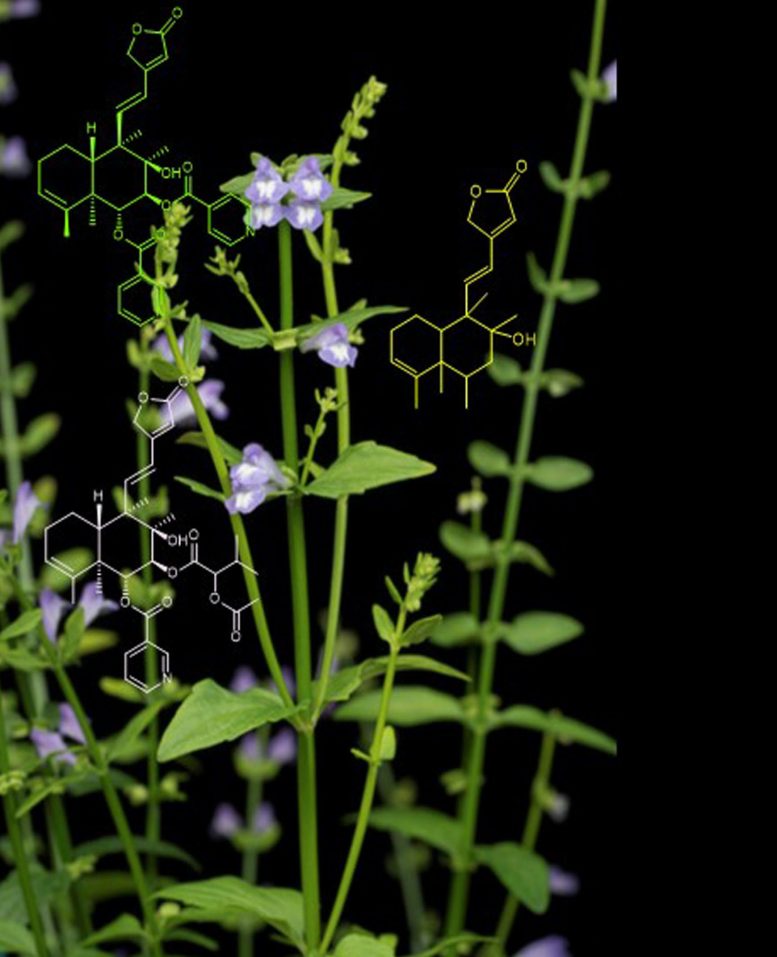
This gave researchers the genetic information – a microevolutionary history – required to identify how the plant produces the compound scutebarbatine A, which acts against a range of cancer cells.
Professor Cathie Martin, Group Leader at the John Innes Centre, and one of the authors of the study said, “We have found that the primary metabolite has activity against cancer cells but not non-cancer cells which are especially important for an anti-cancer metabolite. Now we are looking to develop synthetic methods for producing more of the lead compound.”
Bridging Traditional Medicine and Modern Science
In Traditional Chinese Medicine (TCM), to isolate medicinal chemistry from the plant, the herb is boiled in water for two hours and the extract is dried to produce a powder and taken as a decoction (concentrated liquid). Now, with the knowledge of the genes that make up the biochemical pathway behind the anti-cancer activity of the herb, researchers are close to being able to synthesize larger quantities of compounds more rapidly and sustainably by using a host such as yeast.
The research which appears in the journal Molecular Plant is led by CEPAMS, a partnership between the John Innes Centre and the Chinese Academy of Science and supported by The Royal Society.
“This is a fantastic collaboration about developing interesting drug leads from natural resources and shows the practical value of focusing on the microevolution of a species,” said Professor Martin.
The Skullcap genus has been used for centuries in TCM for the treatment of different medical conditions. Clinical work has shown that preparations based on Scutellaria barbata during chemotherapy can reduce the risk of metastatic tumors.
CEPAMS Group Leader based in Shanghai Dr. Evangelos Tatsis said, “Natural products have long been the lead compounds for the discovery of new drugs. By following the trail of the traditional Chinese plants, we can develop new anti-cancer medicines and this research marks a crucial step in that direction.”
Potential of Plant-Based Natural Products in Oncology
Plant-based traditional medicines have long been used to provide leads for new drug discovery, and plant-natural products like vinblastine and taxol are used clinically as anticancer drugs.
TCM is one of the best-cataloged systems with empirical information about the therapeutic properties of herbal remedies.
Anti-cancer drugs obtained from traditional Chinese medicine have higher efficacy than chemical synthetic drugs and with less toxic side effects.
Reference: “The genomes of medicinal skullcaps reveal the polyphyletic origins of clerodane diterpene biosynthesis in the family Lamiaceae” by Haixiu Li, Song Wu, Ruoxi Lin, Yiren Xiao, Ana Luisa Malaco Morotti, Ya Wang, Meytal Galilee, Haowen Qin, Tao Huang, Yong Zhao, Xun Zhou, Jun Yang, Qing Zhao, Angelos K. Kanellis, Cathie Martin and Evangelos C. Tatsis, 13 January 2023, Molecular Plant.
DOI: 10.1016/j.molp.2023.01.006
Never miss a breakthrough: Join the SciTechDaily newsletter.
Follow us on Google and Google News.
3 Comments
I love traditional medicine
But you don’t like the science-based offshoot of traditional medicine?
Excellent Information for Research.