
Radioactive period following nuclear bomb tests changed rainfall patterns thousands of miles from the detonation sites.
Nuclear bomb tests during the Cold War may have changed rainfall patterns thousands of miles from the detonation sites, new research has revealed.
Scientists at the University of Reading have researched how the electric charge released by radiation from the test detonations, carried out predominantly by the US and Soviet Union in the 1950s and 1960s, affected rainclouds at the time.
The study, published in Physical Review Letters, used historic records between 1962-64 from a research station in Scotland. Scientists compared days with high and low radioactively-generated charge, finding that clouds were visibly thicker, and there was 24% more rain on average on the days with more radioactivity.
Professor Giles Harrison, lead author and Professor of Atmospheric Physics at the University of Reading, said: “By studying the radioactivity released from Cold War weapons tests, scientists at the time learned about atmospheric circulation patterns. We have now reused this data to examine the effect on rainfall.
“The politically charged atmosphere of the Cold War led to a nuclear arms race and worldwide anxiety. Decades later, that global cloud has yielded a silver lining, in giving us a unique way to study how electric charge affects rain.”
It has long been thought that electric charge modifies how water droplets in clouds collide and combine, potentially affecting the size of droplets and influencing rainfall, but this is difficult to observe in the atmosphere. By combining the bomb test data with weather records, the scientists were able to retrospectively investigate this.
Through learning more about how charge affects non-thunderstorm clouds, it is thought that scientists will now have a better understanding of important weather processes.
The race to develop nuclear weapons was a key feature of the Cold War, as the world’s superpowers sought to demonstrate their military capabilities during heightened tensions following the Second World War.
Although detonations were carried out in remote parts of the world, such as the Nevada Desert in the US, and on Pacific and Arctic islands, radioactive pollution spread widely throughout the atmosphere. Radioactivity ionizes the air, releasing electric charge.
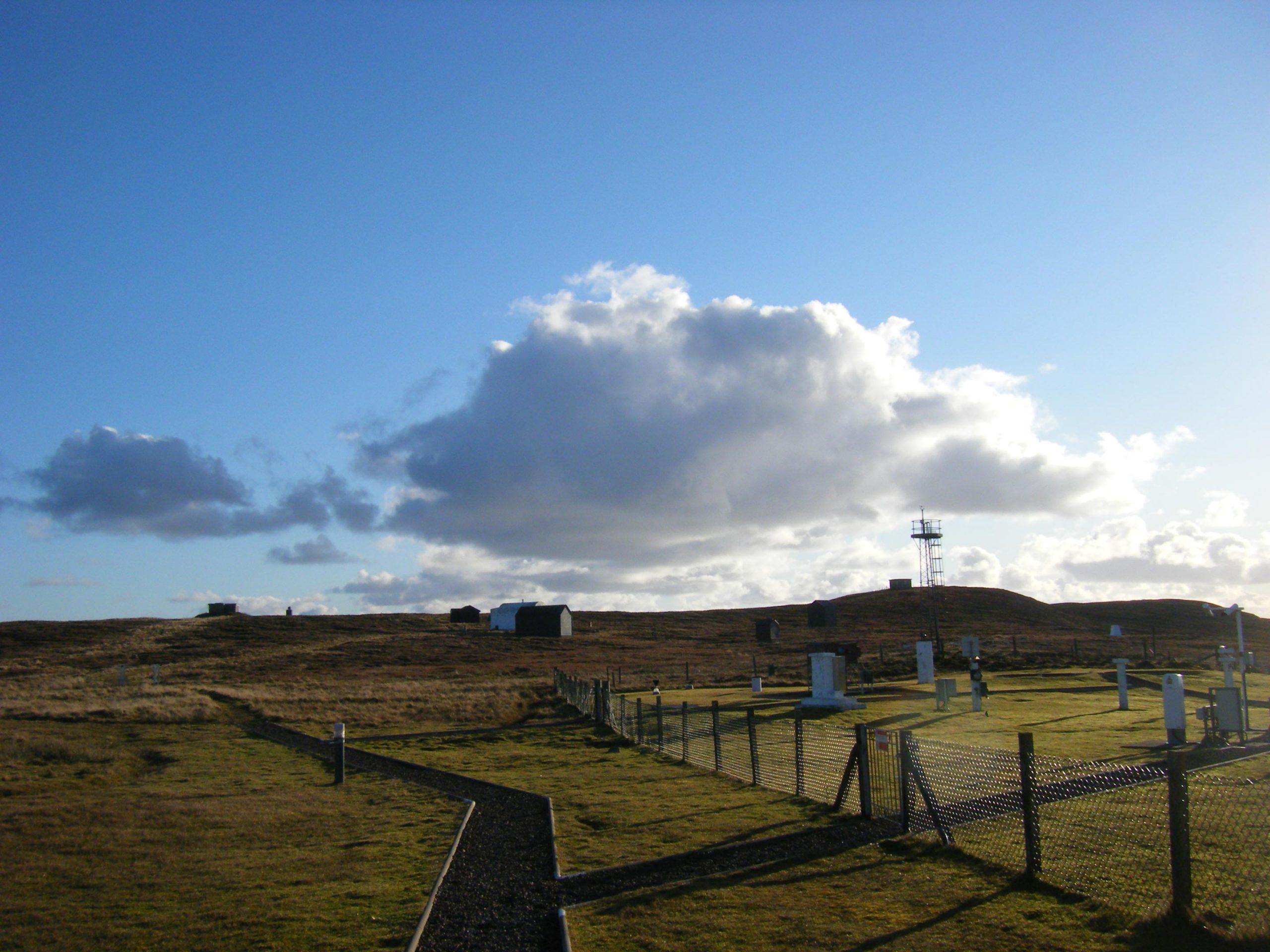
The researchers, from the Universities of Reading, Bath and Bristol, studied records from well-equipped Met Office research weather stations at Kew near London and Lerwick in the Shetland Isles.
Located 300 miles northwest of Scotland, the Shetland site was relatively unaffected by other sources of anthropogenic pollution. This made it well suited as a test site to observe rainfall effects which, although likely to have occurred elsewhere too, would be much more difficult to detect.
Atmospheric electricity is most easily measured on fine days, so the Kew measurements were used to identify nearly 150 days where there was high or low charge generation over the UK while it was cloudy in Lerwick. The Shetland rainfall on these days showed differences which vanished after the major radioactivity episode was over.
The findings may be helpful for cloud-related geoengineering research, which is exploring how electric charge could influence rain, relieve droughts or prevent floods, without the use of chemicals.
Professor Harrison is leading a project investigating electrical effects on dusts and clouds in the United Arab Emirates, as part of their national program in Rain Enhancement Science. These new findings will help to show the typical charges possible in natural non-thunderstorm clouds.
Reference: “Precipitation modification by ionisation” by R. Giles Harrison, Keri A. Nicoll, Maarten H. P. Ambaum, Graeme J. Marlton, Karen L. Aplin and Michael Lockwood, 13 May 2020, Physical Review Letters.
DOI: 10.1103/PhysRevLett.124.198701
Never miss a breakthrough: Join the SciTechDaily newsletter.
Follow us on Google and Google News.