
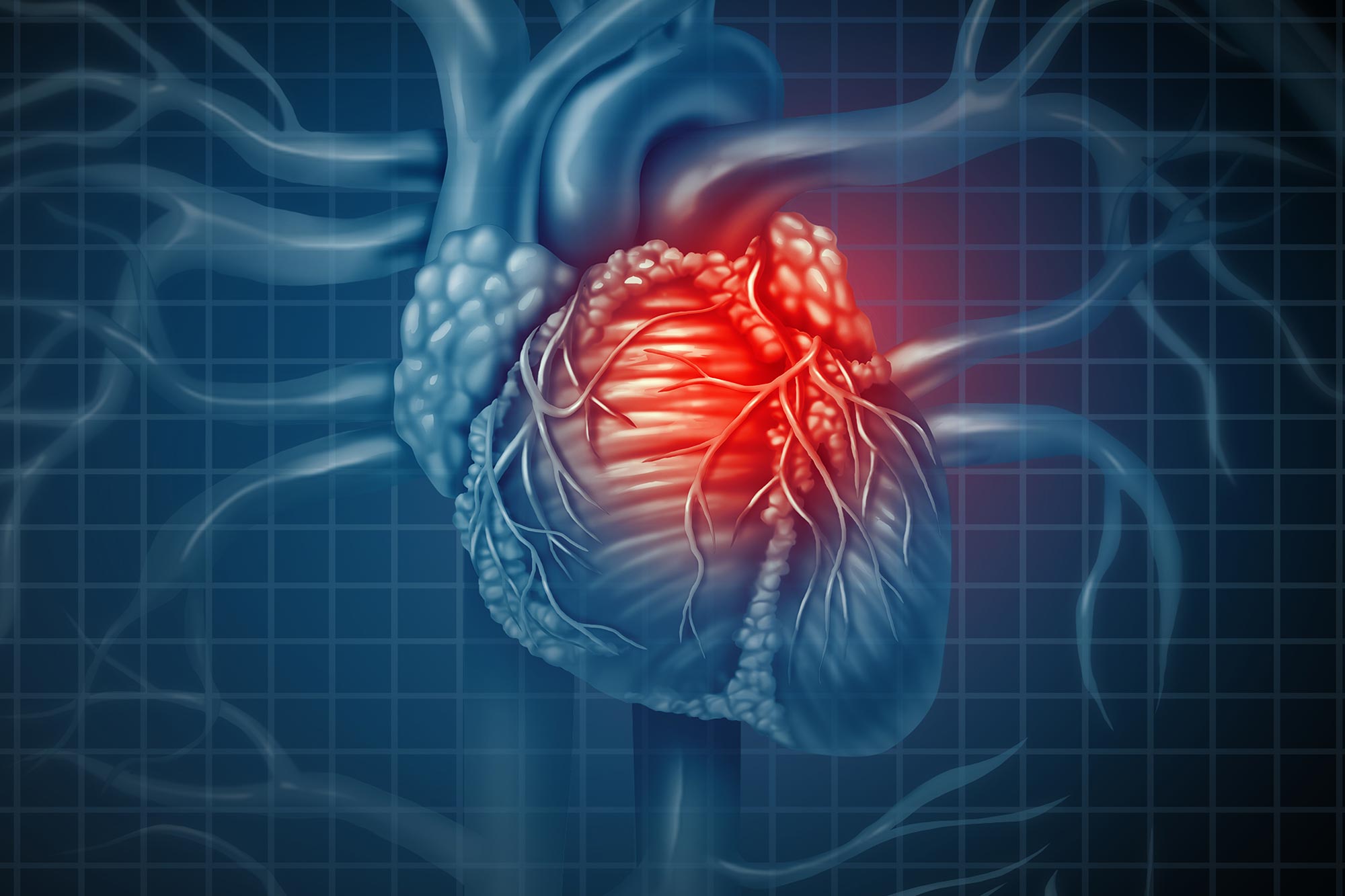
A study by researchers at the University of Arizona College of Medicine – Tucson suggests that an FDA-approved osteoporosis treatment could help restore the shape of a mutated protein and enhance heart function.
A research team co-led by scientists from the University of Arizona College of Medicine – Tucson has discovered that an osteoporosis drug may counteract a rare genetic mutation linked to a specific form of heart disease. Their findings, published in the Journal of Clinical Investigation, could have broader implications for treating other rare diseases.
Dilated cardiomyopathy (DCM) is a group of disorders characterized by weakened heart muscles, which can lead to life-threatening complications as the heart struggles to pump blood efficiently. According to the American Heart Association, DCM primarily affects children and adults under 50.
In response to a weakened heart, the body naturally attempts to compensate by increasing its workload to maintain adequate blood circulation throughout the body.
“Making the heart contract harder and faster actually makes things a lot worse — it burns out faster,” said co-senior author Hesham Sadek, MD, PhD, director of the Sarver Heart Center and chief of the Division of Cardiology at the College of Medicine – Tucson.
Genetic Mutations and the Challenge of Treatment
In a large subset of patients, DCM is associated with at least one of hundreds of different genetic mutations, offering potential targets for precision treatments tailored to the individual.
“Maybe 30% or 40% of DCM is due to genetic mutation,” Sadek said. “We don’t have any mutation-specific therapies so far. Drug companies are unlikely to develop a specific drug because there have to be enough mutated patients to make this viable. Unfortunately, some of these mutations are very, very rare — maybe even a handful of patients.”
Since drug companies are unlikely to invest research dollars to investigate genetic conditions that affect so few people, Sadek took another approach.

“We can take a drug that’s approved for another condition and use it to treat some of these rare mutations,” he said. “Drug repurposing using FDA-approved drugs is a fast track to bring these therapies to patients.”
The heart’s pump is powered by a “motor” made up of many constituent parts — proteins. A mutated protein is a defective part, influencing how well that motor runs.
“A mutation might bend that protein out of shape and make it unable to work properly in that motor,” Sadek said. “If you find a drug that pushes the mutant protein back into shape, you can correct the structure.”
Identifying a Potential Treatment: Risedronate
The team focused on K210del, the first DCM-associated mutation discovered, to investigate how its flawed shape prevents the heart’s motor from running smoothly.
Sadek’s team became the first to create a 3-D model of K210del and compare it to its healthy counterpart to identify where it is misshapen and how it interacts with surrounding proteins to slow down the motor.
Next, they harnessed the power of supercomputers and artificial intelligence to screen 2,000 FDA-approved drugs to see if any of them were likely to bind to the misshapen protein and nudge it back to its correct position.
“The top five or six drugs were all used for osteoporosis,” Sadek said.
After further testing in cell cultures and animal models, they refined the results.
“Only one of the drugs, risedronate, corrected the protein shape back to normal,” Sadek said. “For the first time in an animal model, we found an FDA-approved drug that can correct a gene mutation and normalize heart function.”
Sadek’s team is partnering with the National Cardiovascular Research Center in Spain to assess the efficacy of risedronate in two families with the K210del mutation and is gearing up to start a clinical trial at the Sarver Heart Center as well.
Sadek says that while cancer and cystic fibrosis researchers have taken a similar approach, this is the first time “structure correcting” has been applied to heart disease.
Along with co-senior author Sakthivel Sadayappan, PhD, MBA, associate director of the Sarver Heart Center and head of the Department of Cellular and Molecular Medicine at the College of Medicine – Tucson, Sadek plans to continue searching for FDA-approved drugs to treat other rare mutations driving heart disease. If none exist, they can expand the search to include thousands of drugs that never made it to market and, after that, widen the net even further to include billions of molecules that haven’t been previously investigated by scientists.
“The number of molecules is basically infinite,” he said. “That’s why I came to Sarver — to develop a program to match either FDA-approved drugs or new molecules to patients with rare cardiovascular disorders.”
Reference: “An FDA-approved drug structurally and phenotypically corrects the K210del mutation in genetic cardiomyopathy models” by Ping Wang, Mahmoud Salama Ahmed, Ngoc Uyen Nhi Nguyen, Ivan Menendez-Montes, Ching-Cheng Hsu, Ayman B. Farag, Suwannee Thet, Nicholas T. Lam, Janaka P. Wansapura, Eric Crossley, Ning Ma, Shane Rui Zhao, Tiejun Zhang, Sachio Morimoto, Rohit Singh, Waleed Elhelaly, Tara C. Tassin, Alisson C. Cardoso, Noelle S. Williams, Hayley L. Pointer, David A. Elliott, James W. McNamara, Kevin I. Watt, Enzo R. Porrello, Sakthivel Sadayappan and Hesham A. Sadek, 17 February 2025, The Journal of Clinical Investigation.
DOI: 10.1172/JCI174081
This research is supported by the National Institutes of Health under award Nos. R01 HL-137415, R01 HL-147276, R01 HL-1491371, P01 HL-160476-01A1, R35 HL-166563-01 and P01 HL-160488.
Never miss a breakthrough: Join the SciTechDaily newsletter.
Follow us on Google and Google News.