
Close Menu
    Facebook X (Twitter) Instagram
    SciTechDaily
    • Biology
    • Chemistry
    • Earth
    • Health
    • Physics
    • Science
    • Space
    • Technology
    Facebook X (Twitter) Pinterest YouTube RSS
    SciTechDaily
    Home»Biology»Complex Synthetic Biology Circuit Can Detect Four Different Molecules
    Biology

    Complex Synthetic Biology Circuit Can Detect Four Different Molecules

    By SciTechDailyOctober 9, 2012No Comments3 Mins Read
    Facebook Twitter Pinterest Telegram LinkedIn WhatsApp Email Reddit
    Share
    Facebook Twitter LinkedIn Pinterest Telegram Email Reddit
    biological-complex-circuit
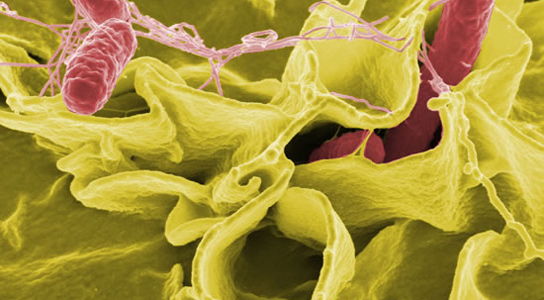
    MIT biological engineers created new genetic circuits using genes found in Salmonella (seen here) and other bacteria. Credit: NIH

    Synthetic biologists design circuits using genes as interchangeable parts, allowing them to perform new functions, such as sensing environmental conditions. However, the overall complexity that can be achieved in such circuits has recently been limited by the difficulty in assembling genetic components that don’t interfere with each other.

    Researchers have been trying to use proteins that control only parts of a synthetic circuit and that don’t hinder others. Christopher Voigt and his team have developed circuit components that don’t interfere with each other, allowing them to produce the most complex synthetic circuit ever built. The scientists published their findings in the journal Nature.
    christopher-voigt-lab
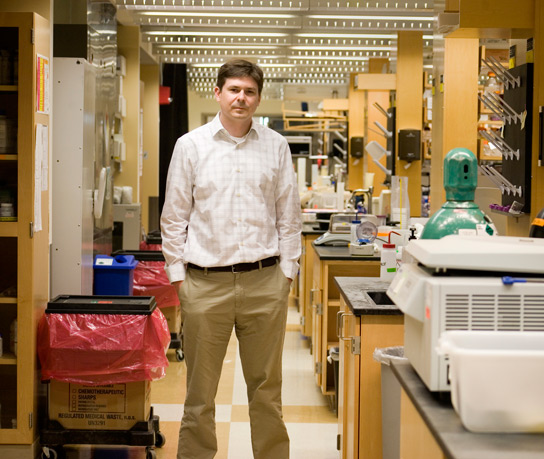
    Biological engineer Christopher Voigt. Credit: M. Scott Brauer

    The circuit they designed integrates four sensors for different molecules, and such circuits could be used inside of cells to precisely monitor their environments. It was incredibly complex stitching together all of these pieces, states Voigt, co-director of the Synthetic Biology Center at MIT. Larger circuits would require computer programs, which are now being developed, and should allow the combination of hundreds of such circuits.

    Voigt had previously used bacteria that could respond to light and capture photographic images, and others that could detect low oxygen levels and high cell density, conditions that are found in tumors. Most of his projects use a small handful of known genetic parts that are repackaged over and over again.

    In order to expand the number of possible circuits, the researchers used the bacterium Salmonella, which has a cellular pathway that controls the injection of proteins into human cells. It’s a tightly regulated circuit, which makes it a good candidate for a synthetic circuit.

    The pathway is made up of three components, an activator, a promoter, and a chaperone. A promoter is a region of DNA where proteins will bind to initiate gene transcription. An activator is such a protein, but these require a chaperone protein before they can bind to DNA in order to begin DNA transcription.

    The scientists found 60 different versions of this pathway in other bacteria, and found that most of the proteins involved were different enough so that they wouldn’t interfere with one another. They did discover a small amount of crosstalk, so they used directed evolution to reduce it. This trial-and-error process involved mutating a gene to create thousands of similar variants, and testing them for the desired trait. The best candidates are then mutated and screened once again, until the optimal gene is created.

    The researchers are applying their work to create a sensor that will allow yeast in an industrial fermenter to monitor its own environment and adjust its output accordingly.

    Reference: “Genetic programs constructed from layered logic gates in single cells” by Tae Seok Moon, Chunbo Lou, Alvin Tamsir, Brynne C. Stanton and Christopher A. Voigt, 7 October 2012, Nature.
    DOI: 10.1038/nature11516

    Never miss a breakthrough: Join the SciTechDaily newsletter.
    Follow us on Google and Google News.

    MIT Synthetic Biology
    Share. Facebook Twitter Pinterest LinkedIn Email Reddit

    Related Articles

    Visolis Harnesses Synthetic Biology To Transform Biomass Into Sustainable Everyday Products

    New Engineered Bacteria Could Prevent Side Effects of Antibiotics

    MIT Scientists Discover New Antibiotic Candidates

    Newly Designed Transcription Factors Can Bind to DNA and Turn on Specific Genes

    Researchers Use Computer Simulations to Better Understand Spider Silk

    Scientists Use Stem Cells to Better Understand Hepatitis C

    Researchers Study Metabolic Errors and Their Effect on DNA

    Viruses Use Bacteria for Reproduction

    MR Spectroscopy Helps Measure Brain Tumor Mutation

    Leave A Reply Cancel Reply

    • Facebook
    • Twitter
    • Pinterest
    • YouTube

    Don't Miss a Discovery

    Subscribe for the Latest in Science & Tech!

    Trending News

    The Universe Is Expanding Too Fast and Scientists Can’t Explain Why

    “Like Liquid Metal”: Scientists Create Strange Shape-Shifting Material

    Early Warning Signals of Esophageal Cancer May Be Hiding in Plain Sight

    Common Blood Pressure Drug Shows Surprising Power Against Deadly Antibiotic-Resistant Superbug

    Scientists Uncover Dangerous Connection Between Serotonin and Heart Valve Disease

    Scientists Discover a “Protector” Protein That Could Help Reverse Hair Loss

    Bone-Strengthening Discovery Could Reverse Osteoporosis

    Scientists Uncover Hidden Trigger Behind Stem Cell Aging

    Follow SciTechDaily
    • Facebook
    • Twitter
    • YouTube
    • Pinterest
    • Newsletter
    • RSS
    SciTech News
    • Biology News
    • Chemistry News
    • Earth News
    • Health News
    • Physics News
    • Science News
    • Space News
    • Technology News
    Recent Posts
    • A Common Diabetes Drug May Hold the Key to Stopping HIV From Coming Back
    • Ancient “Syphilis-Like” Disease in Vietnam Challenges Key Scientific Assumptions
    • Drinking Alcohol To Cope in Your 20s Could Damage Your Brain for Life
    • Scientists Crack Alfalfa’s Chromosome Mystery After Decades of Debate
    • Ancient Ant-Plant Alliance Collapses As Predatory Wasps Move In
    Copyright © 1998 - 2026 SciTechDaily. All Rights Reserved.
    • Science News
    • About
    • Contact
    • Editorial Board
    • Privacy Policy
    • Terms of Use

    Type above and press Enter to search. Press Esc to cancel.