
Online shopping was associated with lower spending on certain unhealthy, impulse-sensitive foods.
When shopping online, participants surveyed spent more money, purchased more items, and spent less on candy and desserts than when they shopped in-store, according to a new study in the Journal of Nutrition Education and Behavior, published by Elsevier.
In recent years, online grocery shopping has grown exponentially. To describe the grocery shopping patterns of people who shopped both online and in-store and evaluate whether shoppers purchased fewer unhealthy, impulse-sensitive items online, 137 primary household shoppers in Maine who shopped at least once in-store and online (with curbside pickup) were studied for 5,573 total transactions from 2015-2017.
“There were differences in both the quantity and types of food purchased when shopping online compared to in-store. When study participants were shopping online, they spent about 44 percent more per transaction, and they purchased a greater number and variety of items compared to when they shopped in-store,” said lead author Laura Zatz, ScD, MPH, Department of Nutrition and Department of Social & Behavioral Sciences, Harvard T.H. Chan School of Public Health, Boston, MA, USA. “We also found that shopping online was associated with reduced spending per transaction on candy, cold or frozen desserts, and grain-based desserts like cookies and cake.”
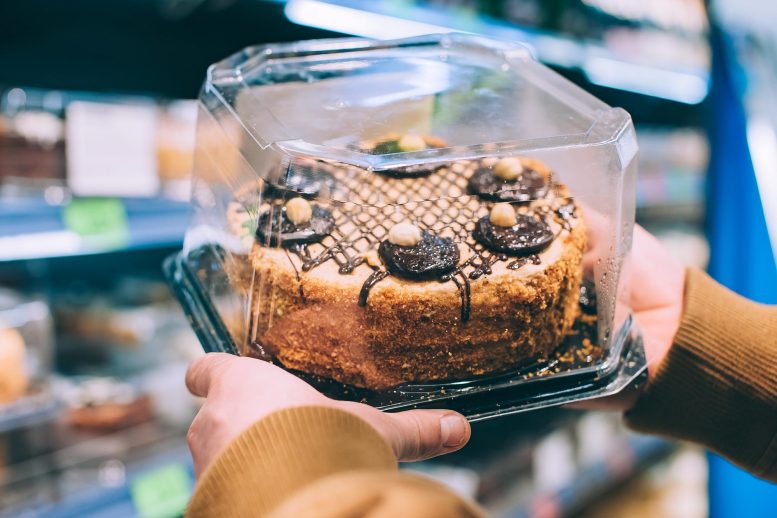
When shopping online, participants surveyed spent more money, purchased more items, and spent less on candy and desserts than when they shopped in-store. Credit: Journal of Nutrition Education and Behavior
Candy and Dessert Purchases Drop in Digital Carts
Spending on sugary drinks and sweet and salty snacks did not change when consumers were shopping online versus in-store. Researchers found that in-store shoppers were spending an average of $2.50 more per transaction on candy and desserts.
When considering why there was no difference in the online versus in-store purchase of sweet and salty snacks and sugary drinks, researchers hypothesized that these items may not be as impulse-sensitive as originally anticipated despite their prominent placement in endcaps and checkout displays.
Planned Purchases May Explain Snacking Trends
“Sugary drinks and snacks might have been a planned purchase for many in our study sample. That would fit with other industry research showing that neither sweet and salty snacks nor sugary drinks are in the top five categories of unplanned food purchases,” said senior author Eric Rimm, ScD, Professor of Epidemiology and Nutrition at the Harvard T.H. Chan School of Public Health.
“With more people buying their groceries online, it will be really important to understand how that impacts the nutritional profile of the foods they purchase,” Dr. Zatz said. “Encouragingly, our results suggest that online grocery shopping is associated with reduced spending on several unhealthy items. However, we’ll want to monitor shopping patterns to make sure sophisticated online marketing tactics, like personalized pop-up ads, don’t override that.” Assessing the evolution of marketing practices in the online grocery setting will be an important area for future inquiry, especially as more consumers use online grocery shopping during the COVID-19 pandemic.
Reference: “Comparing Online and In-Store Grocery Purchases” by Laura Y. Zatz, ScD, MPH; Alyssa J. Moran, ScD, MPH; Rebecca L Franckle, ScD, MPH; Jason P. Block, MD, MPH; Tao Hou, MPH; Dan Blue, BA; Julie C. Green, MPH; Steven Gortmaker, PhD; Sara N. Bleich, PhD; Michele Polacsek, PhD, MHS; Anne N. Thorndike, MD, MPH and Eric B. Rimm, ScD, 8 June 2021, Journal of Nutrition Education and Behavior.
DOI: 10.1016/j.jneb.2021.03.001
Never miss a breakthrough: Join the SciTechDaily newsletter.
Follow us on Google and Google News.