
Close Menu
    Facebook X (Twitter) Instagram
    SciTechDaily
    • Biology
    • Chemistry
    • Earth
    • Health
    • Physics
    • Science
    • Space
    • Technology
    Facebook X (Twitter) Pinterest YouTube RSS
    SciTechDaily
    Home»Chemistry»Cornell Researchers Create First-of-Its-Kind Durable and Recyclable Plastic
    Chemistry

    Cornell Researchers Create First-of-Its-Kind Durable and Recyclable Plastic

    By Cornell UniversityFebruary 3, 20258 Comments3 Mins Read
    Facebook Twitter Pinterest Telegram LinkedIn WhatsApp Email Reddit
    Share
    Facebook Twitter LinkedIn Pinterest Telegram Email Reddit
    Recycling Plastic Resin Pellets
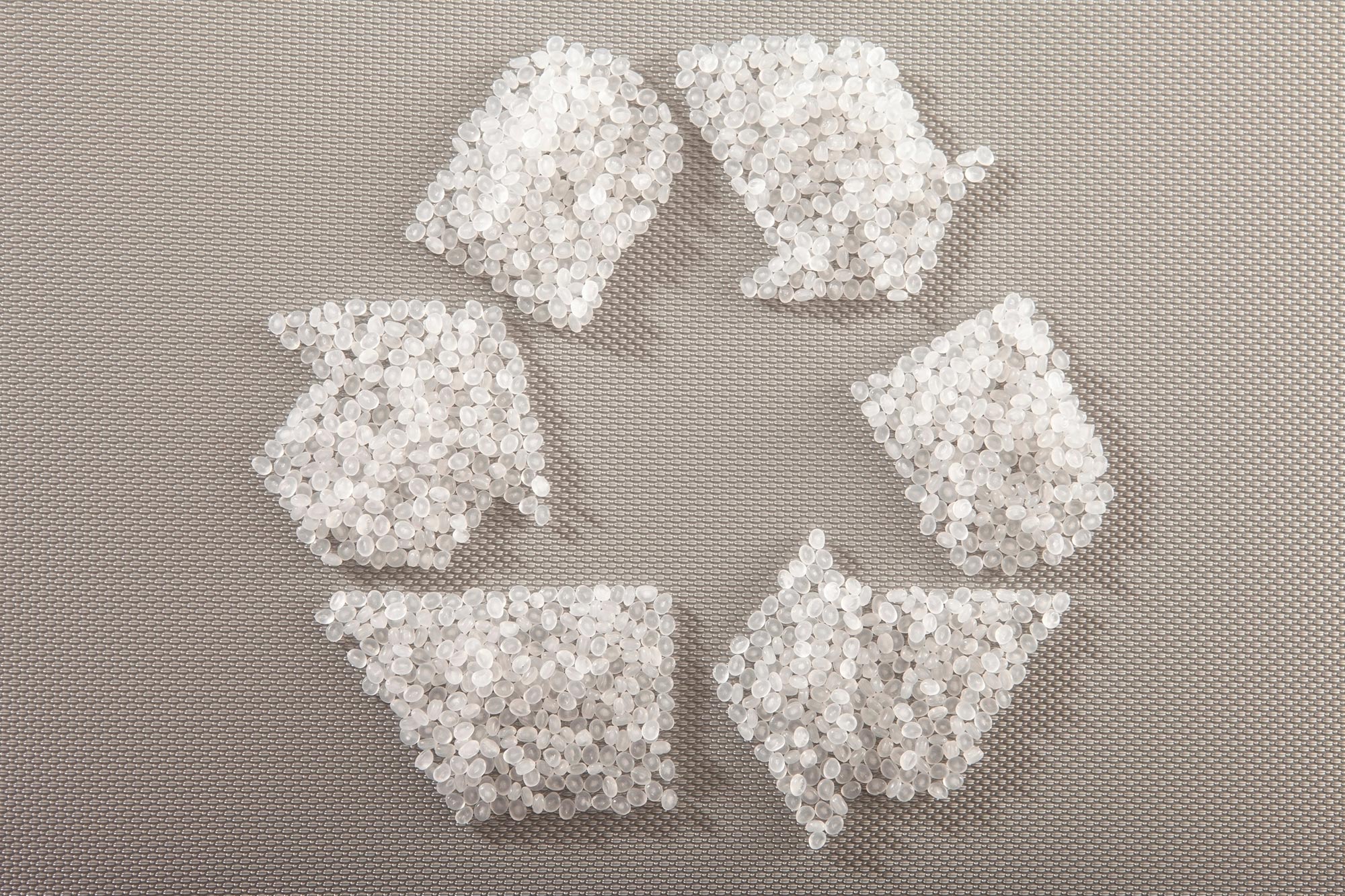
    Cornell University researchers have developed a recyclable alternative to thermoset plastics, which are widely used but currently non-recyclable. Their solution is based on dihydrofuran (DHF), a bio-derived monomer that forms a durable yet degradable material. Unlike conventional thermosets, DHF-based materials can be chemically recycled back into their original building blocks or naturally broken down into benign components.

    Researchers have created a recyclable, bio-based alternative to thermoset plastics using dihydrofuran (DHF).

    Cornell University researchers have developed a recyclable alternative to thermoset plastics, a durable class of materials commonly used in car tires, replacement hip joints, and bowling balls.

    Thermosets are characterized by a crosslinked polymer structure that ensures exceptional strength and longevity. However, this same structure has made traditional, petrochemical-based thermosets— which account for 15% to 20% of all polymers produced—impossible to recycle.

    “Currently, zero percent of the world’s thermoset materials are recycled – they’re either incinerated or thrown in landfills,” said Brett Fors, professor of chemistry and chemical biology at Cornell.

    A Bio-Based, Recyclable Solution

    The Fors lab has addressed that environmental challenge by creating an alternative made from a bio-sourced material that has crosslinked thermosets’ durability and malleability but can be easily recycled and degraded.

    “The whole process, from creating to reusing, is more environmentally friendly than current materials,” said Reagan Dreiling, a doctoral student in the field of chemistry and first author of the paper, which published in Nature.

    The Fors group studies dihydrofuran (DHF), a monomer – or chemical building block – that can be made from biological materials and has the potential to eventually compete with petroleum-based feedstocks.

    How the New Material Works

    Dreiling used DHF, a circular monomer with a double bond, as a building block for two successive polymerizations, the second of which results in a crosslinked polymer that can be recycled through heating and will degrade naturally in the environment.

    DHF thermosets show comparable properties to commercial thermosets, including high-density polyurethane (used in electronics instruments, packaging, and footwear, for example) and ethylene propylene rubber (used in garden hoses and automotive weatherstripping).

    In contrast to current petrochemical thermosets, the DHF-based materials offer a circular economy of use, Fors said. Chemically recyclable, the material can be made back into its building block monomer and used again from scratch. And when some of the material inevitably leaks into the environment, these materials will degrade over time into benign components.

    The researchers are working toward applications, including making the DHF-based material useful for 3D printing. They are also experimenting to expand the properties with additional monomers.

    “We’ve spent 100 years trying to make polymers that last forever, and we’ve realized that’s not actually a good thing,” Fors said. “Now we’re making polymers that don’t last forever, that can environmentally degrade.”

    Reference: “Degradable thermosets via orthogonal polymerizations of a single monomer” by Reagan J. Dreiling, Kathleen Huynh and Brett P. Fors, 29 January 2025, Nature.
    DOI: 10.1038/s41586-024-08386-w

    The study was funded by the U.S. National Science Foundation.

    Never miss a breakthrough: Join the SciTechDaily newsletter.
    Follow us on Google and Google News.

    Cornell University Plastic Recycling
    Share. Facebook Twitter Pinterest LinkedIn Email Reddit

    Related Articles

    Turning Trash Into Treasure: Chemists’ Radical Way To Make It Easier, More Profitable To Recycle Plastic

    Plants From Plastics: Transforming Bio-Based Polymers Into Fertilizer

    A New Approach for Recycling Plastics

    Revolutionary Eco-Friendly Plastic: The Future Looks Bright for Infinitely Recyclable Plastic

    Discovery of a New Molecule Advances Route to Chemically Recyclable Plastics

    Making Plastic More Recyclable Through Chemical and Biological Processes

    New Recycling Process Could Cut Down on Millions of Tons of Plastic Waste

    MIT Chemists Make Tough Thermoset Plastics Recyclable

    Zeolite Catalyst Creates P-Xylene From Biomass

    8 Comments

    1. kamir bouchareb st on February 3, 2025 11:12 am

      thank you

      Reply
    2. Nancy on February 4, 2025 4:20 am

      It’s about time!

      Reply
    3. Krazy K8 on February 4, 2025 10:26 am

      OMG I’m so grateful ! This is fabulous !

      Reply
    4. glenn on February 4, 2025 11:29 am

      Could this be the resurgence of plastic bags..if so how can I mkt this..gc

      Reply
      • Suck On Mynuts on February 5, 2025 6:56 am

        First you have to suck on my big fat cock and hairy balls

        Reply
        • James on February 5, 2025 5:50 pm

          Well aren’t u disgusting

          Reply
    5. Chris on February 5, 2025 5:27 am

      Thank you very much Cornell.

      Reply
    6. Svendle on February 6, 2025 6:19 am

      The whole selling point of plastics during the 90s was that it was all recyclable. Now, here we are with the same selling point as if to say “this time we mean it”.

      Reply
    Leave A Reply Cancel Reply

    • Facebook
    • Twitter
    • Pinterest
    • YouTube

    Don't Miss a Discovery

    Subscribe for the Latest in Science & Tech!

    Trending News

    Millions of People Have Osteopenia Without Realizing It – Here’s What You Need To Know

    Researchers Discover Boosting a Single Protein Helps the Brain Fight Alzheimer’s

    World-First Study Reveals Human Hearts Can Regenerate After a Heart Attack

    Why Your Dreams Feel So Real Sometimes and So Strange Other Times

    This Simple Home Device May Boost Brain Power in Adults Over 40

    Enormous Prehistoric Insects Puzzle Scientists

    Scientists Develop Bioengineered Chewing Gum That Could Help Fight Oral Cancer

    After 37 Years, the World’s Longest-Running Soil Warming Experiment Uncovers a Startling Climate Secret

    Follow SciTechDaily
    • Facebook
    • Twitter
    • YouTube
    • Pinterest
    • Newsletter
    • RSS
    SciTech News
    • Biology News
    • Chemistry News
    • Earth News
    • Health News
    • Physics News
    • Science News
    • Space News
    • Technology News
    Recent Posts
    • After 100 Years, Scientists Uncover Hidden Rule Governing Cosmic Rays
    • The Milky Way Has a Hidden Edge and Scientists Finally Mapped It
    • Scientists Stunned by New Organic Molecules Found on Mars
    • Scientists Discover Evolution’s 120-Million-Year-Old “Cheat Sheet”
    • This New “Sound Laser” Could Measure Gravity With Stunning Precision
    Copyright © 1998 - 2026 SciTechDaily. All Rights Reserved.
    • Science News
    • About
    • Contact
    • Editorial Board
    • Privacy Policy
    • Terms of Use

    Type above and press Enter to search. Press Esc to cancel.