
Close Menu
    Facebook X (Twitter) Instagram
    SciTechDaily
    • Biology
    • Chemistry
    • Earth
    • Health
    • Physics
    • Science
    • Space
    • Technology
    Facebook X (Twitter) Pinterest YouTube RSS
    SciTechDaily
    Home»Health»COVID-19 Can Lead to Obstruction of the Blood Vessels in the Lung, Heart and Kidneys
    Health

    COVID-19 Can Lead to Obstruction of the Blood Vessels in the Lung, Heart and Kidneys

    By Ludwig Maximilian University of MunichAugust 9, 2020No Comments3 Mins Read
    Facebook Twitter Pinterest Telegram LinkedIn WhatsApp Email Reddit
    Share
    Facebook Twitter LinkedIn Pinterest Telegram Email Reddit
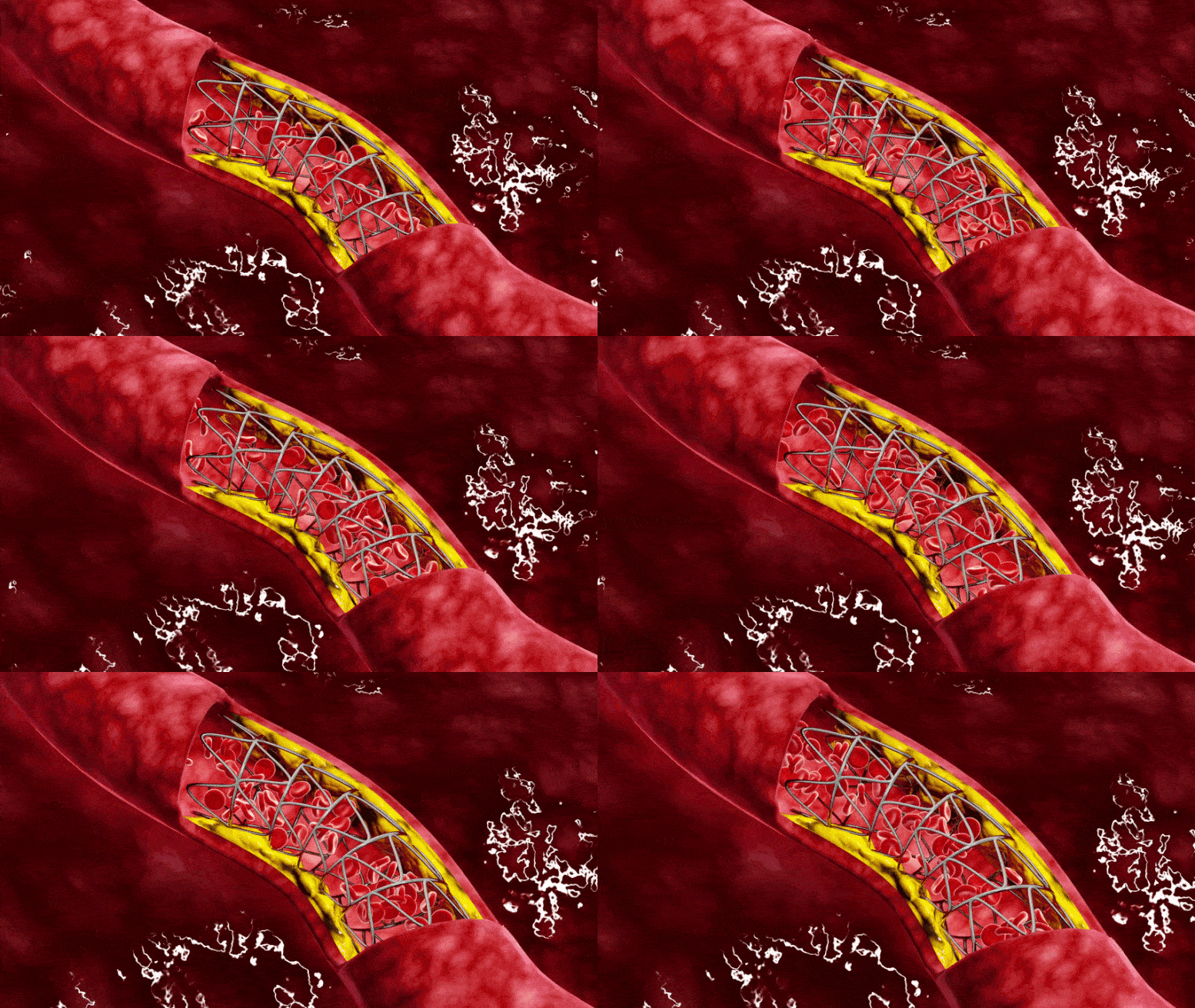
    Blood Vessel Illustration
    Activated immune cells and blood platelets are key contributors to the obstruction of blood vessels in the lungs, heart, and kidneys seen in severe cases of COVID-19, according to LMU researchers.

    In severe cases of COVID-19, the infection can lead to obstruction of the blood vessels in the lung, heart and kidneys. LMU researchers have now shown that activated immune cells and blood platelets play a major role in these pathologies.

    The novel coronavirus SARS-CoV-2 infects the respiratory tract and in severe cases, the infection can result in lung failure, which necessitates the use of mechanical ventilation. In addition, these patients develop further complications, such as pulmonary embolisms or thromboses (clots) in their veins.

    Whether or not virus-associated respiratory failure is functionally related to the systemic increase in the incidence of intravascular clot formation has remained unclear. However, a new study led by LMU clinicians Leo Nicolai and Konstantin Stark, which appears in the journal Circulation, has identified a link between virus-induced changes in the blood vessels of the lung and the increased thrombotic risk. Upon post-mortem examination of the lungs of COVID-19 patients who had died of the disease, Nicolai and colleagues found many microclots within the finest branches of the pulmonary vasculature. Similar observations were made in the heart and the kidney.
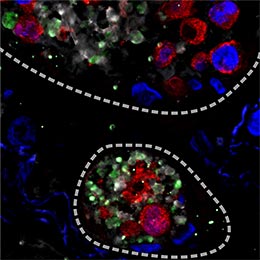
    COVID-19 Patient Lung Microclots
    A histological section of the lung of a COVID-19 patient reveals blood vessels (outlined) occluded by microclots in association with platelets and neutrophils. Credit: Stark/LMU

    These clots were primarily made up of platelets and activated immune cells, in particular neutrophils. Detailed analysis of the thrombi suggested that an activating interaction between platelets and neutrophils is responsible for promoting intravascular coagulation. Neutrophils belong to the innate immune system and their principal task is to fight invading pathogens. Their involvement in abnormal clotting has led to the designation of this process as immunothrombosis. In COVID-19 patients, the stimulation of clot formation eventually compromises the supply of blood to nearby tissues. This in turn ultimately leads to respiratory failure, while the tendency to trigger clotting becomes systemic.

    Using multidimensional flow cytometry assays, the LMU researchers showed that in COVID-19 patients who had suffered lung failure and required mechanical ventilation, the numbers of activated neutrophils and platelets in the circulation were greatly enhanced. Since the two cell types reciprocally activate each other, these interactions lead to the formation of obstructive blood clots in the lung. In addition, activated neutrophils extrude mesh-like complexes made up of DNA and cytoplasmatic proteins, which are known as neutrophil extracellular traps (NETs).

    These normally serve to trap and destroy bacterial and viral pathogens, but they also play a significant role in immunothrombosis by stabilizing thrombi. While this process is initially localized in the lung exacerbating respiratory failure and result in a systemic thrombogenic state. “These findings contribute to a better understanding of the pathophysiology that underlie disease progression in COVID-19,” says Konstantin Stark. “The study also identifies immunothrombosis as a promising target for the prevention and treatment of lung failure and thrombotic complications that arise in cases of COVID-19.“

    Reference: “Immunothrombotic Dysregulation in COVID-19 Pneumonia is Associated with Respiratory Failure and Coagulopathy” by Leo Nicolai, Alexander Leunig, Sophia Brambs, Rainer Kaiser, Tobias Weinberger, Michael Weigand, Maximilian Muenchhoff, Johannes C. Hellmuth, Stephan Ledderose, Heiko Schulz, Clemens Scherer, Martina Rudelius, Michael Zoller, Dominik Höchter, Oliver Keppler, Daniel Teupser, Bernhard Zwißler, Michael Bergwelt-Baildon, Stefan Kääb, Steffen Massberg, Kami Pekayvaz and Konstantin Stark, 28 July 2020, Circulation.
    DOI: 10.1161/CIRCULATIONAHA.120.048488

    Never miss a breakthrough: Join the SciTechDaily newsletter.
    Follow us on Google and Google News.

    COVID-19 Infectious Diseases Ludwig Maximilian University of Munich Public Health
    Share. Facebook Twitter Pinterest LinkedIn Email Reddit

    Related Articles

    Vitamin D Linked to Low Coronavirus Death Rate

    Russia Creates Custom “Humanized” Mice to Test COVID-19 Drugs and Vaccines

    How Effective Are Cloth Masks Against Coronavirus? [Video]

    Hunt for an Effective Treatment for COVID-19 Leads to Llamas & Their Special Antibodies

    New Model to Track COVID-19’s Spread – Very Accurately Forecasts the Timing, Intensity and Geographic Distribution of Outbreak

    New Clues on How to Treat COVID-19 From T Cell Counts and Cytokine Storms

    Key Insights on How Coronavirus Spreads From Chinese Megacity of Shenzhen

    Study Unveils COVID-19 Transmission Patterns and Safety-Conscious Reopening Plans

    COVID-19: The Greater Threat to Society of Social Distancing

    Leave A Reply Cancel Reply

    • Facebook
    • Twitter
    • Pinterest
    • YouTube

    Don't Miss a Discovery

    Subscribe for the Latest in Science & Tech!

    Trending News

    New Study Reveals Why Ozempic Works Better for Some People Than Others

    Climate Change Is Altering a Key Greenhouse Gas in a Way Scientists Didn’t Expect

    New Study Suggests Gravitational Waves May Have Created Dark Matter

    Scientists Discover Why the Brain Gets Stuck in Schizophrenia

    Scientists Engineer “Tumor-Eating” Bacteria That Devour Cancer From Within

    Even “Failed” Diets May Deliver Long-Term Health Gains, Study Finds

    NIH Scientists Discover Powerful New Opioid That Relieves Pain Without Dangerous Side Effects

    Collapsing Plasma May Hold the Key to Cosmic Magnetism

    Follow SciTechDaily
    • Facebook
    • Twitter
    • YouTube
    • Pinterest
    • Newsletter
    • RSS
    SciTech News
    • Biology News
    • Chemistry News
    • Earth News
    • Health News
    • Physics News
    • Science News
    • Space News
    • Technology News
    Recent Posts
    • This 15,000-Year-Old Discovery Changes What We Know About Early Human Creativity
    • 35-Million-Year-Old Mystery: Strange Arachnid Discovered Preserved in Amber
    • Revolutionary Gas Turbine Generates Power Without Air Compression
    • Is AI Really Just a Tool? It Could Be Altering How You See Reality
    • JWST Reveals a “Forbidden” Planet With a Baffling Composition
    Copyright © 1998 - 2026 SciTechDaily. All Rights Reserved.
    • Science News
    • About
    • Contact
    • Editorial Board
    • Privacy Policy
    • Terms of Use

    Type above and press Enter to search. Press Esc to cancel.