
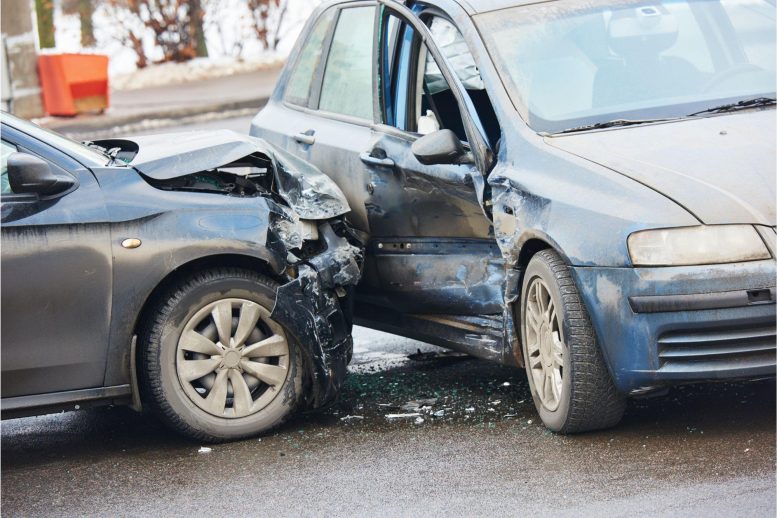
New research suggests that individuals who disregard recommendations for vaccination against coronaviruses may also disregard rules of road safety.
A new study published in The American Journal of Medicine has identified a link between vaccine hesitancy for COVID-19 and increased risks of traffic accidents. Researchers found that individuals who neglect health recommendations for vaccination may also neglect basic road safety measures. The study suggests that raising awareness about the connection between vaccination and road safety may encourage more people to get vaccinated against COVID-19.
This is the first study that explores the possible relationship between vaccine hesitancy and traffic crashes, which are a major cause of injury and death, and can be made worse by other underlying health conditions.
“COVID-19 vaccination is an objective, available, important, authenticated, and timely indicator of human behavior – albeit in a domain separate from motor vehicle traffic,” explained lead investigator Donald A. Redelmeier, MD, Evaluative Clinical Sciences, Sunnybrook Research Institute; Department of Medicine, University of Toronto; Institute for Clinical Evaluative Sciences; and Division of General Internal Medicine, Sunnybrook Health Sciences Centre, Toronto, ON, Canada.
“Whether COVID-19 vaccination is associated with increased traffic risks, however, has not previously been tested. Simple immune activation against a coronavirus, for example, has no direct effect on the risk of a motor vehicle crash. Instead, we theorized that adults who neglect health recommendations may also neglect basic road safety guidelines,” he continued.
Investigators tested whether COVID-19 vaccination was associated with the risks of a traffic crash in Ontario, which is the most populous part of Canada with over 14,500,000 residents in 2021. The yearly crash risk was 2% for an average adult (minor incidents included), the minimum driving age was 16 years, and novice drivers initially received beginner licenses. The COVID-19 vaccine became available in the winter of 2020, doses were widely delivered to adults by the spring of 2021, and uptake had plateaued in the summer of 2021. Vaccination was free to all, supported by community outreach, accompanied by public campaigns, and connected to a central registration system.
The investigators conducted a population-based longitudinal cohort analysis of adults and determined COVID-19 vaccination status through linkages to individual electronic medical records. Traffic crashes requiring emergency medical care were subsequently identified by multicenter outcome ascertainment of 178 centers in the region over a one-month follow-up interval.
Key Findings on Traffic Crash Risks
Over 11 million individuals were included, of whom 16% had not received a COVID-19 vaccine. The cohort accounted for 6,682 traffic crashes during follow-up. Unvaccinated individuals accounted for 1,682 traffic crashes (25%), equal to a 72% increased relative risk compared to those vaccinated. The increased risk was more than the risk associated with diabetes and similar to the relative risk associated with sleep apnea.
The increased traffic risks among unvaccinated adults extended to diverse subgroups (older & younger; drivers & pedestrians; rich & poor) and were equal to a 48% increase after adjustment for age, sex, home location, socioeconomic status, and medical diagnoses. The increased traffic risks extended across the entire spectrum of crash severity and appeared similar for Pfizer, Moderna, or other vaccines. The increased risks collectively amounted to 704 extra traffic crashes.
“The study found traffic risks were 50%-70% greater for adults who had not been vaccinated compared to those who had,” noted Dr. Redelmeier. “These data suggest COVID-19 vaccine hesitancy is associated with significantly increased risks of a traffic crash, however, this does not mean COVID-19 vaccination directly prevents crashes. Instead, it shows how adults who do not follow public health advice may also neglect the rules of the road. Misunderstandings of everyday risk can cause people to put themselves and others in grave danger.”
Recommendations and Broader Impact
The authors recommend that individuals who hesitate to take the COVID-19 vaccine reflect on their choices and recognize how such decisions have repercussions in ways they do not imagine. “We don’t want unvaccinated people to feel persecuted and are not suggesting they stop driving; instead, we suggest they drive a bit more carefully. Physicians counseling patients who decline COVID-19 vaccination could consider safety reminders so their patients do not become traffic statistics,” Dr. Redelmeier concluded.
Reference: “COVID Vaccine Hesitancy and Risk of a Traffic Crash” by Donald A. Redelmeier, Jonathan Wang and Deva Thiruchelvam, 2 December 2022, The American Journal of Medicine.
DOI: 10.1016/j.amjmed.2022.11.002
The study was funded by the Natural Sciences and Engineering Research Council of Canada, the Canadian Institutes of Health Research, the Canada Research Chair in Medical Decision Science, and the University of Toronto Graduate Diploma in Health Research.
Never miss a breakthrough: Join the SciTechDaily newsletter.
Follow us on Google and Google News.
7 Comments
Character assassination masquerading as research. What a farce.
They cannot be serious! Can we get another study that shows the IQ level of people who accepted the shots vs. those that did not? I suspect that the decliners fall on the right side of the IQ bell curve while the accepters will tend to fall on the left side.
Anyway, the mRNA shots are not vaccines.
This is fake. I thought maybe it was pure research on a statistical curiosity like how zebrafish prefer Popeye cartoons to Mickey when given LSD, but it isn’t isn’t even that.
Recently vaccinated drivers in the study counted as unvaccinated, and this is during the vaccine rollout in 2021, as if the vaccine contained good-driving serum which needed 14 days to take effect during a 30-day period. 84% of the deaths were counted out, but 8 deaths were counted in. It completely ignored statistics of who was using the road, and since it’s in Canada, it ignored that it was illegal for the unvaccinated to use all other forms of transport. This is the ultimate in P-hacking, fiddling with the sample data until you get a result you want. If anything dilutes the authority maintaining rules in society, it’s this kind of fraud.
This hit the mainstream news over a month ago. It was mocked for weeks, and used to teach ways statistical analysis can be manipulated. I’m surprised SciTechDaily would make its audience cringe by dredging this embarrassment back out.
Articles like this are created when they start with the conclusion and then cherry-pick the evidence they want; twist the evidence can be twisted to support the wanted conclusion; and omit the evidence that goes against the wanted conclusion.
All Canadian. Any corroborating evidence from say, an “impartial” party that is not politically motivated? Because this article reeks of passive-aggressive shaming tactics that enable toxically-inclined people to be their usual miserable selves, so profoundly insecure that they need to point fingers and tell people they don’t even know how much worse they are, all while creating an emotional wasteland, standing on a pile of rubble, and declaring themselves the “winner”. Anyone who understands dramatic-spectrum personality disorders can see right through this article.
Even if the premise is true (no vax = bad driving) the conclusion is questionable. If the mentality is to resist the vax then forcing the person to get vaxed would not alter their basic attitude; they remain aggressive chance taking drivers.
I heard the unvaccinated are at a higher risk of getting hit by lightning and drowning in dog water bowls. Can somebody please confirm?