
Close Menu
    Facebook X (Twitter) Instagram
    SciTechDaily
    • Biology
    • Chemistry
    • Earth
    • Health
    • Physics
    • Science
    • Space
    • Technology
    Facebook X (Twitter) Pinterest YouTube RSS
    SciTechDaily
    Home»Science»Cretaceous Amber Fossil Sheds Light on Evolution of Bioluminescence in Beetles
    Science

    Cretaceous Amber Fossil Sheds Light on Evolution of Bioluminescence in Beetles

    By Chinese Academy of Sciences HeadquartersFebruary 17, 2021No Comments3 Mins Read
    Facebook Twitter Pinterest Telegram LinkedIn WhatsApp Email Reddit
    Share
    Facebook Twitter LinkedIn Pinterest Telegram Email Reddit
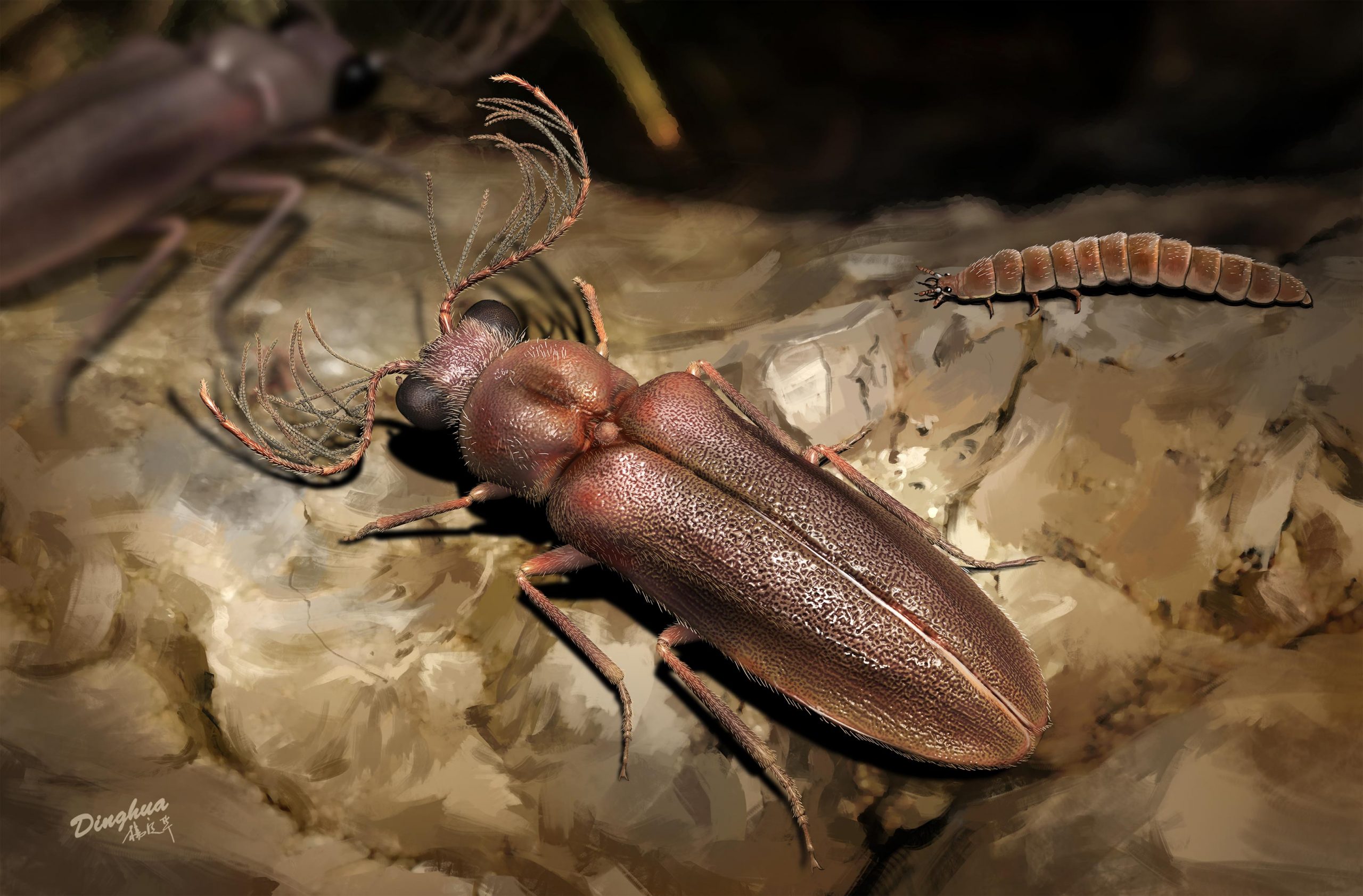
    Cretophengodes azari Artistic Reconstruction
    Ecological reconstruction of Cretophengodes azari. Credit: Dinghua Yang

    A fossil beetle with intact light organs shows bioluminescence began in larvae for defense and evolved for adult communication 99 million years ago.

    Bioluminescence has fascinated people since time immemorial. The majority of organisms able to produce their own light are beetles, specifically fireflies, glow-worm beetles, and their relatives.

    While the chemistry that gives some insects the almost magical ability to glow is now reasonably well-appreciated, much less is known about how these signals evolved.

    New research by a team of scientists led by the Nanjing Institute of Geology and Palaeontology of the Chinese Academy of Sciences (NIGPAS) has provided new insight on the evolution of this capacity. Their research focuses on the newly discovered family of Cretophengodidae, found in a Cretaceous amber fossil, which sheds light on bioluminescence in beetles. Their study was published in Proceedings of the Royal Society B on January 20, 2021.

    “The newly discovered fossil, preserved with lifelike fidelity in amber, represents an extinct relative of the fireflies and the smaller families Rhagophthalmidae and Phengodidae,” said paleontologist and lead author LI Yanda, a scientist at NIGPAS and Peking University.
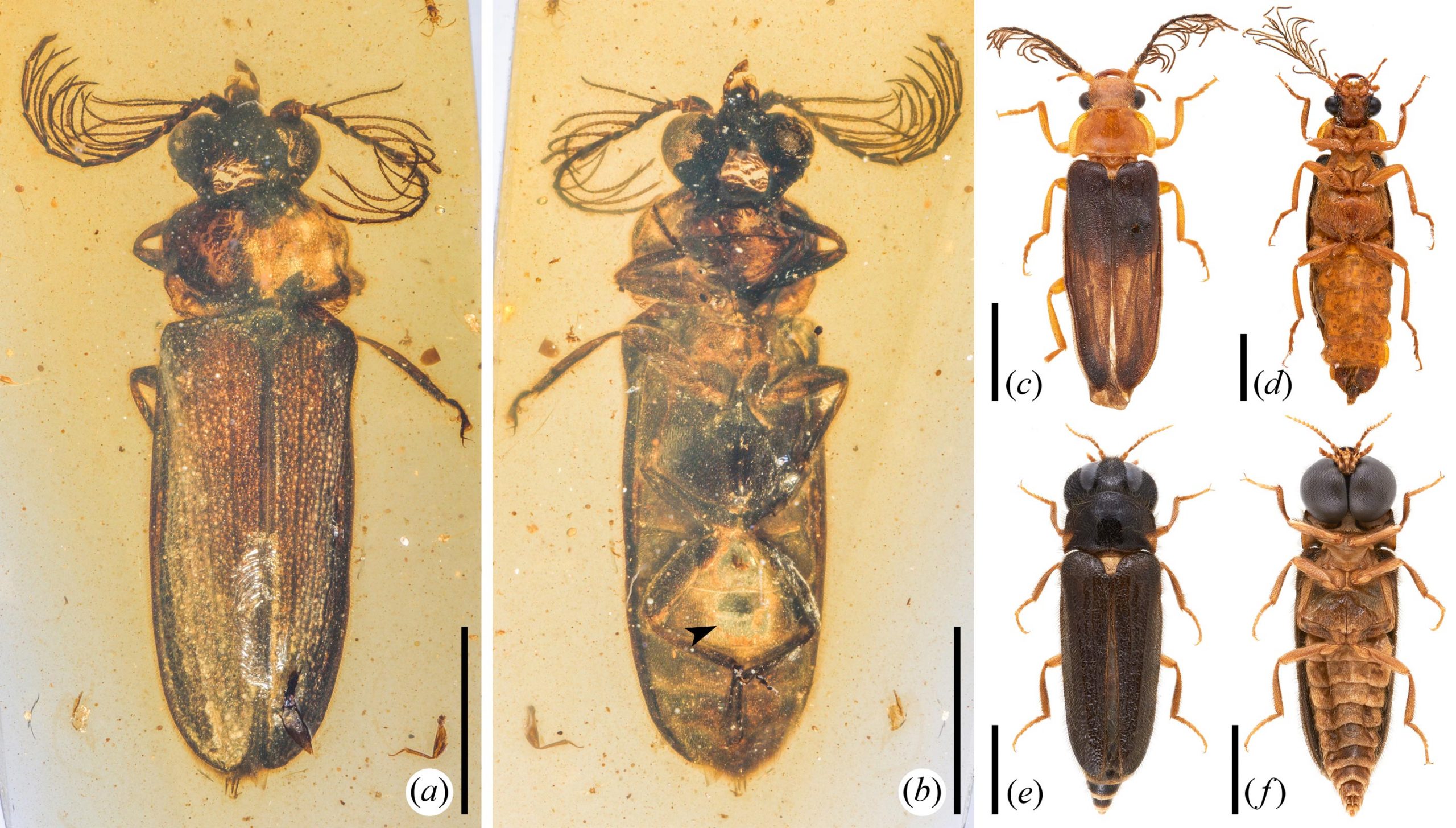
    Cretophengodes azari From Mid-Cretaceous Burmese Amber
    Cretophengodes azari from mid-Cretaceous Burmese amber and its extant relatives. Credit: NIGPAS

    The amber from northern Myanmar is approximately 99 million years old, thus dating back to the golden age of the dinosaurs. “The new fossil is exceptionally well-preserved; even the light organ on its abdomen is intact,” said Dr. CAI Chenyang, associate professor at NIGPAS and research fellow at the University of Bristol.

    Origins of Beetle Bioluminescence: Defense Before Mating

    “The fossil shows that some beetles were already producing light 99 million years ago, in the Cretaceous. We think that light production initially evolved in the beetle’s soft and vulnerable larvae as a defensive mechanism to ward off predators. It was later taken up by the adults as well and co-opted to serve other functions such as locating mates,” said Robin Kundrata, an expert on elateroid beetles from Palacký University in the Czech Republic.
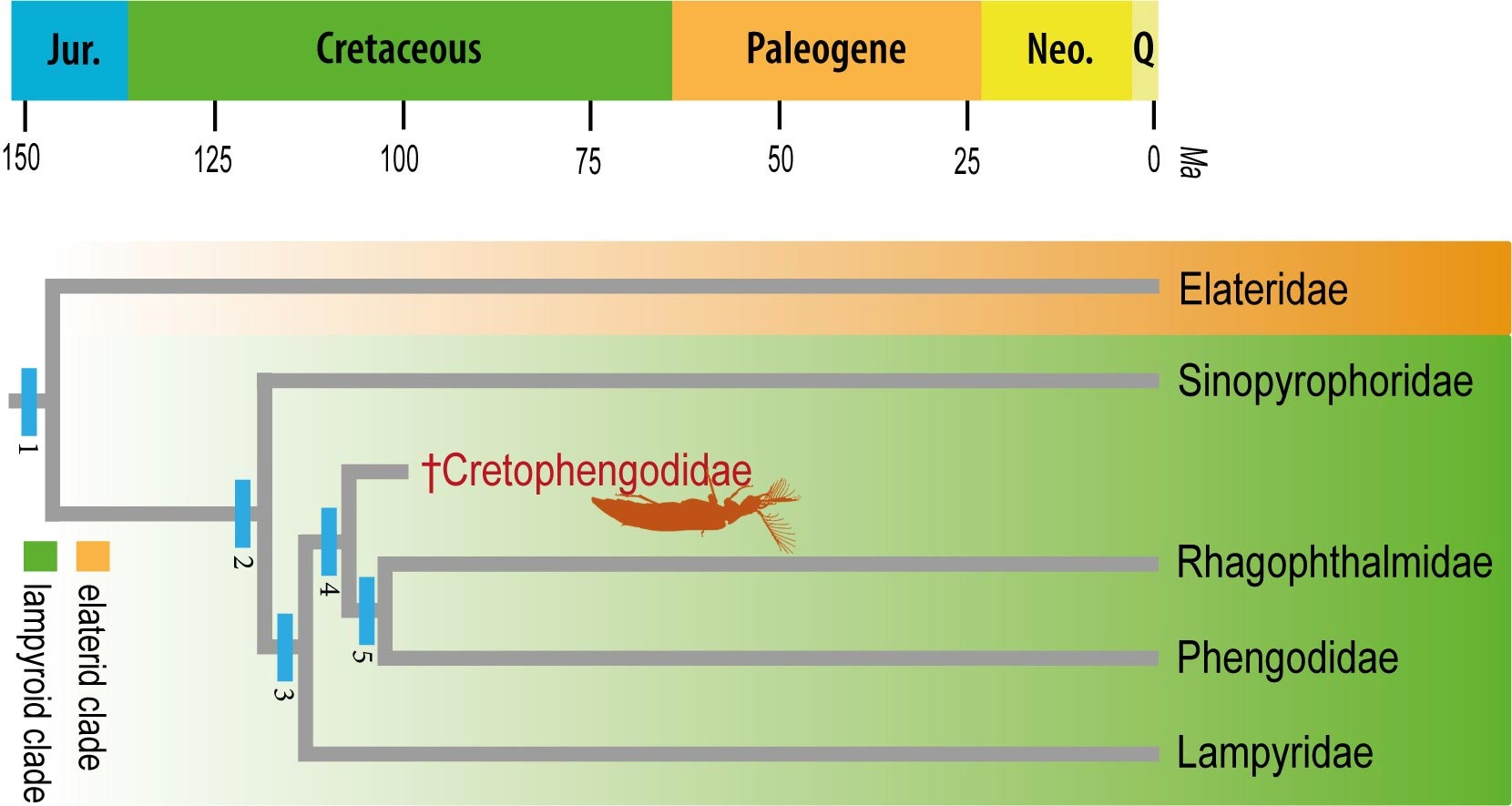
    Systematic Position of Cretophengodes azari
    Systematic position of Cretophengodes azari. Credit: NIGPAS

    Shedding Light on Beetle Biodiversity and Evolution

    With some 386,000 described species and maybe over a million more still waiting to be discovered, beetles are the most diverse group of animals. The majority of light-producing beetles fall into the giant superfamily Elateroidea, with some 24,000 species. It is one of the most heterogeneous groups of beetles and has always posed difficulties for entomologists, particularly because important anatomical innovations were independently acquired many times in unrelated families.

    “The discovery of a new extinct elateroid beetle family is significant because it helps shed light on the evolution of this puzzling but fascinating group,” said Erik Tihelka from the School of Earth Sciences and a participant in this research.

    Read 100 Million-Year-Old Beetle Is Fireflies’ Missing Fossil Link for more on this research.

    Reference: “Cretophengodidae, a new Cretaceous beetle family, sheds light on the evolution of bioluminescence” by Yan-Da Li, Robin Kundrata, Erik Tihelka, Zhenhua Liu, Diying Huang and Chenyang Cai, 20 January 2021, Proceedings of the Royal Society B.
    DOI: 10.1098/rspb.2020.2730

    Never miss a breakthrough: Join the SciTechDaily newsletter.
    Follow us on Google and Google News.

    Archaeology Beetle Bioluminescence Chinese Academy of Sciences Entomology Evolution Paleontology
    Share. Facebook Twitter Pinterest LinkedIn Email Reddit

    Related Articles

    Becoming Human: What Ancient DNA Tells Us About Who We Are

    Tiny Ancient Bird Discovered in China Shares Skull Features With Tyrannosaurus rex

    Two New Species of Ancient, Burrowing Mammal Ancestors Discovered in China

    Extraordinary Species Diversity Within a 14.7 Million-Year-Old Tropical Rainforest and Sheds Light on Evolution

    Preserved With Life-Like Fidelity, 100 Million-Year-Old Beetle Is Fireflies’ Missing Fossil Link

    Five-Eyed 520-Million-Year-Old Fossil Reveals Arthropod Origin

    True Color of 99-Million-Year-Old Insects Revealed by Amber Fossils

    Important Missing Piece of Human History Uncovered From Ancient DNA

    When Did Animals Leave Their First Footprint on Earth?

    Leave A Reply Cancel Reply

    • Facebook
    • Twitter
    • Pinterest
    • YouTube

    Don't Miss a Discovery

    Subscribe for the Latest in Science & Tech!

    Trending News

    Scientists Uncover Potential Brain Risks of Popular Fish Oil Supplements

    Scientists Discover a Surprising Way To Make Bread Healthier and More Nutritious

    After 60 Years, Scientists Uncover Unexpected Brain Effects of Popular Diabetes Drug Metformin

    New Research Uncovers Hidden Side Effects of Popular Weight-Loss Drugs

    Scientists Rethink Extreme Warming After Surprising Ocean Discovery

    Landmark Study Links Never Marrying to Significantly Higher Cancer Risk

    Researchers Discover Unknown Beetle Species Just Steps From Their Lab

    Largest-Ever Study Finds Medicinal Cannabis Ineffective for Anxiety, Depression, PTSD

    Follow SciTechDaily
    • Facebook
    • Twitter
    • YouTube
    • Pinterest
    • Newsletter
    • RSS
    SciTech News
    • Biology News
    • Chemistry News
    • Earth News
    • Health News
    • Physics News
    • Science News
    • Space News
    • Technology News
    Recent Posts
    • Students Build Dark Matter Detector and Set New Experimental Limits
    • Scientists Discover Caffeine Can Repair Key Memory Circuits After Sleep Loss
    • Strange 65-Foot Dinosaur Discovered in Argentina
    • Researchers Uncover Source of Strange Deformation in Earth’s Largest Continental Rift
    • Scientists Solve Mystery of Where the Colorado River Vanished Millions of Years Ago
    Copyright © 1998 - 2026 SciTechDaily. All Rights Reserved.
    • Science News
    • About
    • Contact
    • Editorial Board
    • Privacy Policy
    • Terms of Use

    Type above and press Enter to search. Press Esc to cancel.