
Close Menu
    Facebook X (Twitter) Instagram
    SciTechDaily
    • Biology
    • Chemistry
    • Earth
    • Health
    • Physics
    • Science
    • Space
    • Technology
    Facebook X (Twitter) Pinterest YouTube RSS
    SciTechDaily
    Home»Biology»Critically Endangered Mako Shark Tagged for the First Time in the Mediterranean
    Biology

    Critically Endangered Mako Shark Tagged for the First Time in the Mediterranean

    By Virginia TechDecember 19, 2024No Comments3 Mins Read
    Facebook Twitter Pinterest Telegram LinkedIn WhatsApp Email Reddit
    Share
    Facebook Twitter LinkedIn Pinterest Telegram Email Reddit
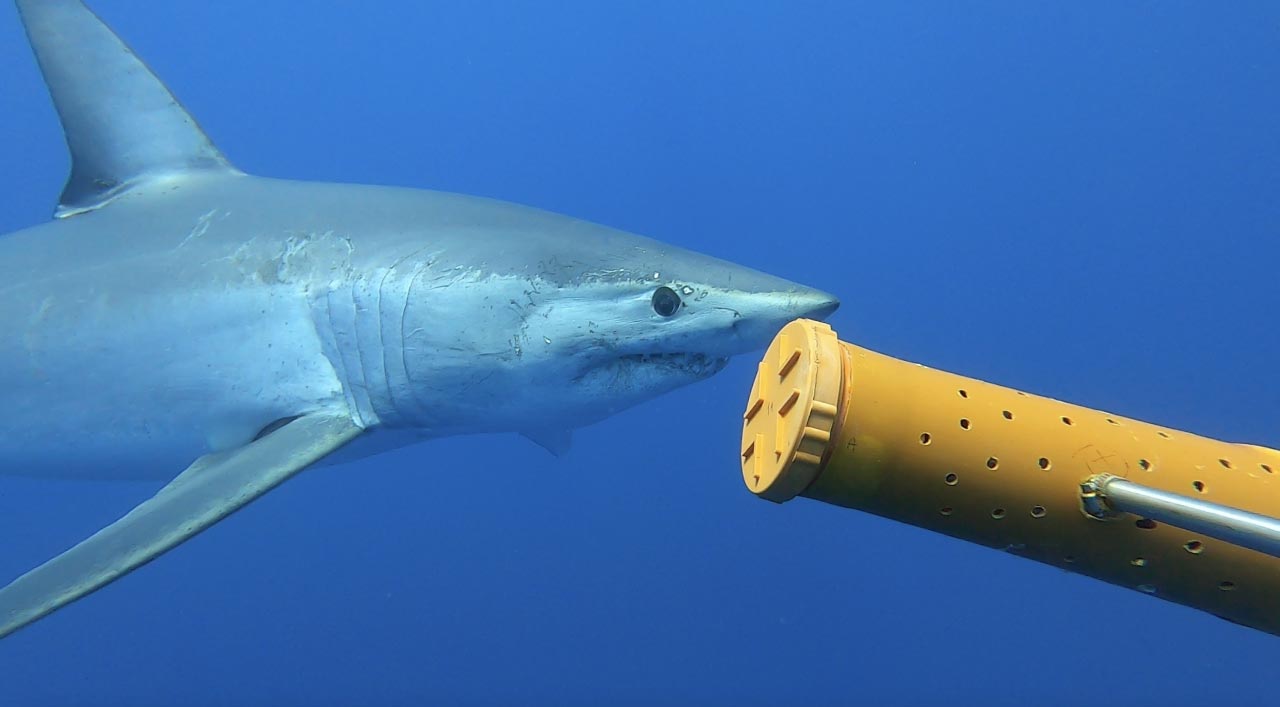
    Mako Shark
    The research team successfully tagged a Mako shark for the first time in the region as part of another research project. Credit: Photo courtesy of Brendan Shea.

    By tagging the young mako shark, researchers from Virginia Tech and the College of Natural Resources and Environment gathered valuable behavioral insights to aid in preventing the species’ decline in the region.

    Virginia Tech researchers achieved a significant milestone in the summer of 2023 by successfully tagging a young shortfin mako shark in the Mediterranean—marking the first instance of such an accomplishment in this region.

    Shortfin mako sharks are critically endangered, not only in the Mediterranean but also worldwide.

    The research team tagged the mako shark during a research expedition for the white shark in the region.

    “During that research trip, we encountered a young shortfin mako shark by happenstance,” said Brendan Shea, a Ph.D. student in the College of Natural Resources and Environment. “We placed an electronic tag on it, which provides valuable information about its movements, helping us understand how to better conserve the population.”

    Innovative Tagging Technology

    The tag the team used is called a pop-off archival tag. It collects and stores data on water temperature, depth, and ambient light levels. This data helps the researchers estimate the shark’s location and understand its movements. The tag detaches after a set period or if the shark dives too deep – more than 1,800 meters – and then transmits the data back to a satellite.

    “These tags give us valuable information about where these animals travel,” Shea said. “This makes conserving them easier. We need to do more tagging, but this is a great starting point.”
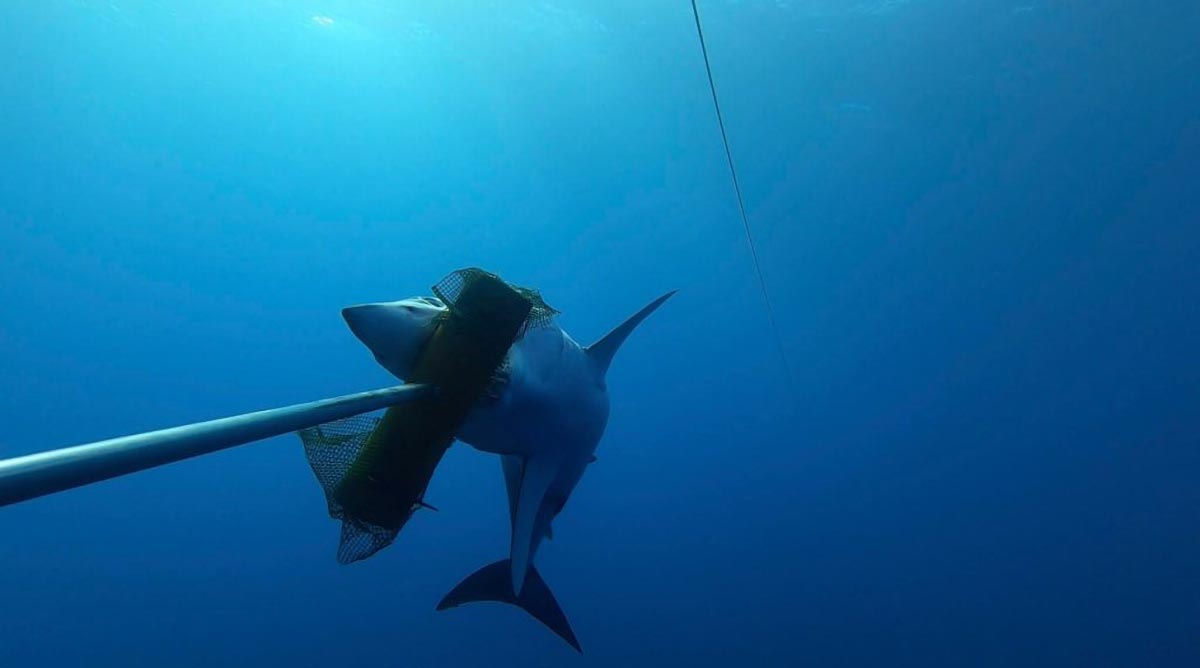
    Mako Shark Tag
    The research team successfully tagged a Mako shark for the first time in the region as part of another research project. Credit: Photo courtesy of Francesco Ferretti

    The research, carried out as part of the White Shark Chase initiative led by Francesco Ferretti at Virginia Tech, was published recently in Frontiers in Marine Science.

    This collaborative effort included Jeremy Jenrette of Virginia Tech’s Department of Fish and Wildlife Conservation, Chiara Gambardella of the Polytechnic University of Marche, Gambardella and Stefano Moro of Stazione Zoologica Anton Dohrn, Khaled Echwikhi of the High Institute of Applied Biology of Medenine at University of Gabes, Robert Schallert and Barbara Block of Stanford University, Schallert of Tag-a-Giant, and Taylor Chapple of Oregon State University’s Coastal Oregon Marine Experiment Station.

    Funding was provided by The Explorers Club, Discovery Channel, Sharkproject, the Bertarelli Foundation, the Augmentum platform, and individual donors.

    Insights Into Shark Movements and Conservation

    The young mako shark traveled more than 750 miles in 54 days, even though it was likely only 1 or 2 years old. This means that protecting nursery areas might not be enough because these young sharks travel so far.

    “Sharks play a crucial role in the health of our oceans,” Shea said. “A healthy ocean supports various human activities, so understanding and conserving shark populations benefits everyone. Understanding the three-dimensional movement of sharks helps us know how they connect different habitats and their role in the ecosystem. This data also informs us about the depths they occupy, which is vital for conservation efforts.”

    Reference: “First satellite track of a juvenile shortfin mako shark (Isurus oxyrinchus) in the Mediterranean Sea” by Brendan D. Shea, Taylor K. Chapple, Khaled Echwikhi, Chiara Gambardella, Jeremy F. Jenrette, Stefano Moro, Robert J. Schallert, Barbara A. Block and Francesco Ferretti, 8 November 2024, Frontiers in Marine Science.
    DOI: 10.3389/fmars.2024.1423507

    Never miss a breakthrough: Join the SciTechDaily newsletter.
    Follow us on Google and Google News.

    Conservation Marine Biology Sharks Virginia Tech
    Share. Facebook Twitter Pinterest LinkedIn Email Reddit

    Related Articles

    Marine Mystery: Why Are Great White Sharks Disappearing in South Africa?

    “Astonishing” Footage – Orca’s Solo Hunt of Great White Shark Rattles Marine Science

    Don’t Blame Sharks: Scientists Reveal Why More Hooked Tarpon Are Being Eaten

    Warm-Blooded Surprise: How Stranded Sharks and Megalodon Mysteries Reveal Climate Perils

    Win-Win: LED Lighted Nets Dramatically Reduce Bycatch of Wildlife While Making Fishing More Efficient

    Ancestors of Whale Sharks in Panama May Come From Distant Waters Around the World

    Five Incredible Ways NASA Helps With Shark Conservation

    Protecting a Nearly Endangered Species: Tracking Hammerhead Sharks Reveals Conservation Targets

    Six-Year Whale Shark Study Offers New Behavior and Conservation Insights [Video]

    Leave A Reply Cancel Reply

    • Facebook
    • Twitter
    • Pinterest
    • YouTube

    Don't Miss a Discovery

    Subscribe for the Latest in Science & Tech!

    Trending News

    Monster Storms on Jupiter Unleash Lightning Beyond Anything on Earth

    Scientists Create “Liquid Gears” That Spin Without Touching

    The Simple Habit That Could Help Prevent Cancer

    Millions Take These IBS Drugs, But a New Study Finds Serious Risks

    Scientists Unlock Hidden Secrets of 2,300-Year-Old Mummies Using Cutting-Edge CT Scanner

    Bread Might Be Making You Gain Weight Even Without Eating More Calories

    Scientists Discover Massive Magma Reservoir Beneath Tuscany

    Europe’s Most Active Volcano Just Got Stranger – Here’s Why Scientists Are Rethinking It

    Follow SciTechDaily
    • Facebook
    • Twitter
    • YouTube
    • Pinterest
    • Newsletter
    • RSS
    SciTech News
    • Biology News
    • Chemistry News
    • Earth News
    • Health News
    • Physics News
    • Science News
    • Space News
    • Technology News
    Recent Posts
    • Scientists Were Wrong About This Strange “Rule-Breaking” Particle
    • Webb Space Telescope Uncovers Unexpected Ice Clouds on a Jupiter-Like World
    • 289-Million-Year-Old Reptile Mummy Reveals Origin of Human Breathing System
    • New Brain Discovery Challenges Long-Held Theory of Teenage Brain Development
    • Sharks Are Overheating as Warming Oceans Push Them to the Edge
    Copyright © 1998 - 2026 SciTechDaily. All Rights Reserved.
    • Science News
    • About
    • Contact
    • Editorial Board
    • Privacy Policy
    • Terms of Use

    Type above and press Enter to search. Press Esc to cancel.