
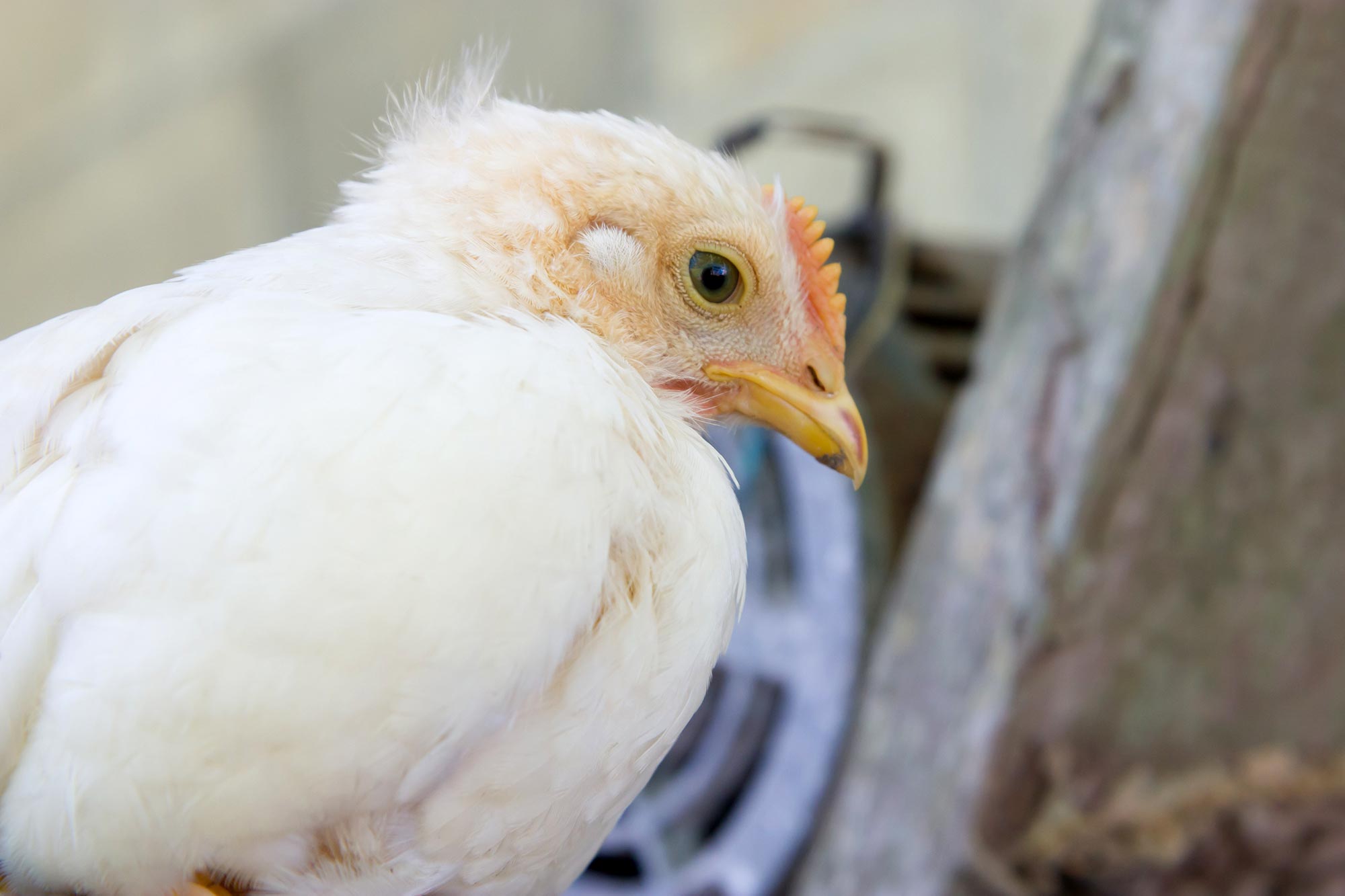
New research sheds light on how a key avian influenza virus enzyme can mutate to allow the virus to replicate in mammals.
Significant strides have been made in controlling seasonal flu through public health initiatives, but the potential for an avian influenza outbreak in mammals remains a concern. New research has uncovered how mutations enable bird flu to adapt to mammalian hosts, posing new challenges for human health. The study provides crucial insights into the polymerase’s role in viral replication and points towards the need for targeted drug development against these complex viral mechanisms.
Progress in Combating Seasonal Flu and Emerging Threats
In recent years, public health measures, surveillance, and vaccination have helped bring about significant progress in reducing the impact of seasonal flu epidemics, caused by human influenza viruses A and B. However, a possible outbreak of avian influenza A (commonly known as ‘bird flu’) in mammals, including humans, poses a significant threat to public health.
The Cusack group at EMBL Grenoble studies the replication process of influenza viruses. A new study from this group sheds light on the different mutations that the avian influenza virus can undergo to be able to replicate in mammalian cells.
Some avian influenza strains can cause severe disease and mortality. Fortunately, significant biological differences between birds and mammals normally prevent avian influenza from spreading from birds to other species. To infect mammals, the avian influenza virus must mutate to overcome two main barriers: the ability to enter the cell and to replicate within that cell. To cause an epidemic or pandemic, it must also acquire the ability to be transmitted between humans.
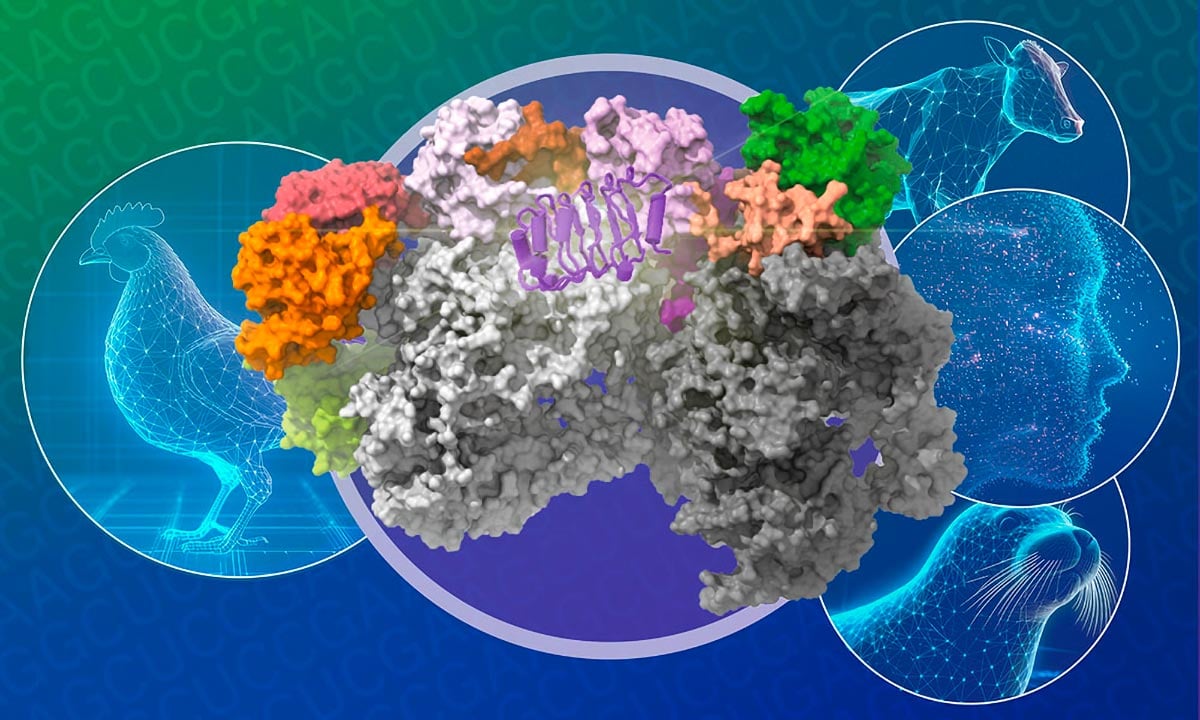
Avian Influenza Cross-Species Transmission
However, sporadic contamination of wild and domestic mammals by bird flu is becoming increasingly common. Of particular concern is the recent unexpected infection of dairy cows in the USA by an avian H5N1 strain, which risks becoming endemic in cattle. This might facilitate adaptation to humans, and indeed, a few cases of transmission to humans have been reported, so far resulting in only mild symptoms.
At the heart of this process is the polymerase, an enzyme that orchestrates the virus’s replication inside host cells. This flexible protein can rearrange itself according to the different functions it performs during infection. These include transcription – copying the viral RNA into messenger RNA to make viral proteins – and replication – making copies of the viral RNA to package into new viruses.
Viral replication is a complex process to study because it involves two viral polymerases and a host cell protein – ANP32. Together, these three proteins form the replication complex, a molecular machine that carries out replication. ANP32 is known as a ‘chaperone’, meaning that it acts as a stabilizer for certain cellular proteins. It can do this thanks to a key structure – its long acidic tail. In 2015, it was discovered that ANP32 is critical for influenza virus replication, but its function was not fully understood.
Structural Insights and Adaptations for Human Cells
The results of the new study, published today (August 19) in the journal Nature Communications, show that ANP32 acts as a bridge between the two viral polymerases – called replicase and encapsidase. The names reflect the two distinct conformations taken up by the polymerases to perform two different functions – creating copies of the viral RNA (replicase) and packaging the copy inside a protective coating with ANP32’s help (encapsidase).
Through its tail, ANP32 acts as a stabilizer for the replication complex, allowing it to form within the host cell. Interestingly, the ANP32 tail differs between birds and mammals, although the core of the protein remains very similar. This biological difference explains why the avian influenza virus does not replicate easily in mammals and humans.
“The key difference between avian and human ANP32 is a 33-amino-acid insertion in the avian tail, and the polymerase has to adapt to this difference,” explained Benoît Arragain, a postdoctoral fellow in the Cusack group and first author of the publication. “For the avian-adapted polymerase to replicate in human cells, it must acquire certain mutations to be able to use human ANP32.”
To better understand this process, Arragain and his collaborators obtained the structure of the replicase and encapsidase conformations of a human-adapted avian influenza polymerase (from strain H7N9) while they were interacting with human ANP32. This structure gives detailed information about which amino acids are important in forming the replication complex and which mutations could allow the avian influenza polymerase to adapt to mammalian cells.
Research Findings and Future Directions
To obtain these results, Arragain carried out in vitro experiments at EMBL Grenoble, using the Eukaryotic Expression Facility, the ISBG biophysical platform, and the cryo-electron microscopy platform available through the Partnership for Structural Biology. “We also collaborated with the Naffakh group at the Institut Pasteur, who carried out cellular experiments,” added Arragain. “In addition, we obtained the structure of the human type B influenza replication complex, which is similar to that of influenza A. The cellular experiments confirmed our structural data.”
These new insights into the influenza replication complex can be used to study polymerase mutations in other similar strains of the avian influenza virus. It is therefore possible to use the structure obtained from the H7N9 strain and adapt it to other strains such as H5N1.
“The threat of a new pandemic caused by highly pathogenic, human-adapted avian influenza strains with a high mortality rate needs to be taken seriously,” said Stephen Cusack, EMBL Grenoble Senior Scientist who led the study and has been studying influenza viruses for 30 years. “One of the key responses to this threat includes monitoring mutations in the virus in the field. Knowing this structure allows us to interpret these mutations and assess if a strain is on the path of adaptation to infect and transmit between mammals.”
These results are also useful in the long-term perspective of anti-influenza drug development, as there are no existing drugs that target the replication complex specifically. “But it’s just the beginning,” said Cusack. “What we want to do next is to understand how the replication complex works dynamically, in other words, to know in more detail how it actively performs replication.” The group has already successfully carried out similar studies on the role of influenza polymerase in the viral transcription process.
Reference: “Structures of influenza A and B replication complexes give insight into avian to human host adaptation and reveal a role of ANP32 as an electrostatic chaperone for the apo-polymerase” by Benoît Arragain, Tim Krischuns, Martin Pelosse, Petra Drncova, Martin Blackledge, Nadia Naffakh and Stephen Cusack, 19 August 2024, Nature Communications.
DOI: 10.1038/s41467-024-51007-3
Never miss a breakthrough: Join the SciTechDaily newsletter.
Follow us on Google and Google News.
3 Comments
Sounds a lot like gain of function research.
or even exactly like 🙁
Culling chicken flocks because some small number may have contacted the bird flu has proven ineffective. It has only caused the price of eggs and chicken to escalate as chickens and eggs become scarier.
Can we stop following this foolish policy?