
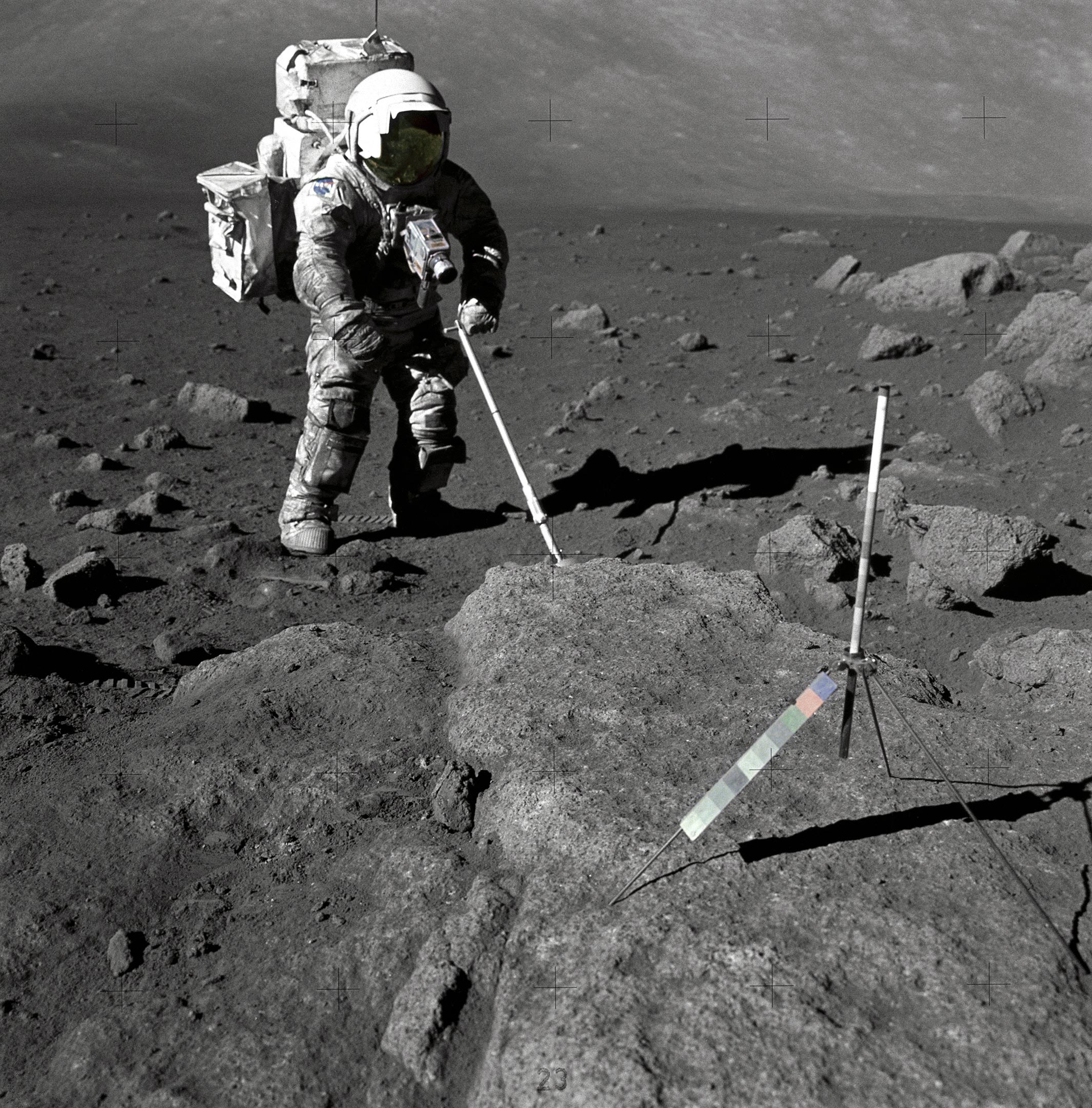
After an ocean of magma cooled down, the lunar crystals formed at least 4.46 billion years ago.
More than 4 billion years ago, when the Solar System was still young and the Earth was still growing, a giant object the size of Mars crashed into the Earth. The biggest piece that broke off of the early Earth formed our Moon. But precisely when this happened has remained a mystery. In a new study in the journal Geochemical Perspectives Letters, researchers used crystals brought back from the Moon by Apollo astronauts in 1972 to help pinpoint the time of the Moon’s formation. Their discovery pushes back the age of the Moon by 40 million years, to at least 4.46 billion years old.
The Significance of Lunar Crystals
“These crystals are the oldest known solids that formed after the giant impact. And because we know how old these crystals are, they serve as an anchor for the lunar chronology,” says Philipp Heck, the Field Museum’s Robert A. Pritzker Curator for Meteoritics and Polar Studies and the Senior Director of the Negaunee Interactive Research Center, a professor at the University of Chicago, and the study’s senior author.
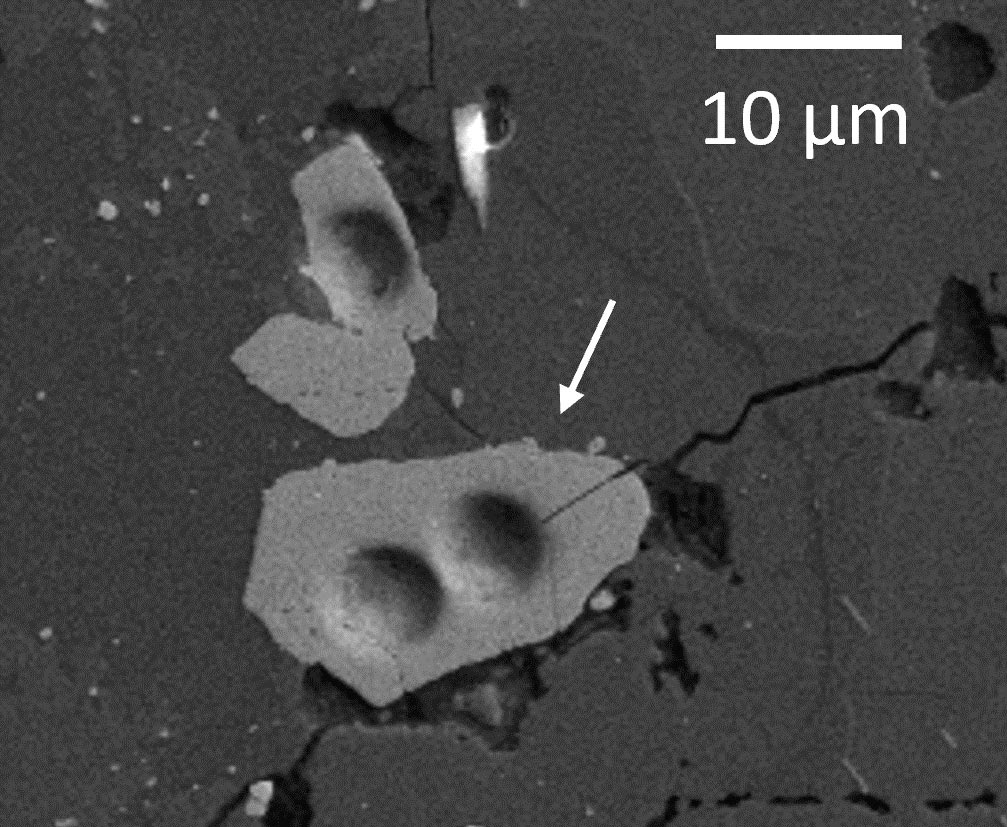
The discovery was born of Heck’s work with the study’s lead author, Jennika Greer, when she was a doctoral candidate at the Field Museum and the University of Chicago. “We were approached by our coauthors, Bidong Zhang and Audrey Bouvier, who needed a nanoscale look at these samples in order to understand them fully,” says Greer, who is now a research associate at the University of Glasgow.
Moon Formation and Zircon Crystals
The sample of lunar dust used in the study was brought back by Apollo 17 astronauts in the last crewed mission to the Moon in 1972. This dust contains tiny crystals that formed billions of years ago. These crystals are a telltale sign of when the Moon must have formed.
When the Mars-size object hit the Earth and formed the Moon, the energy of the impact melted the rock that eventually became the Moon’s surface. “When the surface was molten like that, zircon crystals couldn’t form and survive. So any crystals on the Moon’s surface must have formed after this lunar magma ocean cooled,” says Heck. “Otherwise, they would have been melted and their chemical signatures would be erased.”
Since the crystals must have formed after the magma ocean cooled, determining the age of the zircon crystals would reveal the minimum possible age of the Moon. A previous study by co-author Bidong Zhang has suggested this age, but this most recent study marks the first use of an analytical method called atom probe tomography which “nailed down” the age of this oldest known lunar crystal.
Atom Probe Tomography: An Insightful Technique
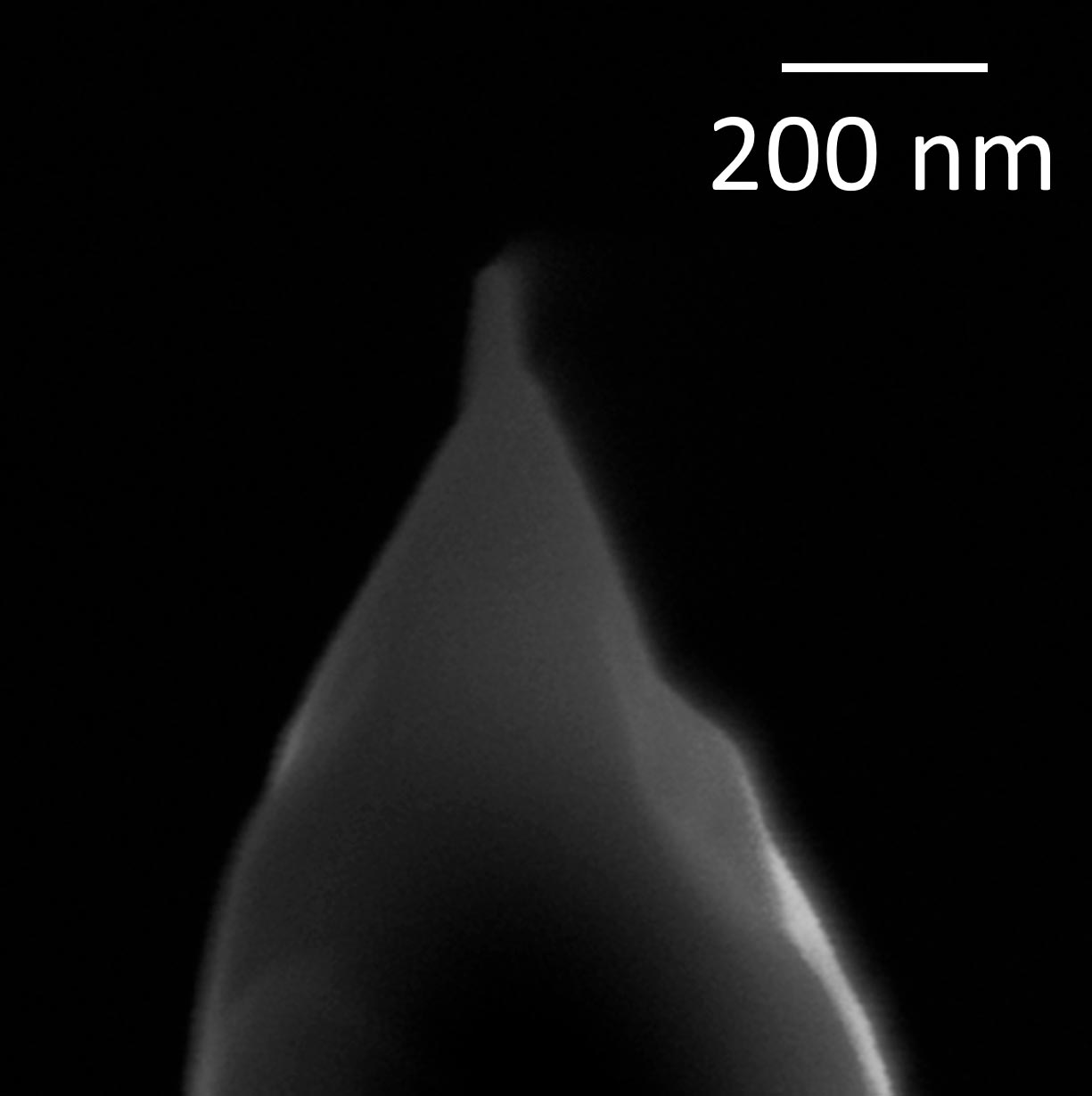
“In atom probe tomography, we start by sharpening a piece of the lunar sample into a very sharp tip, using a focused ion beam microscope, almost like a very fancy pencil sharpener,” says Greer. “Then, we use UV lasers to evaporate atoms from the surface of that tip. The atoms travel through a mass spectrometer, and how fast they move tells us how heavy they are, which in turn tells us what they’re made of.”
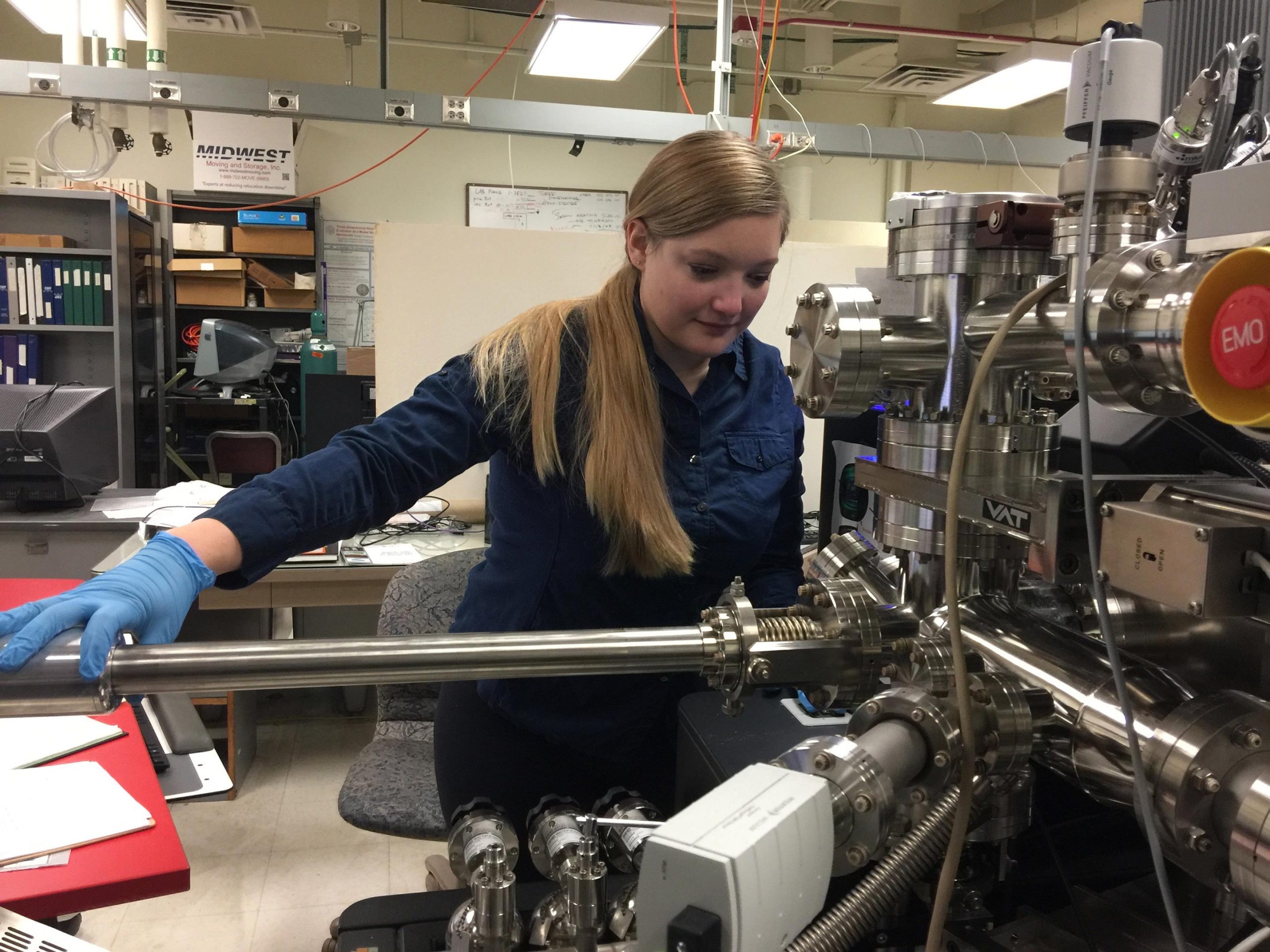
This atom-by-atom analysis, conducted using instruments at Northwestern University, showed how many of the atoms inside the zircon crystals had undergone radioactive decay. When an atom has an unstable configuration of protons and neutrons in its nucleus, it undergoes decay, shedding some of these protons and neutrons and transforming into different elements. For instance, uranium decays into lead. Scientists have established how long it takes this process to occur, and by looking at the proportion of different uranium and lead atoms (called isotopes) present in a sample, they can tell how old it is.
“Radiometric dating works a little bit like an hourglass,” says Heck. “In an hourglass, sand flows from one glass bulb to another, with the passage of time indicated by the accumulation of sand in the lower bulb. Radiometric dating works similarly by counting the number of parent atoms and the number of daughter atoms they have transformed into. The passage of time can then be calculated because the transformation rate is known.”
The proportion of lead isotopes that the researchers found indicated that the sample was about 4.46 billion years old. Therefore, the Moon has to be at least that old.
Implications and Significance
“It’s amazing being able to have proof that the rock you’re holding is the oldest bit of the Moon we’ve found so far. It’s an anchor point for so many questions about the Earth. When you know how old something is, you can better understand what has happened to it in its history,” says Greer.
It’s important to know when the Moon formed, says Heck, because “the Moon is an important partner in our planetary system — it stabilizes the Earth’s rotational axis, it’s the reason there are 24 hours in a day, it’s the reason we have tides. Without the Moon, life on Earth would look different. It’s a part of our natural system that we want to better understand, and our study provides a tiny puzzle piece in that whole picture.”
Reference: “4.46 Ga zircons anchor chronology of lunar magma ocean” by J. Greer, B. Zhang, D. Isheim, D.N. Seidman, A. Bouvier and P.R. Heck, 23 October 2023, Geochemical Perspectives Letters.
DOI: 10.7185/geochemlet.2334
This study was contributed to by Jennika Greer at the University of Glasgow, B. Zhang at the University of California, Los Angeles, D. Isheim, and D.N. Seidman at Northwestern University, A. Bouvier at Bayreuth University, and Philipp Heck at the Field Museum.
Never miss a breakthrough: Join the SciTechDaily newsletter.
Follow us on Google and Google News.