
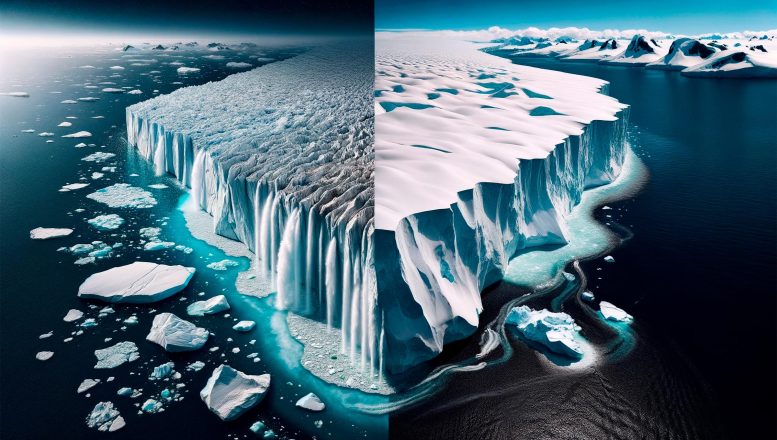
UC Irvine-led researchers identify contributions of downslope winds and ozone layer.
Surface ice in Greenland has been melting at an increasing rate in recent decades, while the trend in Antarctica has moved in the opposite direction, according to researchers at the University of California, Irvine and Utrecht University in the Netherlands.
Impact of Foehn and Katabatic Winds
For a paper published recently in the American Geophysical Union journal Geophysical Research Letters, the scientists studied the role of Foehn and katabatic winds, downslope gusts that bring warm, dry air into contact with the tops of glaciers. They said that melting of the Greenland ice sheet related to these winds has gone up by more than 10 percent in the past 20 years; the impact of the winds on the Antarctic ice sheet has decreased by 32 percent.
Research Findings and Sea Level Rise
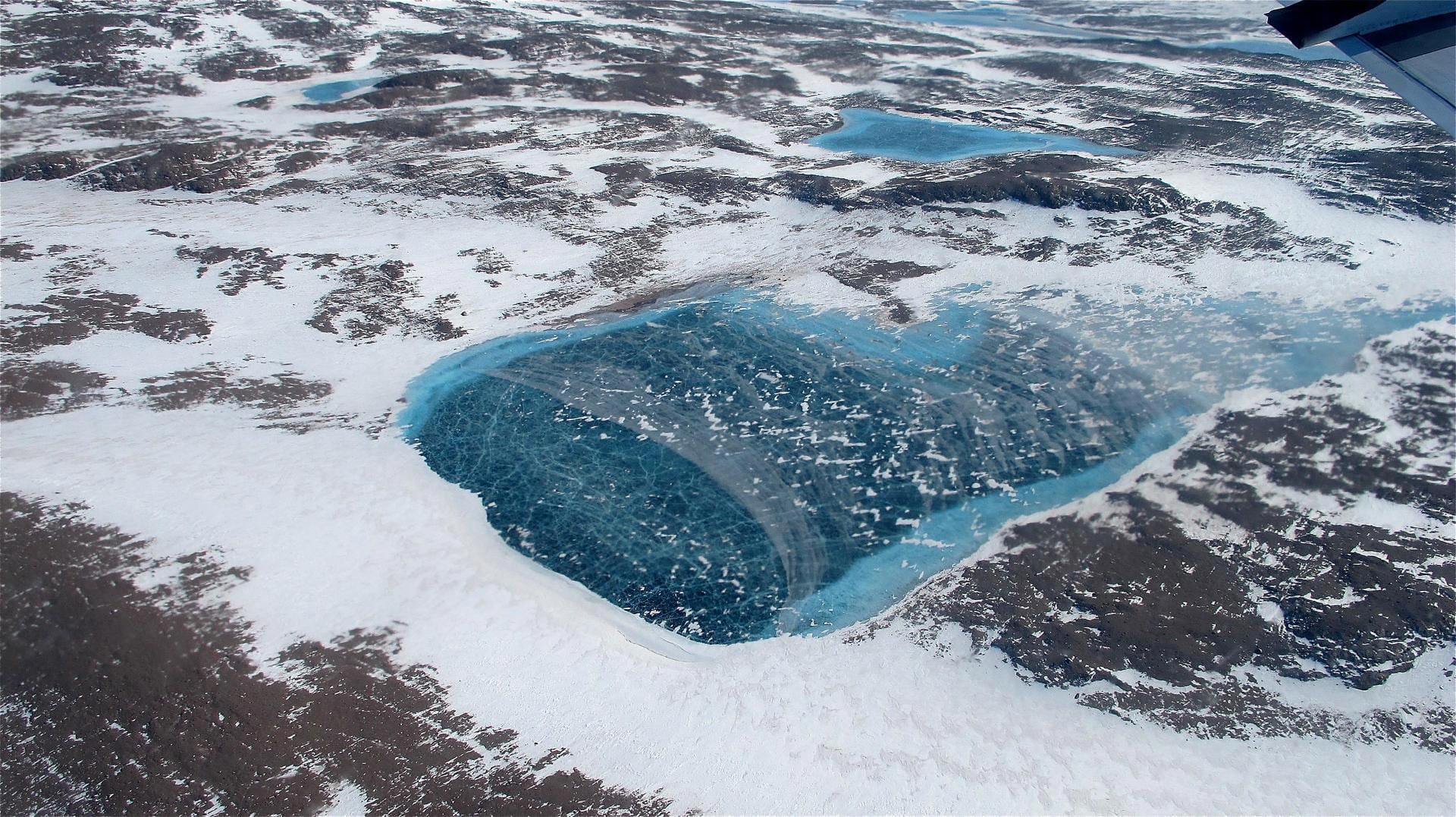
“We used regional climate model simulations to study ice sheets in Greenland and Antarctica, and the results showed that downslope winds are responsible for a significant amount of surface melt of the ice sheets in both regions,” said co-author Charlie Zender, UCI professor of Earth system science. “Surface melt leads to runoff and ice shelf hydrofracture that increase freshwater flow to oceans – causing sea level rise.”
While the impact of the winds is substantial, he said, the distinct behaviors of global warming in the Northern and Southern hemispheres are causing contrasting outcomes in the regions.
Greenland’s Melting Dynamics
In Greenland, wind-driven surface melt is compounded by the massive island “becoming so warm that sunlight alone (without wind) is enough to melt it,” according to Zender. The 10 percent growth in wind-driven melt combined with warmer surface air temperatures has resulted in a 34 percent increase in total surface ice melt. He attributes this outcome in part to the influence of global warming on the North Atlantic Oscillation, an index of sea level pressure difference. The shifting of NAO to a positive phase has led to below-normal pressure across high latitudes, ushering warm air over Greenland and other Arctic areas.
Antarctica’s Ice Melt Patterns
The authors found that, in contrast with Greenland, total Antarctic surface melt has decreased by about 15 percent since 2000. The bad news is that this reduction is largely due to 32 percent less downslope wind-generated melt on the Antarctic Peninsula where two vulnerable ice shelves have already collapsed. Zender said it’s fortunate that the Antarctic stratospheric ozone hole discovered in the 1980s continues to recover, which temporarily helps to insulate the surface from further melt.
The Global Significance of Ice Melt
“The ice sheets in Greenland and Antarctica keep over 200 feet of water out of the ocean, and their melt has raised global sea level by about three-quarters of an inch since 1992,” said Zender, who holds a joint appointment in UCI’s Department of Computer Science. “Although Greenland has been the No. 1 driver of sea level rise in recent decades, Antarctica is close behind and catching up and will eventually dominate sea level rise. So it’s important to monitor and model melt as both ice sheets deteriorate, including the ways climate change alters the relationship between wind and ice.”
Future Research and Implications
Zender hopes that the research on the role of Foehn and katabatic winds in polar regions will help the climate science community strengthen the physical fidelity of Earth system models.
Reference: “Wind-Associated Melt Trends and Contrasts Between the Greenland and Antarctic Ice Sheets” by Matthew K. Laffin, Charles S. Zender, Melchior van Wessem, Brice Noël and Wenshan Wang, 29 August 2023, Geophysical Research Letters.
DOI: 10.1029/2023GL102828
Zender was joined on this project by Matthew Laffin and Wenshan Wang of UCI’s Department of Earth System Science and Melchior van Wessem and Brice Noel of the University of Utrecht’s Institute for Marine and Atmospheric Research. The researchers received financial support from the U.S. Department of Energy, the National Science Foundation and the Netherlands Organization for Scientific Research.
Never miss a breakthrough: Join the SciTechDaily newsletter.
Follow us on Google and Google News.
2 Comments
“Zender said it’s fortunate that the Antarctic stratospheric ozone hole discovered in the 1980s continues to recover, which temporarily helps to insulate the surface from further melt.
I don’t think that he has kept up with what has been happening with the so-called ‘ozone hole’ in recent years.
https://scitechdaily.com/ozone-hole-swells-to-10-million-square-miles-one-of-the-biggest-on-record/
“The authors found that, in contrast with Greenland, total Antarctic surface melt has DECREASED by about 15 percent since 2000. The bad news is that this reduction is largely due to 32 percent less downslope wind-generated melt on the Antarctic Peninsula where two vulnerable ice shelves have already collapsed.”
I think this needs some explanation. I don’t see why decreased surface melting is bad news.