
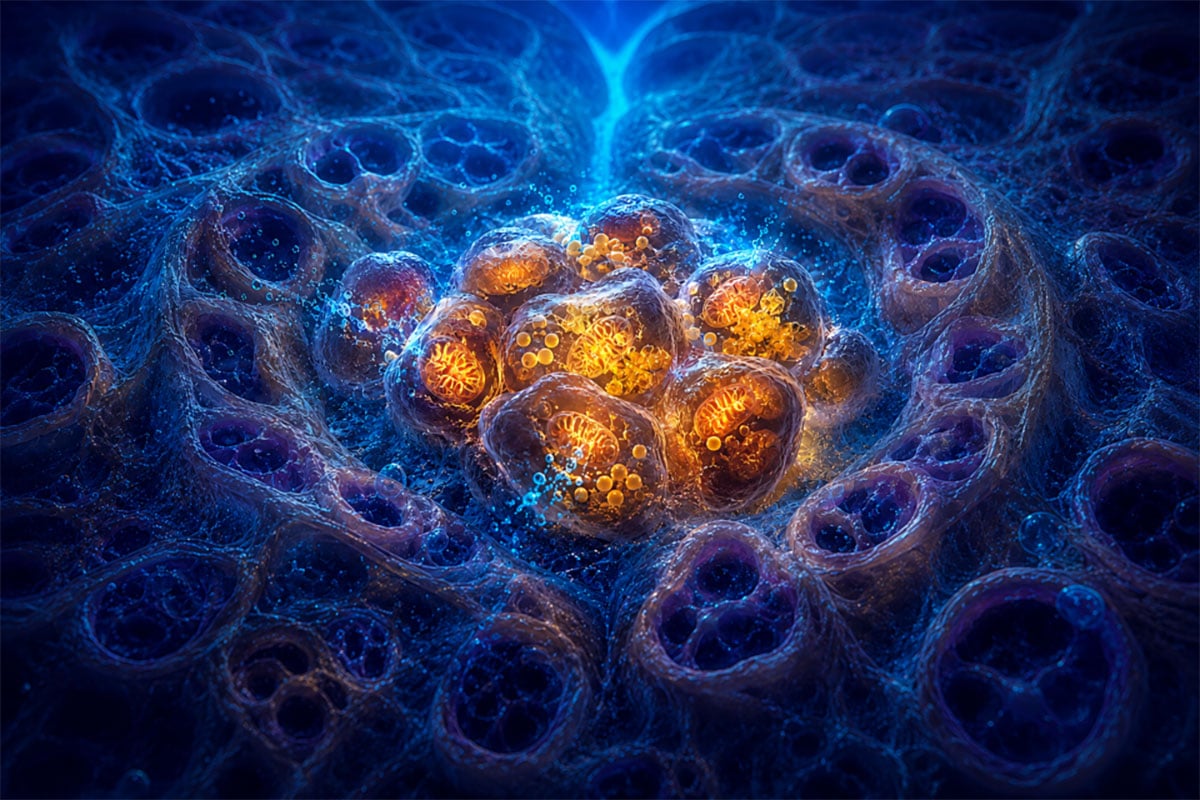
A newly identified link between amino acid metabolism and cholesterol production may help prostate tumors adapt to hormone therapy.
Prostate cancer can find ways around treatments designed to deprive tumors of the hormones they need to grow. Weill Cornell Medicine investigators have now traced one possible route of resistance to amino acid metabolism, where a metabolic byproduct can keep cholesterol production active even when the cell would normally shut it down.
The preclinical study, published in Nature Metabolism, focused on propionyl-CoA, a compound generated when the essential amino acids isoleucine and valine are broken down during normal energy metabolism. Researchers found that propionyl-CoA can act as a signal that turns on cholesterol production, helping prostate cancer cells adjust to hormone-deprived conditions and develop more aggressive characteristics.
That connection points to a potential vulnerability that might eventually be targeted with drugs or, if clinical studies support the approach, dietary strategies that lower isoleucine and valine. Both amino acids are common in protein-rich foods, including meat, fish, and dairy products.
“Our study uncovers an unexpected way prostate cancer cells can adapt when hormone signaling is blocked,” said senior author Dr. John Blenis, the Anna-Maria and Stephen Kellen Professor in Cancer Research and professor of pharmacology at Weill Cornell. “It raises the possibility that the availability of certain amino acids, whether from diet or altered metabolism, may affect how tumors progress and respond to therapy.”
A metabolic signal overrides cholesterol controls
A clue emerged when lead author Dr. Zhongchi Li, an instructor in pharmacology at Weill Cornell, and colleagues found higher levels of propionylcarnitine, a metabolite closely related to propionyl-CoA, in more aggressive human prostate tumors.
The researchers then determined how the signal could influence cholesterol metabolism. Propionyl-CoA promotes a chemical modification known as propionylation on SREBP2, a protein that controls genes involved in cholesterol production. Adding this chemical tag stabilizes SREBP2 and allows those genes to remain active.
Under normal conditions, SREBP2 helps keep cholesterol levels balanced. When cholesterol is scarce, it stimulates production. When cholesterol is abundant, its activity falls. Propionyl-CoA disrupted that feedback system by allowing SREBP2 to stay active even when cholesterol production would ordinarily be suppressed.
That matters because prostate cancer cells can convert excess cholesterol into androgens (testosterone and related male hormones). Those hormones activate the androgen receptor, which plays a central role in prostate cancer growth. Treatments such as enzalutamide are intended to block this pathway, but increased androgen production can help tumors maintain signaling and become less responsive to therapy.
Hormone deprivation strengthens the pathway
The pathway became more active under the very conditions created by hormone treatment. In laboratory models, propionyl-CoA levels increased when prostate cancer cells were deprived of male hormones, suggesting that cancer cells may turn to this metabolic route as a survival response when androgen signaling is disrupted.
“Because this pathway connects nutrients, cholesterol, and hormone signaling, it gives us several points where we may be able to intervene,” Dr. Blenis said. “The long-term goal is to determine whether drugs or carefully controlled dietary strategies can make existing treatments work better.”
Diet is one source of isoleucine and valine, but propionyl-CoA can arise from other processes in the body as well. Aging and cancer-associated cachexia can lead to substantial muscle loss, while obesity and diabetes have been linked to changes in circulating levels of branched-chain amino acids. Researchers do not yet know whether these broader changes in the body increase propionyl-CoA production inside tumors.
Restricting amino acids slowed tumors in mice
The investigators next tested whether changing the availability of isoleucine and valine could affect the disease in mouse models. Restricting the two amino acids slowed prostate tumor growth and reduced the spread of cancer cells to the lungs. Increasing propionyl-CoA had the opposite effect, promoting tumor growth and greater lung colonization.
“If future clinical studies show that reducing valine and isoleucine in a patient’s diet is safe and effective, combining this approach with enzalutamide might improve the response to treatment,” Dr. Blenis said. “In addition, drugs that inhibit key enzymes required to convert isoleucine and valine into propionyl-CoA could aid in limiting resistance to androgen receptor targeting therapies.”
The connection to cholesterol metabolism may also shed light on why cholesterol-lowering statin drugs appear to benefit some patients with prostate cancer but not others. Dr. Li said that, if future research validates the relationship, activity in this metabolic pathway could potentially help identify which patients are more likely to benefit from statins.
Dr. Blenis’ laboratory plans to investigate whether the same pathway plays a role in other cancers, as well as in aging and metabolic diseases.
“Metabolism does much more than supply energy and building blocks—it also generates signals that can change how cells behave,” Dr. Li said. “This study shows how one such signal can help cancer cells adapt to treatment, highlighting why the connections between diet, metabolism, and therapy deserve closer attention.”
Reference: “Isoleucine and valine promote prostate cancer progression via propionyl-CoA-mediated cholesterol metabolism” by Zhongchi Li, Shuchen Liu, Wenbing Jin, Leyi Xiao, Olivia Kester, Nayah Bullen, Xuanrong Chen, Un In Chan, Jude Owiredu, Zhucui Li, Rabia Khan, Jennifer Endress, Moniquetta Shafer, Vivien Low, Nikolaos Koundouros, Sungyun Cho, Christopher Barbieri, Chun-Jun Guo and John Blenis, 20 August 2026, Nature Metabolism.
DOI: 10.1038/s42255-026-01583-z
This research was supported by the National Cancer Institute, the National Institute on Aging and the National Institute of Diabetes and Digestive and Kidney Diseases, all part of the National Institutes of Health, through grant numbers R01CA273357, R01CA301410, R01CA46595, DK135816, CA299862, AI172027, DK132244, and R01CA297829.
Never miss a breakthrough: Join the SciTechDaily newsletter.
Follow us on Google and Google News.