
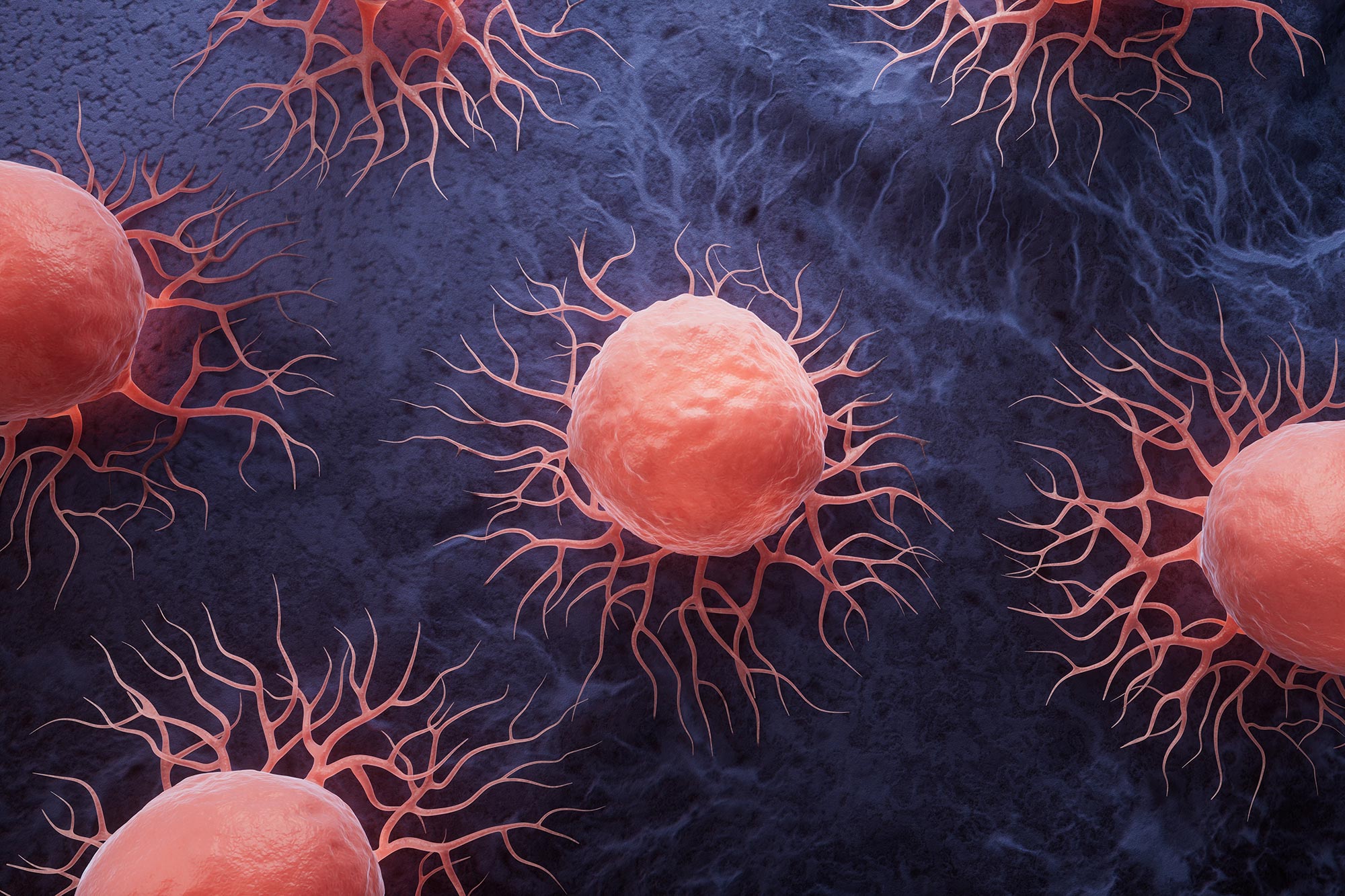
Scientists uncover a molecular weakness that could transform prostate cancer therapy.
An international team of researchers has identified a new weakness in prostate cancer cells that could enhance treatment for one of the most common cancers in men.
The study, published in the Proceedings of the National Academy of Sciences (PNAS), was conducted by scientists from Flinders University in Australia and the South China University of Technology.
Researchers discovered that two enzymes, PDIA1 and PDIA5, play a key role in allowing prostate cancer cells to grow, survive, and resist treatment.
These enzymes function as molecular protectors for the androgen receptor (AR), a protein that drives prostate cancer growth. When PDIA1 and PDIA5 are inhibited, the AR becomes unstable and breaks apart, leading to cancer cell death and reduced tumor size in both laboratory-grown cells and animal models.
Boosting existing prostate cancer therapies
The researchers also found that combining PDIA1 and PDIA5 inhibitors with enzalutamide, a widely prescribed prostate cancer drug, significantly increased the therapy’s effectiveness.
“We’ve discovered a previously unknown mechanism that prostate cancer cells use to protect the androgen receptor, which is a key driver of the disease,” says senior author, Professor Luke Selth, Head of Prostate Cancer Research and Co-Director of Flinders Health and Medical Research Institute’s Cancer Impact program.
“By targeting these enzymes, we can destabilize the AR and make tumors more vulnerable to existing therapies like enzalutamide.”
Lead author, Professor Jianling Xie, who started the research whilst at Flinders University, says that this combination therapy worked well in patient-derived tumor samples and in mice, suggesting strong potential for future clinical trials.
Targeting the cancer’s energy supply
“This is an exciting step forward,” says Dr Xie, now at South China University of Technology.
“Our findings show that PDIA1 and PDIA5 are not just helpers of cancer growth, but they’re also promising targets for new treatments that could work alongside existing drugs.”
Interestingly, the role of these enzymes goes beyond protecting the AR. The study found that PDIA1 and PDIA5 also help cancer cells manage stress and maintain energy production.
Blocking them causes damage to the cells’ mitochondria — the parts of the cell that generate energy — and leads to oxidative stress, which further weakens the cancer.
“This dual impact of hitting both the AR and the cancer’s energy supply makes these enzymes especially attractive targets,” adds Dr Xie.
“It’s like cutting off both the fuel and the engine at the same time.”
Toward safer and more effective treatments
Professor Selth adds that while current drugs that block PDIA1 and PDIA5 show promise, more work is needed to make them safe and effective for use in patients. Some of the existing compounds may affect healthy cells, so future studies will focus on developing safer inhibitors.
Prostate cancer is the second most common cancer in men worldwide. Although treatments like hormone therapy and AR-targeting drugs have helped many patients, resistance to these therapies is a major challenge. This new discovery could help overcome that hurdle and improve outcomes for men with advanced prostate cancer.
Reference: “Protein disulfide isomerases regulate androgen receptor stability and promote prostate cancer cell growth and survival” by Jianling Xie, Kaikai Shen, Wenken Liang, Zijian Kuang, Raj K. Shrestha, Adrienne R. Hanson, Scott L. Townley, Meiling He, Sishu Yu, Peiwen Zhou, Liangzhen Zhu, Zhiwen Gong, Xiang Ao, Sushma R. Rao, Qing Zhang, Kaijie Chen, Jinfen Wei, Shashikanth Marri, Marten F. Snel, Swati Irani, Liye Chen, Ling Wang, Daniel P. McDougal, John B. Bruning, Minglin Ou, Shaobo Wang, Christopher G. Proud, Hongli Du, Lisa M. Butler and Luke A. Selth, 14 October 2025, Proceedings of the National Academy of Sciences.
DOI: 10.1073/pnas.2509222122
Funding: Cancer Council SA, Cancer Council NSW, Flinders Foundation, Movember Foundation, Prostate Cancer Foundation of Australia, Hospital Research Foundation, Cancer Australia, Masonic Charities Trust, Australian Research Council
Never miss a breakthrough: Join the SciTechDaily newsletter.
Follow us on Google and Google News.