
Close Menu
    Facebook X (Twitter) Instagram
    SciTechDaily
    • Biology
    • Chemistry
    • Earth
    • Health
    • Physics
    • Science
    • Space
    • Technology
    Facebook X (Twitter) Pinterest YouTube RSS
    SciTechDaily
    Home»Technology»DARPA Program Takes Advantage of Floating Icebergs
    Technology

    DARPA Program Takes Advantage of Floating Icebergs

    By SciTechDailySeptember 24, 20121 Comment2 Mins Read
    Facebook Twitter Pinterest Telegram LinkedIn WhatsApp Email Reddit
    Share
    Facebook Twitter LinkedIn Pinterest Telegram Email Reddit
    arctic-ice-drifting
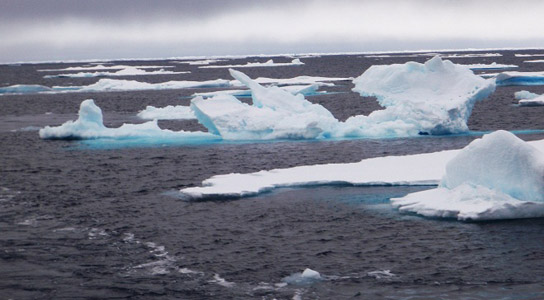
    DARPA plans to use icebergs for sensors to track ships and submarines. Electromagnetic and acoustic sensors would be mounted on the icebergs, aiding in surveillance as the icebergs drift.

    If the Arctic continues to melt, there could be more military and commercial activity in this environment. DARPA is working on an all-seeing network of sensors that will track what is happening in the Arctic all year long. This network will include sensors placed on icebergs.

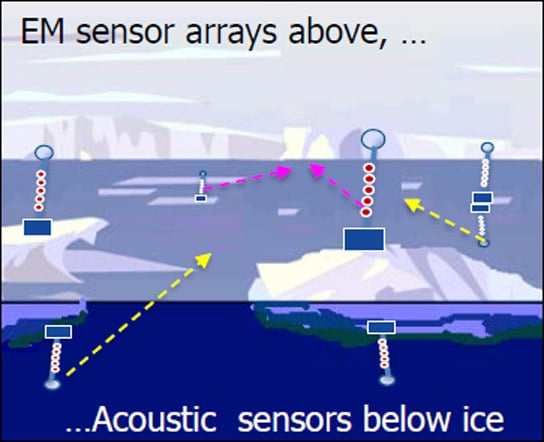
    DARPA wants to leverage icebergs for electromagnetic and acoustic sensors to help track ships and submarines. This was part of a DARPA briefing (PDF). The electromagnetic sensors would be stuck on top of icebergs, with acoustic sensors tacked onto the undersides, which could help track submarines and map the Arctic floor. Icebergs can drift up to six kilometers (3.7 miles) per day, and they have been speeding up ever since the record ice melts. The military wants to take advantage of this ice movement.
    leveraging-icebergs

    This is all part of DARPA’s Assured Arctic Awareness program; and while the program is vague, the agency documents hint that the Pentagon wants to keep track of the Arctic. DARPA program manager Andrew Coon states, “The program will emphasize remote distributed sensing as a way to provide standoff situational awareness in the Arctic.”

    The Arctic could be used as new shipping routes become available, due to the ice melt. Companies might also plan to harvest the Arctic’s deposits of oil and natural gas. There’s even the scenario of Arctic War, whereupon nations go to war as they scramble for energy resources, because of the messy overlapping claims to Arctic waters.

    Although the land mass is decreasing, it’s still at more than three million square kilometers (1.2 million square miles). Ships could be tracked by their radar signatures, used to track hazardous ice, and even though the Arctic ice scatters acoustic signals, Darpa wants to use “ice dynamics” and “opportunistic active acoustics” as leverage to track submarines.

    Never miss a breakthrough: Join the SciTechDaily newsletter.
    Follow us on Google and Google News.

    Arctic DARPA Defense Radar
    Share. Facebook Twitter Pinterest LinkedIn Email Reddit

    Related Articles

    Navigating Beneath the Arctic Ice – Without GPS

    DARPA Underground Autonomous Robot Navigation Challenge

    New Energy-Friendly Chip Can Perform Powerful AI Tasks

    Rice Engineers Develop Real-Time 3D Radar System

    New Graphene Sensors Could Provide Unprecedented Insights into Brain Structure

    Wyss Institute Continues to Develop Its Soft Exosuit

    Ape-Like RoboSimian Robot in Development

    Scientists Measure and Control the Temperature Inside Living Cells

    DARPA Grants Phase 2-4 Contract for Unmanned Sub-Hunting Vessel

    1 Comment

    1. Kenny on September 24, 2012 2:05 pm

      Oh great! Another billion dollar effort thwarted by the all seeing eye of the news media!? Now it will be easy for them to build a finder and/or scrambler for same!!! But I’m sure they’ll get get hundreds of millions to use for naught!

      Reply
    Leave A Reply Cancel Reply

    • Facebook
    • Twitter
    • Pinterest
    • YouTube

    Don't Miss a Discovery

    Subscribe for the Latest in Science & Tech!

    Trending News

    Monster Storms on Jupiter Unleash Lightning Beyond Anything on Earth

    Scientists Create “Liquid Gears” That Spin Without Touching

    The Simple Habit That Could Help Prevent Cancer

    Millions Take These IBS Drugs, But a New Study Finds Serious Risks

    Scientists Unlock Hidden Secrets of 2,300-Year-Old Mummies Using Cutting-Edge CT Scanner

    Bread Might Be Making You Gain Weight Even Without Eating More Calories

    Scientists Discover Massive Magma Reservoir Beneath Tuscany

    Europe’s Most Active Volcano Just Got Stranger – Here’s Why Scientists Are Rethinking It

    Follow SciTechDaily
    • Facebook
    • Twitter
    • YouTube
    • Pinterest
    • Newsletter
    • RSS
    SciTech News
    • Biology News
    • Chemistry News
    • Earth News
    • Health News
    • Physics News
    • Science News
    • Space News
    • Technology News
    Recent Posts
    • Sharks Are Overheating as Warming Oceans Push Them to the Edge
    • Scientists Discover Plants “Scream” – We Just Couldn’t Hear Them Until Now
    • 25-Year Study Uncovers Hidden Paths and Early Warning Signs of Blood Cancer
    • Not Just Snoring – New Research Reveals Sleep Apnea May Be Damaging Your Muscles
    • Scientists Discover a Surprising Reason Intermittent Fasting Extends Life
    Copyright © 1998 - 2026 SciTechDaily. All Rights Reserved.
    • Science News
    • About
    • Contact
    • Editorial Board
    • Privacy Policy
    • Terms of Use

    Type above and press Enter to search. Press Esc to cancel.