
Close Menu
    Facebook X (Twitter) Instagram
    SciTechDaily
    • Biology
    • Chemistry
    • Earth
    • Health
    • Physics
    • Science
    • Space
    • Technology
    Facebook X (Twitter) Pinterest YouTube RSS
    SciTechDaily
    Home»Space»Data-Relay Satellite Ready for Service – Most Sophisticated Laser Communication Network Ever Designed
    Space

    Data-Relay Satellite Ready for Service – Most Sophisticated Laser Communication Network Ever Designed

    By European Space Agency (ESA)May 31, 2020No Comments2 Mins Read
    Facebook Twitter Pinterest Telegram LinkedIn WhatsApp Email Reddit
    Share
    Facebook Twitter LinkedIn Pinterest Telegram Email Reddit
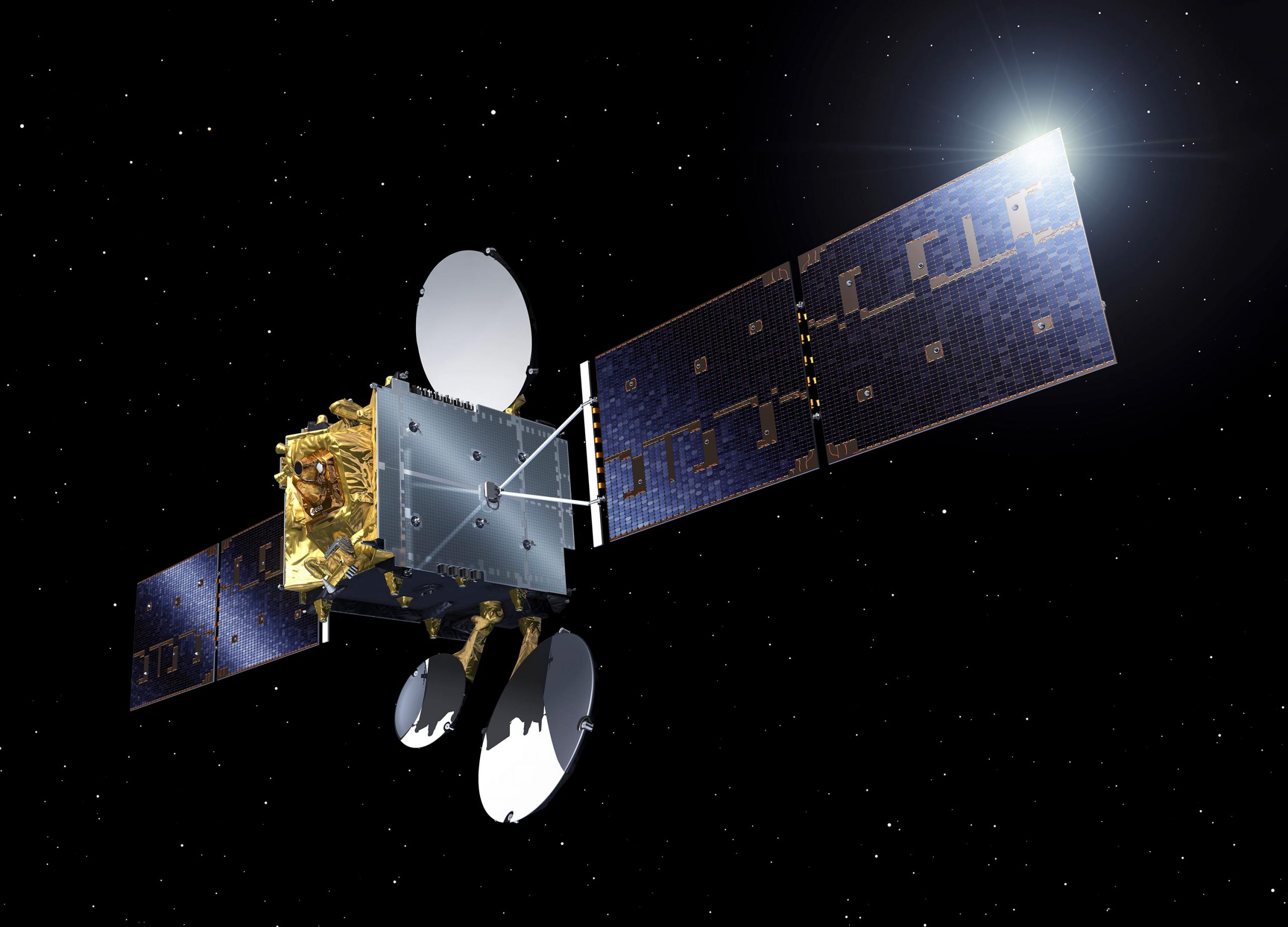
    EDRS-C
    EDRS-C is the second node of the European Data Relay System (EDRS). It is the first dedicated EDRS satellite as well as the first flight for ESA’s SmallGEO platform. EDRS is designed to transmit data between low Earth-orbiting satellites and the EDRS payloads in geostationary orbit using innovative laser communication technology. Credit: ESA

    The second node in the most sophisticated laser communication network ever designed is ready to go into service.

    Dubbed the “SpaceDataHighway,” the European Data Relay System (EDRS) helps Earth-observing satellites to transmit large quantities of potentially life-saving data to Europe in near-real time.

    Its second satellite, EDRS-C, has now completed its in-orbit commissioning review and is ready to start service.

    Launched on 6 August 2019, EDRS-C has since maneuvered into its geostationary orbit some 36,000 kilometers (22,400 mi) above Earth where it has been thoroughly tested during the past six months.

    This geostationary position enables the communication satellite to maintain an almost constant connection with Earth-observation satellites that are closer to the planet’s surface and circle the Earth every 90 minutes or so.

    The EDRS satellites use lasers to communicate with Earth-observation satellites and beam their data back to Europe in almost real time. Without them, there would be delays of up to 90 minutes.

    The in-orbit commissioning review demonstrated that all EDRS-C systems perform well and that EDRS-C can link with Sentinel 2B, one of the Earth-observation satellites from the European Union’s Copernicus program.

    EDRS-C is now being tested with all four Sentinel satellites ahead of its user commissioning review, which is due to take place in a few weeks.

    Following the user commissioning review, EDRS-C will join its sister satellite, EDRS-A, as an operational node of the EDRS constellation. The latter was launched in January 2016 and has been providing communications services to the Copernicus program since November 2016.

    EDRS-A is due to relay information from the International Space Station, once the required equipment is installed on the outside of its Columbus laboratory.

    EDRS is a new, independent European satellite system, and is a Partnership Project between ESA and operator Airbus as part of ESA’s efforts to federate industry around large-scale programs, stimulating technology developments to achieve economic benefits.

    The EDRS-C satellite platform was built by OHB System in Germany and the laser terminals were developed by Tesat-Spacecom and the DLR German Space Administration.

    Never miss a breakthrough: Join the SciTechDaily newsletter.
    Follow us on Google and Google News.

    European Space Agency Telecommunications
    Share. Facebook Twitter Pinterest LinkedIn Email Reddit

    Related Articles

    Beaming Up Security: Spire Global Launches Optical Link Nanosats

    The Moon: Going Where No Satnav Has Gone Before

    Eutelsat Quantum: Revolutionary Reprogrammable “Chameleon” Satellite Launched

    Quantum Communication in Space Advances

    Testing Lunar 4G Operations to Support Future Moon Exploration

    Data-Relay Satellite Beams at Light Speed – The Most Sophisticated Laser Communication Network Ever Designed

    ESA’s Mars Express MARSIS Radar Explores Martian Oceans

    ESA’s Hershel Space Telescope Captures Incredible Views of Eagle Nebula

    Hubble Reaches New Milestone: 10,000th Scientific Paper Published

    Leave A Reply Cancel Reply

    • Facebook
    • Twitter
    • Pinterest
    • YouTube

    Don't Miss a Discovery

    Subscribe for the Latest in Science & Tech!

    Trending News

    Popular Sugar-Free Sweetener Linked to Liver Disease, Study Warns

    What Is Hantavirus? The Deadly Disease Raising Alarm Worldwide

    Scientists Just Discovered How the Universe Builds Monster Black Holes

    Scientists Unveil New Treatment Strategy That Could Outsmart Cancer

    A Simple Vitamin May Hold the Key to Treating Rare Genetic Diseases

    Scientists Think the Real Fountain of Youth May Be Hiding in Your Gut

    Ravens Don’t Follow Wolves, They Predict Them

    This Common Knee Surgery May Be Doing More Harm Than Good

    Follow SciTechDaily
    • Facebook
    • Twitter
    • YouTube
    • Pinterest
    • Newsletter
    • RSS
    SciTech News
    • Biology News
    • Chemistry News
    • Earth News
    • Health News
    • Physics News
    • Science News
    • Space News
    • Technology News
    Recent Posts
    • Why Are So Many New Fathers Dying? Scientists Say the U.S. Has a Dangerous Blind Spot
    • Scientists Identify Simple Supplement That Greatly Reduces Alzheimer’s Damage
    • You May Have a Dangerous Type of Cholesterol Even if Your Tests Look Normal
    • Study Reveals Dangerous Flaw in AI Symptom Checkers
    • New MRI Breakthrough Captures Stunningly Clear Images of the Eye and Brain
    Copyright © 1998 - 2026 SciTechDaily. All Rights Reserved.
    • Science News
    • About
    • Contact
    • Editorial Board
    • Privacy Policy
    • Terms of Use

    Type above and press Enter to search. Press Esc to cancel.