
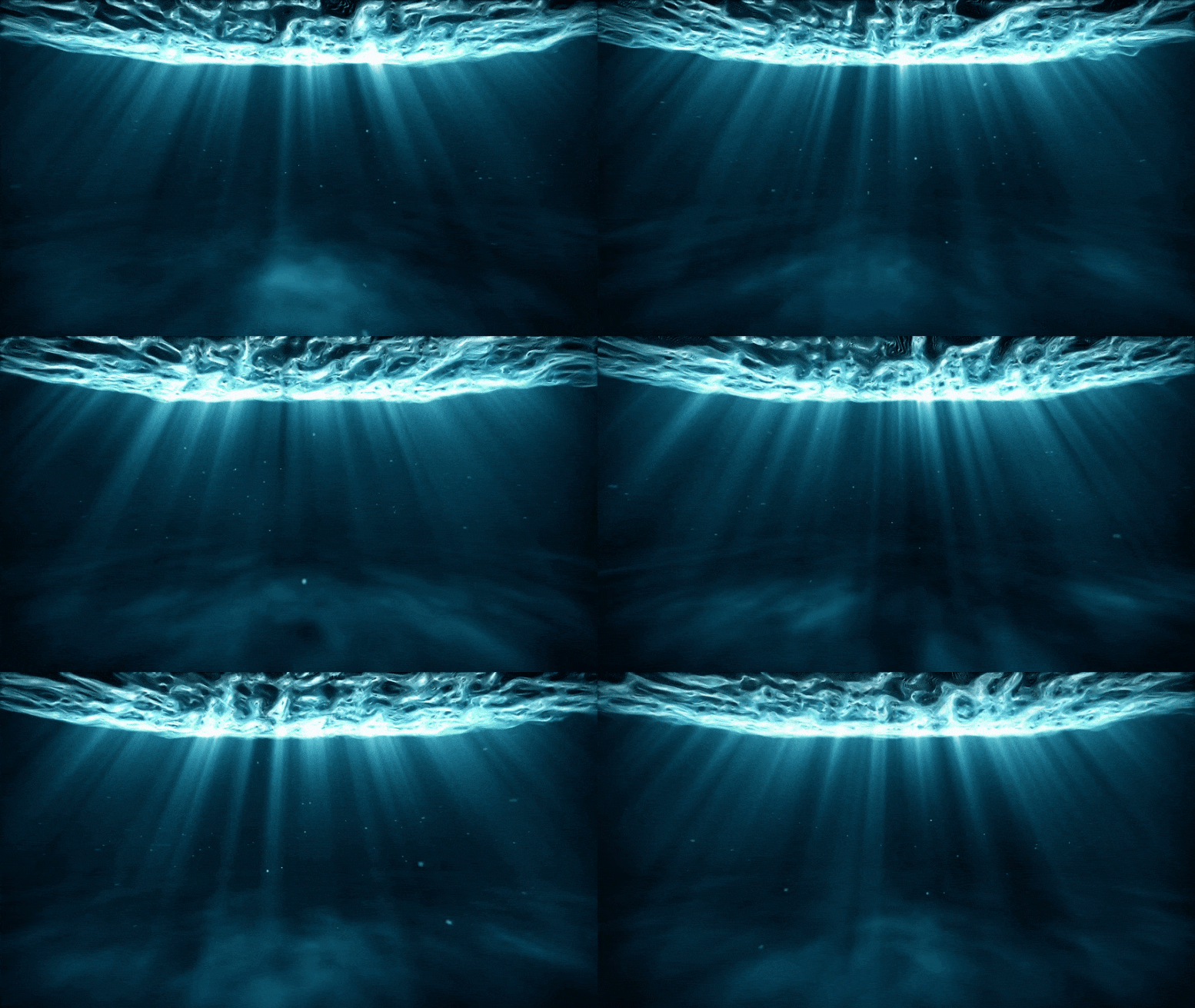
Over the past 1.2 million years, marine life was repeatedly extinguished in low-oxygen ‘dead zones’ in the North Pacific Ocean during warm interglacial climates.
An analysis of sediment cores from the Bering Sea has revealed a recurring relationship between warmer climates and abrupt episodes of low-oxygen “dead zones” in the subarctic North Pacific Ocean over the past 1.2 million years.
The new study, led by researchers at UC Santa Cruz, was published on June 2, 2021, in Science Advances. The findings provide crucial information for understanding the causes of low oxygen or “hypoxia” in the North Pacific and for predicting the occurrence of hypoxic conditions in the future.

“It is essential to understand whether climate change is pushing the oceans toward a ‘tipping point’ for abrupt and severe hypoxia that would destroy ecosystems, food sources, and economies,” said first author Karla Knudson, who led the study as a graduate student in Earth sciences at UCSC.
The researchers based their findings on an analysis of deep sediment cores from a site in the Bering Sea. Over long periods of time, sediments are deposited and build up on the seafloor. The activity of organisms living in the seafloor sediments usually disrupts and mixes them as they accumulate, but if hypoxia has killed those organisms, an orderly pattern of layers is preserved. Thus, scientists can find a record of past hypoxic events in the form of these layered or “laminated” sediments in cores drilled from the seafloor.
Scientists have long known about a major episode of widespread hypoxia in the North Pacific at the end of the last ice age, when the melting of the ice sheets sent a massive influx of fresh water into the ocean. The new study provides the first records of earlier low-oxygen events, and shows that the most recent occurrence was not representative of most of these events in terms of mechanisms or timing.
Warm Climates, High Seas, and Iron: A Dangerous Mix
“It doesn’t take a huge perturbation like melting ice sheets for this to happen,” said corresponding author Ana Christina Ravelo, professor of ocean sciences at UC Santa Cruz. “These abrupt hypoxic events are actually common in the geologic record, and they are not typically associated with deglaciation. They almost always happen during the warm interglacial periods, like the one we’re in now.”
The hypoxia occurs after intense growth of phytoplankton (marine algae) in the surface waters. When the phytoplankton die, they sink deeper into the ocean and decompose, which depletes the oxygen and releases carbon dioxide into the water below the surface. What triggers these events, however, remains unclear. Ocean warming, high sea levels, and the availability of iron (a limiting factor for growth of phytoplankton) all seem to play a role.
“Our study shows that high sea levels, which occur during warm interglacial climates, contributed to these hypoxic events,” Knudson said. “During high sea levels, dissolved iron from the flooded continental shelves can be transferred to the open ocean and promote intense phytoplankton growth in the surface waters.”
What Triggers Abrupt Hypoxia?
Although high sea level is an important background condition, it is not enough to trigger a hypoxic event by itself. Changes in ocean circulation, including intensified upwelling to bring more nutrients into the surface waters and stronger currents that could transfer iron from the continental shelf to the open ocean, may play a critical role, Knudson said.
Currently, regional dead zones occur in coastal areas around the world due to the temperature effects of climate warming, as well as nutrient enrichment of coastal waters from agricultural fertilizers. But even the massive dead zone at the mouth of the Mississippi River pales in comparison to the widespread hypoxia that occurred all across the North Pacific Ocean at the end of the last ice age.
Because the new study is based on sediment cores from a single site, the researchers do not know the extent of the dead zones it records–whether they were confined to the Bering Sea or extended across the North Pacific rim as the most recent event did.
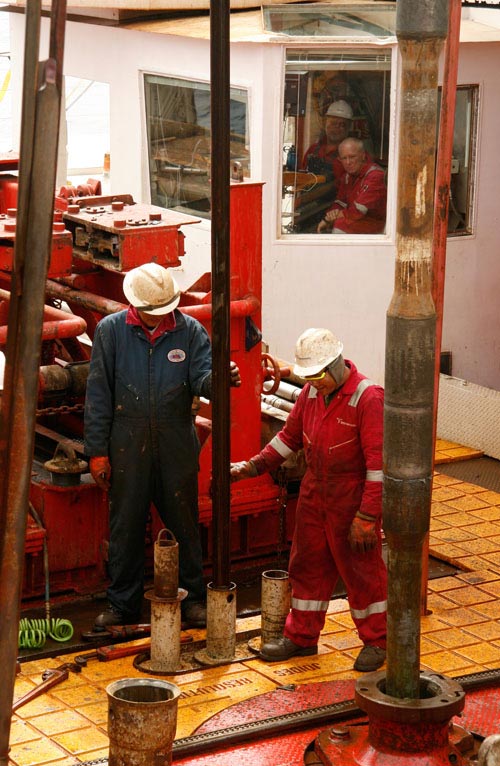
“We don’t know how extensive they were, but we do know they were very intense and lasted longer than the deglaciation event that has been so well studied,” said Ravelo, who was co-chief scientist of Integrated Ocean Drilling Program Expedition 323, which recovered the Bering Sea cores in 2009.
Recurring Hypoxia Across the Pleistocene
Knudson said the cores record multiple events during each interglacial period throughout the Pleistocene, with abrupt transitions where laminated sediments appear and disappear in the core.
The new findings raise concerns about whether climate change and ocean warming will lead to a tipping point that would trigger widespread hypoxia in the North Pacific Ocean.
“The system is primed for this type of event happening,” Ravelo said. “We need to know how extensive they were, and we need to rethink how these events are triggered, because we now know that it doesn’t take a huge perturbation. This study sets the stage for a lot of follow-up work.”
Reference: “Causes and timing of recurring subarctic Pacific hypoxia” by Karla P. Knudson, Ana Christina Ravelo, Ivano W. Aiello, Christina P. Knudson, Michelle K. Drake and Tatsuhiko Sakamoto, 2 June 2021, Science Advances.
DOI: 10.1126/sciadv.abg2906
In addition to Knudson and Ravelo, the coauthors of the paper include Ivano Aiello at Moss Landing Marine Laboratories, Christina Knudson at the University of St. Thomas in Minnesota, Michelle Drake at UC Santa Cruz, and Tatsuhiko Sakamoto at Mie University in Japan.
Never miss a breakthrough: Join the SciTechDaily newsletter.
Follow us on Google and Google News.
2 Comments
“The system is primed for this type of event happening,”
Not really! From the article, “Our study shows that high sea levels, which occur during warm interglacial climates, contributed to these hypoxic events,” The sea levels are not as high as during past interglacials. It would take a significant acceleration in melting to achieve the previous high stands, and even then, it would take thousands of years. It isn’t going to happen tomorrow, as the misnomer “tipping point” suggests.
The take away is that events, which humans may judge to be undesirable, happened frequently before humans had any impact, and the world recovered! That isn’t a “tipping point.” It is a phase in cyclical events.
Warning! Entering ecological dead zone.