
Close Menu
    Facebook X (Twitter) Instagram
    SciTechDaily
    • Biology
    • Chemistry
    • Earth
    • Health
    • Physics
    • Science
    • Space
    • Technology
    Facebook X (Twitter) Pinterest YouTube RSS
    SciTechDaily
    Home»Space»Death Becomes Her: The Catastrophic Stellar Explosion That Shook UGC 12295
    Space

    Death Becomes Her: The Catastrophic Stellar Explosion That Shook UGC 12295

    By ESA/HubbleJuly 23, 2023No Comments2 Mins Read
    Facebook Twitter Pinterest Telegram LinkedIn WhatsApp Email Reddit
    Share
    Facebook Twitter LinkedIn Pinterest Telegram Email Reddit
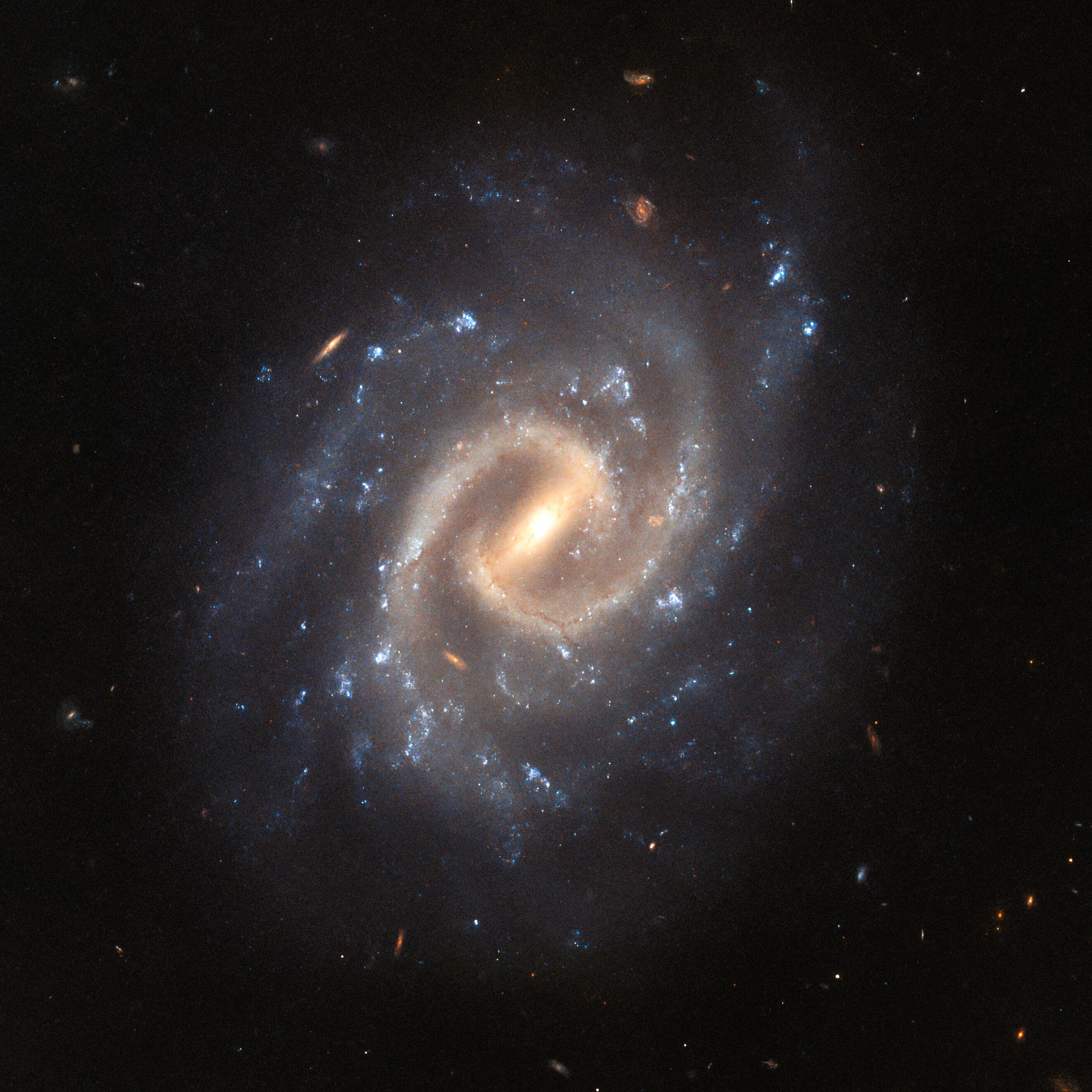
    Spiral Galaxy UGC 12295
    Hubble Space Telescope image of the spiral galaxy UGC 12295, which is located around 192 million light-years away in the constellation Pisces. It has been under study since a supernova was first detected there in 2015. Credit: ESA/Hubble & NASA, A. Filippenko, J. Lyman

    Two teams of astronomers used Hubble’s Wide Field Camera 3 to study UGC 12295, a spiral galaxy in Pisces, following a supernova detected in 2015. While the first team investigated the supernova’s remnants to understand matter evolution, the second revisited previous supernova sites to study the nature of their host systems.

    The tranquil spiral galaxy UGC 12295 basks leisurely in this image from the NASA/ESA Hubble Space Telescope. This galaxy lies around 192 million light-years away in the constellation Pisces, and is almost face-on when viewed from Earth, displaying a bright central bar and tightly wound spiral arms.

    Despite appearing as an island of tranquillity in this image, UGC 12295 played host to a catastrophically violent explosion — a supernova — that was first detected in 2015. This supernova prompted two different teams of astronomers to propose Hubble observations of UGC 12295 that would sift through the wreckage of this vast stellar explosion.

    Supernovae are the explosive deaths of massive stars, and are responsible for forging many of the elements found here on Earth. The first team of astronomers used Hubble’s Wide Field Camera 3 (WFC3) to examine the detritus left behind by the supernova in order to better understand the evolution of matter in our Universe. 

    The second team of astronomers also used WFC3 to explore the aftermath of UGC 12295’s supernova, but their investigation focused on returning to the sites of some of the best-studied nearby supernovae. Hubble’s keen vision can reveal lingering traces of these energetic events, shedding light on the nature of the systems that host supernovae.

    Never miss a breakthrough: Join the SciTechDaily newsletter.
    Follow us on Google and Google News.

    Astronomy European Space Agency Hubble Space Telescope Popular
    Share. Facebook Twitter Pinterest LinkedIn Email Reddit

    Related Articles

    Hubble’s Newest Discovery Isn’t a Star, It’s a Window Into the Dark Universe

    Hubble Views Spiral Galaxy NGC 5793

    Hubble Captures the Best Ever Image of the Antennae Galaxies

    Hubble Captures Face-On Image of Messier 61

    Hubble Views an Ongoing Cosmic Collision

    Hubble Views Newborn Stars in Galaxy IC 5052

    New XDF Image, The Deepest-Ever View of the Universe

    Hubble Zooms in on the Center of M4

    Hubble Image of Peculiar Galaxy Pair Arp 116

    Leave A Reply Cancel Reply

    • Facebook
    • Twitter
    • Pinterest
    • YouTube

    Don't Miss a Discovery

    Subscribe for the Latest in Science & Tech!

    Trending News

    Bone-Strengthening Discovery Could Reverse Osteoporosis

    Scientists Uncover Hidden Trigger Behind Stem Cell Aging

    Scientists Find Way to Reverse Fatty Liver Disease Without Changing Diet

    Could Humans Regrow Limbs? New Study Reveals Promising Genetic Pathway

    Scientists Reveal Eating Fruits and Vegetables May Increase Your Risk of Lung Cancer

    Scientists Reverse Brain Aging With Simple Nasal Spray

    Scientists Uncover Potential Brain Risks of Popular Fish Oil Supplements

    Scientists Discover a Surprising Way To Make Bread Healthier and More Nutritious

    Follow SciTechDaily
    • Facebook
    • Twitter
    • YouTube
    • Pinterest
    • Newsletter
    • RSS
    SciTech News
    • Biology News
    • Chemistry News
    • Earth News
    • Health News
    • Physics News
    • Science News
    • Space News
    • Technology News
    Recent Posts
    • Wind Farms Are Disrupting Ocean Currents, Moving Millions of Tons of Mud Each Year
    • Scientists Discover Massive Magma Reservoir Beneath Tuscany
    • Scientists Create “Neurobots” – Living Machines With Their Own Nervous Systems
    • Europe’s Most Active Volcano Just Got Stranger – Here’s Why Scientists Are Rethinking It
    • Why Are Giant Ants Letting Tiny Ants Crawl All Over Them?
    Copyright © 1998 - 2026 SciTechDaily. All Rights Reserved.
    • Science News
    • About
    • Contact
    • Editorial Board
    • Privacy Policy
    • Terms of Use

    Type above and press Enter to search. Press Esc to cancel.