
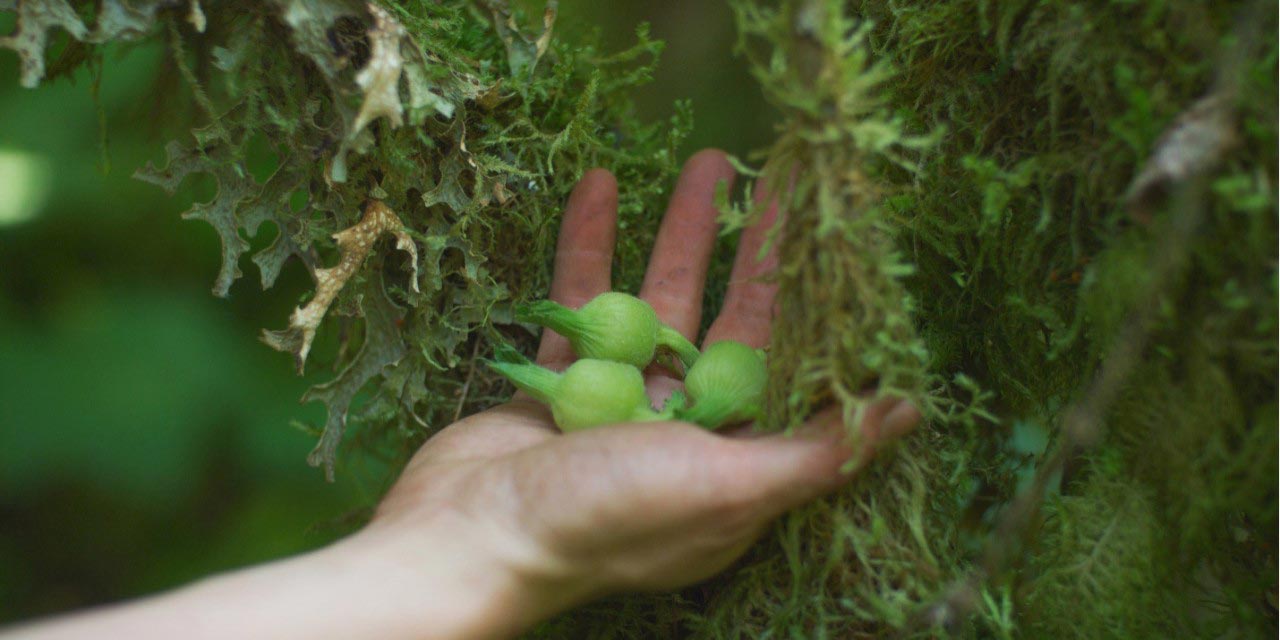
SFU professor Chelsey Geralda Armstrong’s research on beaked hazelnut DNA reveals Indigenous peoples in British Columbia cultivated and traded the plant 7,000 years ago, shaping the land sustainably. The study challenges colonial misconceptions of untouched landscapes and emphasizes Indigenous environmental expertise.
By decoding the DNA of the beaked hazelnut (Corylus cornuta), a native plant that thrives in British Columbia, a multidisciplinary team of scientists is shedding new light on how ancestral Indigenous peoples stewarded plants across the province.
The innovative study, led by Chelsey Geralda Armstrong, an assistant professor in Simon Fraser University’s (SFU) Department of Indigenous Studies, was recently published in the Proceedings of the National Academy of Sciences (PNAS), a leading scientific journal.
“The misconception that Indigenous peoples did not use or steward the land is widespread across North America, but is very pointed in British Columbia, where landscapes are often described as ‘wild’ or ‘untouched,’” says Armstrong of the engrained cultural biases she seeks to address through her research.
Far from being only “hunter-gatherers” — an anthropological designation of the early 20th century to describe Indigenous peoples on the northwest coast — the study challenges settler-colonial narratives by establishing people actively cultivated hazelnut on a continental scale, beginning likely 7,000 years ago.
Indigenous knowledge inspires genetic research
As an ethnoecologist and archaeologist, Armstrong specializes in finding hidden signs of how humans in the distant past co-evolved with, and co-constitute, lived environments. To understand the intertwined histories of people and plants, Armstrong often works for and with Indigenous Elders and knowledge-holders.
Through previous projects, Armstrong became aware of oral traditions that told of how ancient humans cultivated beaked hazelnut. In addition to providing a reliable source of nutrition, people uncovered ingenious uses for all parts of the plant: making medicine and cosmetics from its oil; producing a rich blue dye from its roots; as well as building and crafting useful items, such as snowshoes, from its flexible-yet-durable wood and shoots.
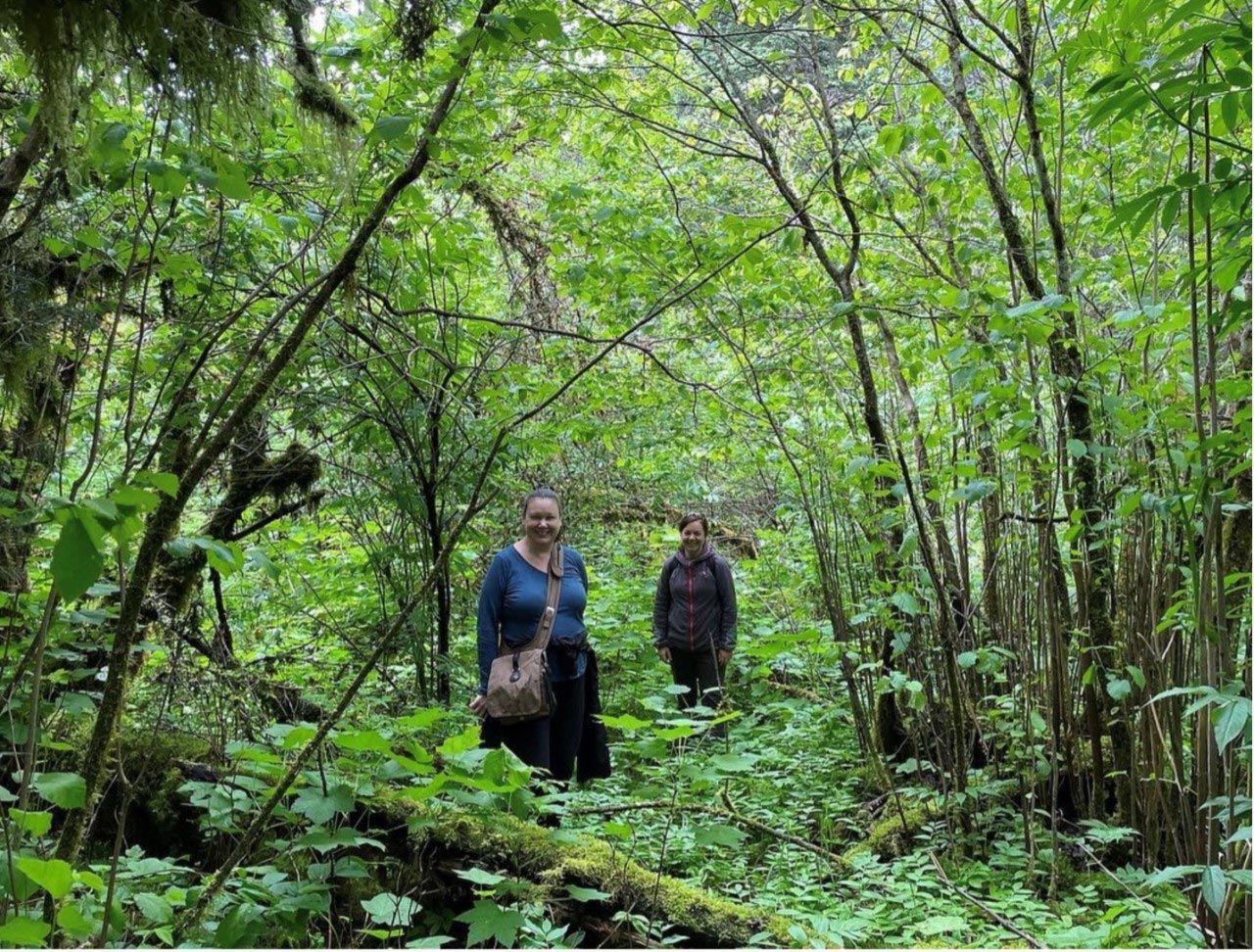
Armstrong was inspired to investigate how the genetic profile of the hazelnut aligned with the knowledge passed down for generations, and brought together a team of geneticists and linguists to find multifaceted evidence of how actions by humans led the beaked hazelnut to become naturalized in the forests of British Columbia.
Genes point to trade and plant transplantation over long distances
Alongside oral traditions, Armstrong’s team found similarities in Indigenous languages in the province that indicate the beaked hazelnut was a versatile commodity that was traded and shared among different communities, “British Columbia is very linguistically diverse. We found that the word for hazelnut is similar in many Indigenous languages, where there should be no similarities.”
To retrace how the native hazelnut spread across Western North America, Armstrong and her team collected specimens found throughout the province, but also focused on sampling near archaeological village sites. A team of interdisciplinary scientists from the Hakai Institute worked closely with Armstrong to analyze the DNA of these specimens and mapped out the geographic distribution of plants sharing these genetic traits.
“We found that people were actively transplanting and cultivating hazelnuts hundreds of kilometers from their place of origin,” Armstrong explains of the expansive trade activity the maps illustrated. “People were moving hazelnut around and selectively managing it to the point that it increased genetic diversity. This type of activity was previously thought to be entirely absent in the Pacific Northwest.”
Significantly, by analyzing specimens from the Skeena Watershed, Armstrong’s team identified unique hazelnut clusters that are only found at the origin place of the Gitxsan, Ts’msyen, and Nisga’a peoples. “Genetic clustering allowed us to map something that appears subtle,” says Armstrong of the finding, which supports Indigenous land claims in the area.
Reconnecting with Indigenous science will support food security
According to Armstrong, settler-colonial efforts to systematically separate Indigenous peoples from their land and suppress traditional knowledge have obscured the role humans played in shaping the landscape. By using genetic evidence to recount the shared history of people and plants, the study brings wider appreciation to the effective methods Indigenous peoples used to manage the land for millennia.
Jesse Stoeppler (Gwii Lok’im Gibuu), who belongs to Wilp Spookwx of the Lax Gibuu Clan, is a Gitxsan land steward, co-executive director of the Skeena Watershed Coalition and Deputy Chief of the Hagwilget First Nation. Stoeppler believes that mobilizing this traditional knowledge will benefit his community’s economy and the environment. “Throughout thousands of years of human history, someone has faced the same problems our communities are facing now and has found a solution,” says Stoeppler. “Our future is in our past. Our people saw value in the hazelnut and practiced stewardship of the land. The flora and fauna in the area were able to thrive in that environment. Understanding this can support food sovereignty in our communities.”
Similarly, Armstrong says the study indicates that ancestral Indigenous peoples understood the importance of genetic diversity in promoting environmental sustainability, “This research confirms what Indigenous peoples have always known: plants were cultivated and engineered to a level that is now observable in the genetic structure of hazelnut.”
Reference: “Genetic differentiation and precolonial Indigenous cultivation of hazelnut (Corylus cornuta, Betulaceae) in western North America” by Chelsey Geralda Armstrong, Rute B. G. Clemente-Carvalho, Nancy J. Turner, Sara Wickham, Andrew Trant and Matthew A. Lemay, 18 November 2024, Proceedings of the National Academy of Sciences.
DOI: 10.1073/pnas.2402304121
Never miss a breakthrough: Join the SciTechDaily newsletter.
Follow us on Google and Google News.
2 Comments
Anyone remotely paying attention knows the Native Americans cultivated and harvested nuts.
Seems like pure speculation to me. Humans are not the only animals that eat hazelnuts. Mamals land birds have been dropping nuts and seeds around this dispersing plants for since nuts seeds were created. To assume that man was the only one potentially doing this is insulting to the way of the natural world and the power of natural selection in the microclimates where these nuts were dropped.